
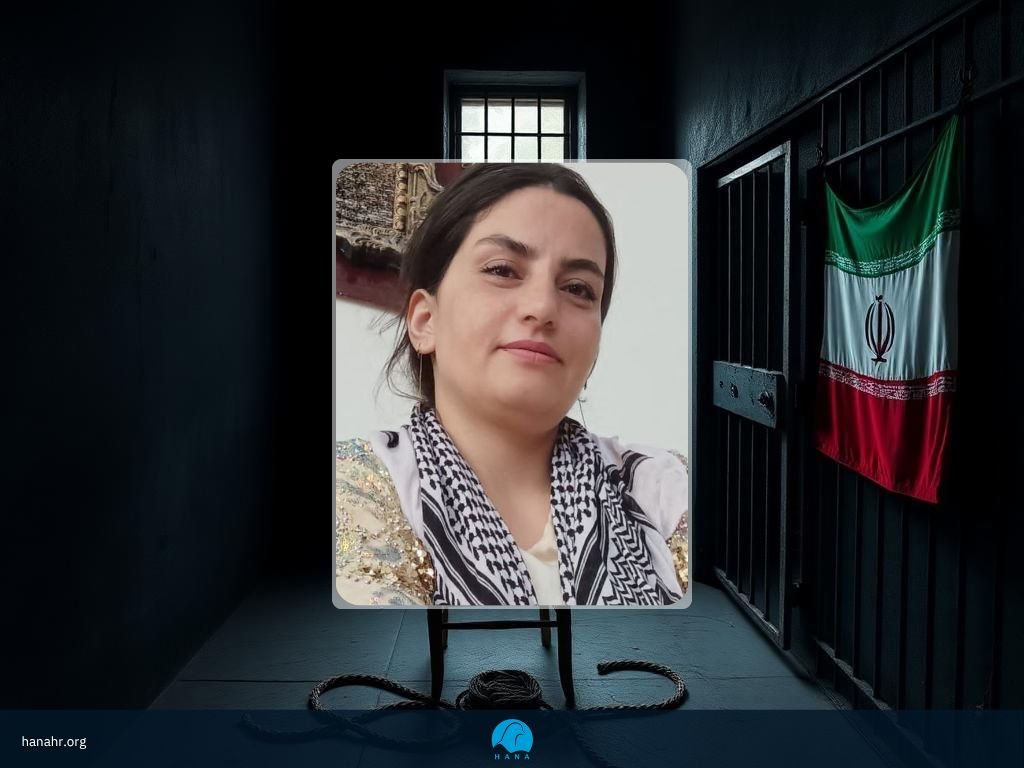
Soheila Mota’i, a civil activist from Dehgolan, was released from Sanandaj Correction and Rehabilitation Center on Monday, June 21, 2026, and will serve the remainder of her six-month sentence under electronic ankle bracelet monitoring.
According to HANA, Ms. Mota’i had previously been sentenced to six months in ta’zir imprisonment by Branch 102 of Dehgolan Criminal Court Two on charges of “propaganda against the Islamic Republic of Iran.” She had been transferred to Sanandaj Correction and Rehabilitation Center on June 13, 2026, after being summoned to the sentence enforcement unit to begin serving her sentence.
In recent years, Soheila Mota’i has repeatedly faced judicial and security prosecution due to her civil activism and participation in social gatherings and events. Her most recent arrest came in February 2025, in connection with a commemorative event held for International Women’s Day in Sanandaj. After a period of detention and interrogation at the Sanandaj Intelligence Office detention facility, she was temporarily released on bail.
Her transfer to electronic monitoring does not mark the end of her punishment or the lifting of the restrictions imposed on her. The electronic ankle bracelet is a form of criminal sentence enforcement that subjects a person to continuous surveillance, restrictions on movement, and permanent monitoring, keeping their freedom contingent on the decisions and oversight of judicial authorities.
In cases rooted in civil activism, freedom of expression, and peaceful civic participation, the continuation of punishment through electronic monitoring raises serious human rights concerns. While less restrictive than physical imprisonment, it remains part of the punishment process and can carry significant social, psychological, and reputational consequences for the individual. The use of such measures against people whose activities fall within the framework of fundamental civic rights warrants scrutiny in light of the principles of necessity and proportionality in restricting basic rights and freedoms.
Soheila Mota’i’s case must be understood within a broader pattern in which civil activists, particularly women activists in Kurdistan, face criminal prosecution, detention, and post-conviction restrictions for exercising their fundamental rights, including freedom of expression, freedom of peaceful assembly, and participation in civic life. In this context, replacing imprisonment with electronic monitoring cannot be seen as an end to judicial pressure. In practice, it simply represents a shift in the form of punishment, while surveillance and control over the individual’s life continue unabated.