
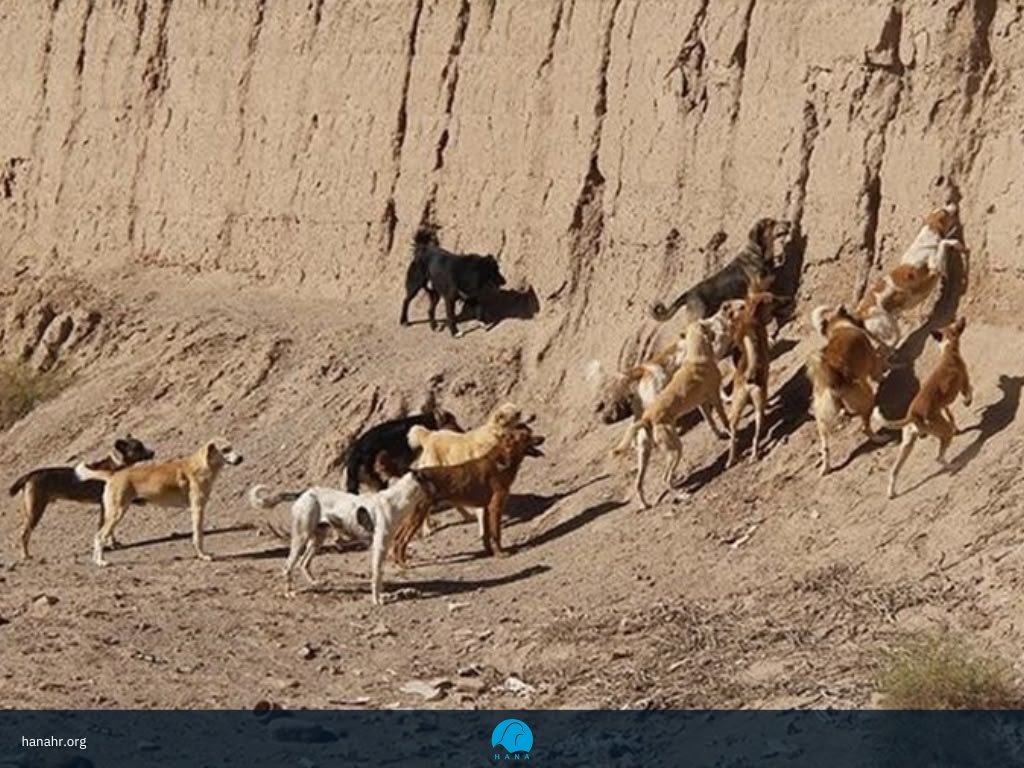
According to an investigation by the HANA Human Rights Organization, at least five children in Sanandaj have been attacked by stray dogs in less than one month. In these incidents, one young child lost her life, while several other children were transferred to hospital with serious injuries. The most recent incident occurred on August 6, 2026, when Arad Majidi was attacked by several stray dogs while playing.
These incidents can no longer be dismissed as isolated cases of animal bites. Previously, on July 9, 2026, a 12-year-old girl was attacked in the Saadi Town district. On July 20, 2026, a young child in the Kalkajar neighborhood died from injuries sustained in a dog attack. On 26 July, two other children were injured in the Zagros Town district.
Following the death of the child in Kalkajar, the Kurdistan Province Judiciary announced that a judicial case had been opened to investigate possible negligence and failure to perform official duties, and that two Sanandaj municipal managers had been arrested. Nevertheless, the subsequent attacks indicate that the danger remains and that the measures taken have not been sufficient to ensure the safety of children.
The municipality’s responsibility in this regard is not merely managerial or ethical. Paragraph 15 of Article 55 of the Municipalities Law places responsibility for addressing stray animals and eliminating the dangers arising from them among the municipality’s statutory duties. In such circumstances, the recurrence of incidents following repeated warnings and the death of a child raises the issue of whether public authorities had prior knowledge of a specific and foreseeable danger. Where such a danger is known, failure to take effective preventive measures may provide grounds for examining civil liability and, where applicable, the personal responsibility of the officials concerned.
The issue is also of serious importance from a child-rights perspective. The Islamic Republic of Iran is a State Party to the Convention on the Rights of the Child. Articles 3 and 6 of the Convention require states and public authorities to make the best interests of the child a primary consideration in their actions and to protect children’s inherent right to life, survival, and development. Article 24 of the Convention also recognizes the child’s right to the highest attainable standard of health. These obligations are not limited to preventing direct violations against children by the state; they also encompass the adoption of necessary measures to address known and preventable risks.
The continuation of these attacks despite previous warnings and the death of a child demonstrates a failure to adequately protect the fundamental rights of children within Sanandaj’s municipal governance system. The central issue is not merely the presence of stray dogs, but the persistence of a danger of which the responsible authorities were aware and which they nevertheless failed to prevent from recurring