
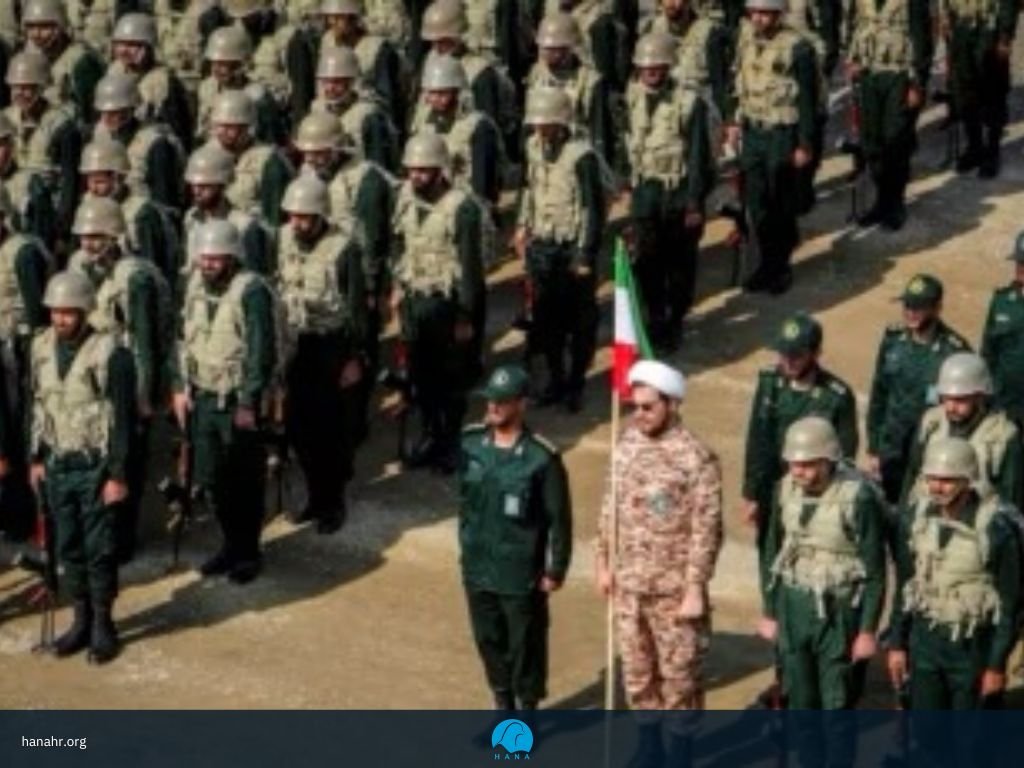
Statement of Hana Human Rights Organization on the Enforcement of Canada’s Inadmissibility Provisions in Relation to Individuals Affiliated with the Islamic Revolutionary Guard Corps and Other Iranian Security Institutions
Hana Human Rights Organization expresses serious concern regarding attempts by individuals affiliated with the Islamic Revolutionary Guard Corps (IRGC), the Ministry of Intelligence, the IRGC Intelligence Organization, and other Iranian security institutions to obtain visas, permanent residence, or Canadian citizenship.
This concern is grounded in extensive and credible evidence documenting the role of these institutions in serious and systematic human rights violations in Iran. Reports issued by United Nations mechanisms, including the Special Rapporteur on Iran and the Independent International Fact-Finding Mission, together with findings of leading human rights organizations, have consistently documented patterns of arbitrary detention, torture, enforced disappearance, unlawful killings, violent suppression of peaceful protests, and persecution of ethnic and religious minorities. In these circumstances, immigration screening is not merely an administrative exercise. It is an essential component of accountability and Canada’s commitment to preventing safe haven for individuals connected to gross human rights violations.
Canada’s legal framework expressly reflects this principle. Section 35(1)(b) of the Immigration and Refugee Protection Act (“IRPA”) renders inadmissible foreign nationals who served as senior officials of a government responsible for terrorism, gross or systematic human rights violations, war crimes, or crimes against humanity. The provision is intentionally broad and is not limited to direct perpetrators. It recognizes that responsibility may also arise through participation in, authority within, or meaningful association with institutions responsible for such conduct.
Consistent with this legislative purpose, the assessment of inadmissibility cannot be reduced to a review of formal titles or nominal rank. Rather, decision-makers must examine the individual’s actual functions, authority, influence, institutional responsibilities, and relationship to state structures implicated in serious human rights abuses. Effective enforcement requires a substantive assessment of the individual’s role within the relevant governmental apparatus.
Canada has formally designated the Islamic Republic of Iran under section 35(1)(b) of the IRPA and has determined that senior officials who served on or after 23 June 2003 may be inadmissible to Canada. In addition, the listing of the IRGC as a terrorist entity under Canadian law reflects Parliament’s recognition of the serious security and human rights concerns associated with that organization.
Accordingly, Hana calls upon Immigration, Refugees and Citizenship Canada (IRCC), the Canada Border Services Agency (CBSA), and all competent authorities to apply the inadmissibility provisions of the IRPA rigorously and consistently when assessing applications submitted by individuals affiliated with the IRGC, the Ministry of Intelligence, the IRGC Intelligence Organization, or other institutions implicated in serious human rights violations. Such assessments should include thorough verification of organizational affiliations, access to state authority, involvement in decision-making structures, and any connection to conduct giving rise to inadmissibility under Canadian law.
As a Canadian-registered human rights organization that has documented human rights violations in Iran for many years, Hana considers the effective enforcement of these provisions to be a matter of legal accountability, public confidence, and the integrity of Canada’s immigration system. Canada’s commitment to human rights requires not only protection for victims, but also meaningful scrutiny of those who directed, enabled, facilitated, or benefited from structures responsible for systematic repression. Robust application of the IRPA’s inadmissibility regime is therefore essential to advancing accountability, combating impunity, and upholding the rule of law.