
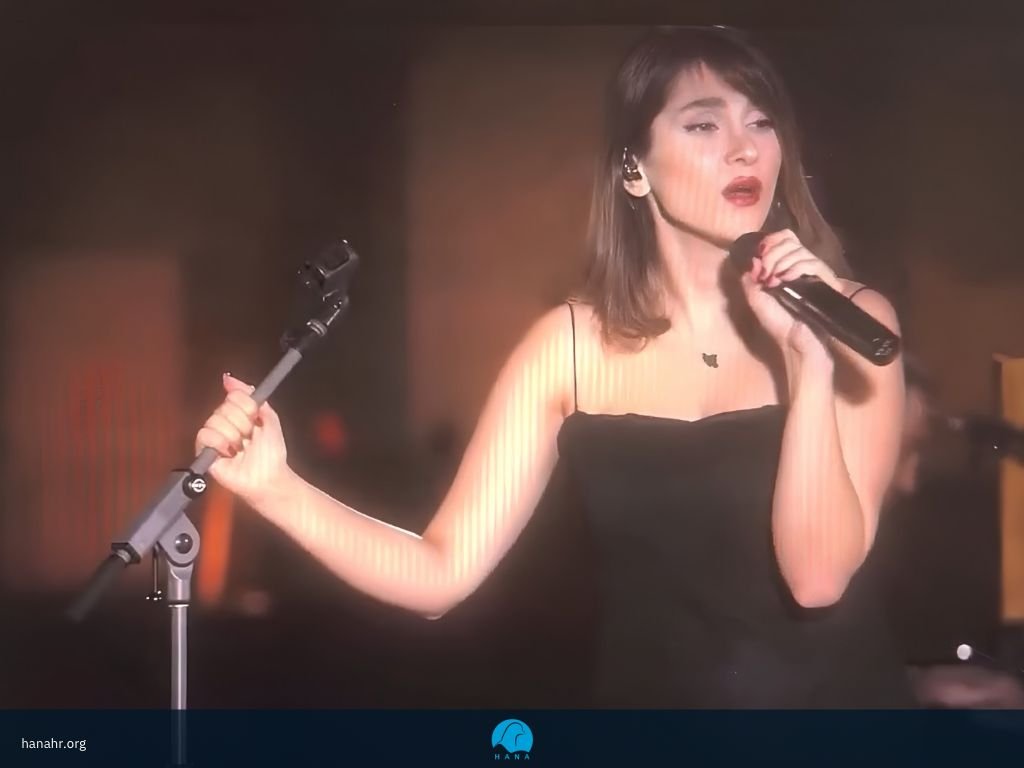
Qom Province Criminal Court sentenced Parastoo Ahmadi, a singer, along with eight musicians and crew members of the “Caravanserai Concert,” to 74 lashes of ta’zir flogging, a two-year ban on artistic activity, and a two-year travel ban.
According to the verdict, the charges against them were framed as “offending public decency through the production and distribution of immoral content on social media.” The case was opened following the release of a video from the Caravanserai Concert in December 2024, in which Parastoo Ahmadi performed without the mandatory hijab. In the wake of the video’s release, criminal cases were filed against those involved in the event and the venue where the concert was held was sealed.
The imposition of flogging as punishment for artistic and cultural activity is a deeply troubling example of the use of criminal law to restrict fundamental freedoms.
Corporal punishment, including flogging, is recognized by international human rights bodies as degrading and incompatible with human dignity, and has no place in the legal systems of most countries today.
At the same time, the ban on artistic work and the travel ban go well beyond ordinary criminal punishment, effectively restricting the right to participate in cultural life, freedom of expression, and professional activity. The use of such penalties against artists reflects the continuation of an approach that, rather than protecting cultural and artistic freedoms, deploys criminal tools to control and suppress peaceful forms of expression.
This verdict was issued at the first instance level and may be appealed under the domestic regulations of the Islamic Republic of Iran.