
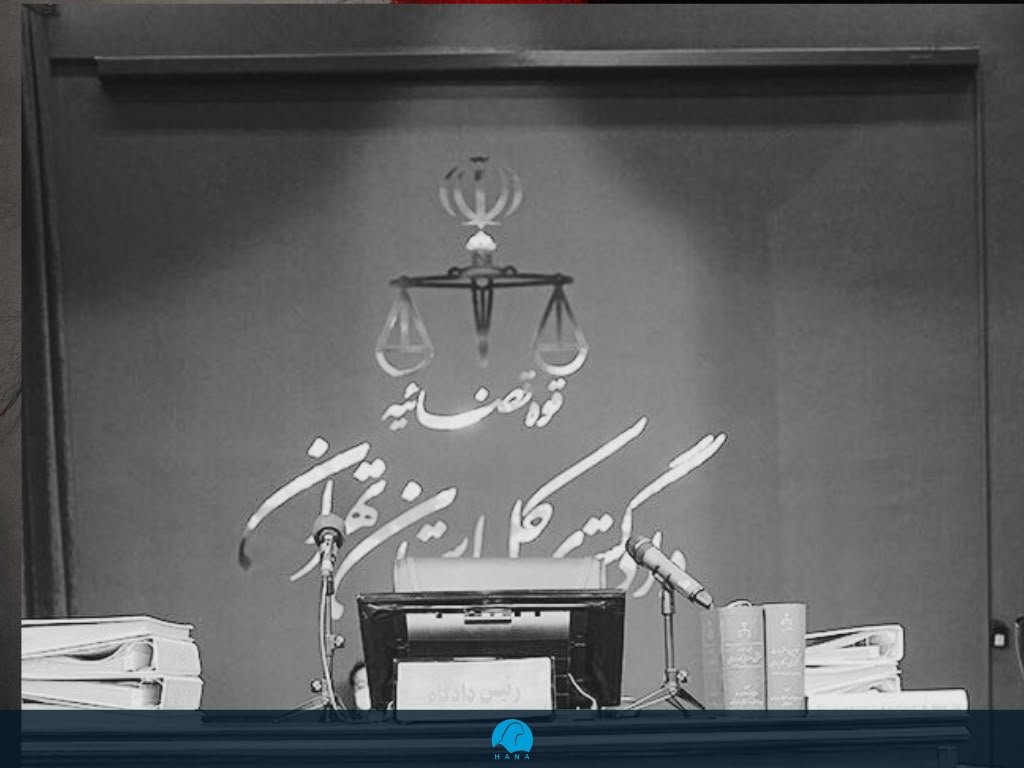
The Tehran Prosecutor’s Office has announced that it has opened criminal cases against a number of people who protested or spoke out in support of those executed in connection with the January 2026 protests. A statement from the judiciary describes these individuals as “direct and indirect supporters of the coup plotters,” without naming who they are, specifying what conduct they are accused of, or citing any legal basis or evidence tying them to a crime. Coming after the bloody crackdown on the protests and the executions that followed, this legal threat is a blatant attempt to widen the net of repression from the protesters themselves to anyone who criticizes their execution.
Under the basic principles governing criminal law, vague, catch-all phrases like “indirect support” or “supporting coup plotters” do not constitute a distinct, clearly defined criminal offense. Article 2 of the Islamic Penal Code, and the fundamental principle that crime and punishment must be defined by law, require that prosecuting anyone rest on specific conduct, conduct that matches the actual text of the law, with both the material and mental elements of the offense proven through a fair trial. Criticizing a death sentence, objecting to an unfair judicial process, or expressing solidarity with detained protesters cannot, absent some separate criminal act, serve as the legal basis for prosecution.
The use of the word “coup” itself has no legal or factual grounding here. A coup refers to an organized attempt by part of the armed forces, or figures embedded within the structure of power, to seize control of the government unlawfully. The judiciary has so far produced no evidence that any military units, commanders, or state officials took part in the January 2026 protests. Absent such evidence, this label functions purely as a security tool to distort the true nature of the protests, cast opponents as enemies, and justify harsher punishments.
This move, and the threats behind it, once again reveal that the judicial authorities of the Islamic Republic function not as an independent body, but as an extension of the security apparatus. Prosecuting people on the basis of political labels with no legal definition shows that these authorities are violating not only fair trial principles and human rights obligations, but the Islamic Republic’s own laws as well. In this system, the law has ceased to function as a check on power or a shield for citizens against the state, and has instead become a selective tool for suppressing critics, all in the name of what the Islamic Republic’s own political vocabulary calls “preserving the system.”