
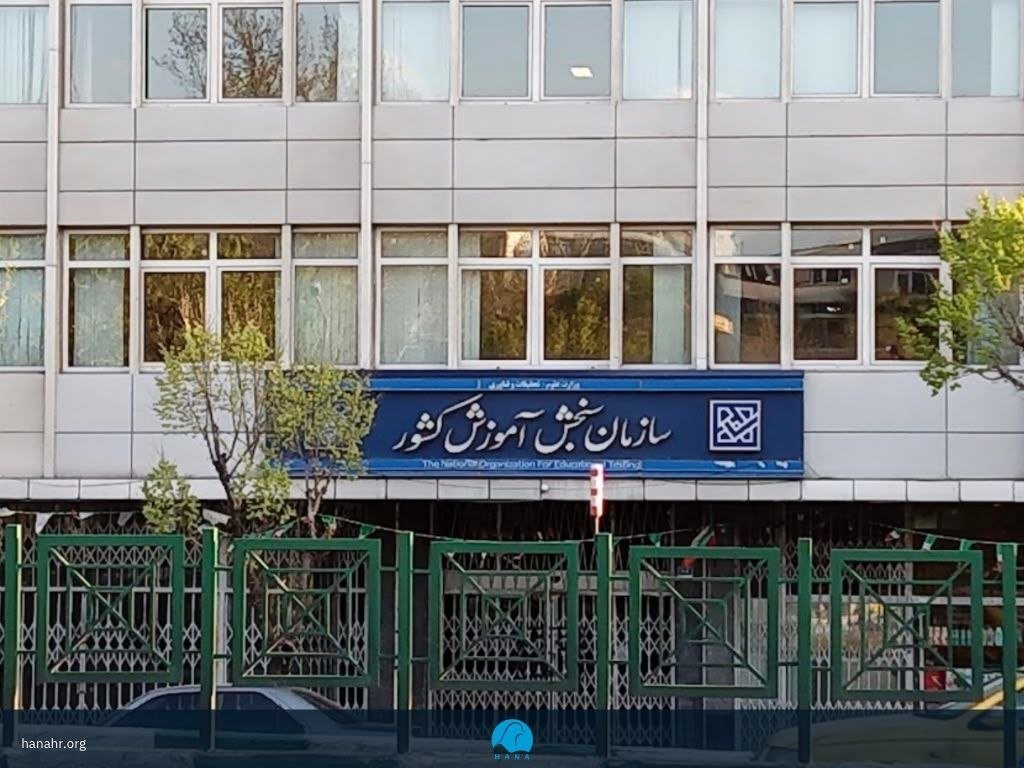
The Islamic Republic’s Minister of Science announcing the allocation of a “war quota” in the 2026 national university entrance exam has once again heightened concerns about the expansion of a discriminatory quota system governing access to higher education. According to the minister’s statements, the government intends to allocate a special quota in the national exam for applicants affected by the recent war, though the implementation details, the body responsible for issuing certificates of eligibility, and the size of the quota have yet to be determined.
HANA Human Rights Organization notes that Iran’s higher education system has for decades been shaped by political, ideological, and non-competitive quota policies. These policies have undermined the principle of equal opportunity and organized citizens’ access to higher education not on the basis of academic merit, but according to non-educational and discriminatory criteria.
In democratic systems, certain compensatory policies may be employed to support marginalized or vulnerable groups, but such policies must be transparent, necessary, proportionate, temporary, and subject to legal oversight. The Islamic Republic, by contrast, has over the years turned educational quotas into a structural tool for distributing privilege, reproducing inequality, and diminishing fair competition in higher education.
The right to equal access to education and the prohibition of discrimination are fundamental principles of human rights, affirmed in Articles 2 and 26 of the Universal Declaration of Human Rights and in Article 13 of the International Covenant on Economic, Social and Cultural Rights. Any policy that, without clear and fair criteria, grants special advantages to one group of applicants while reducing opportunities for others stands in direct conflict with the principles of equality and equitable access to education.
HANA emphasizes that supporting the victims of war is a state obligation, but this support must be provided through compensation, medical services, social support, and welfare programs, not through the expansion of quotas in higher education. Adding a “war quota” to the already extensive array of existing quotas in practice deepens structural discrimination in the Islamic Republic and moves educational opportunity further away from the standard of academic merit.