
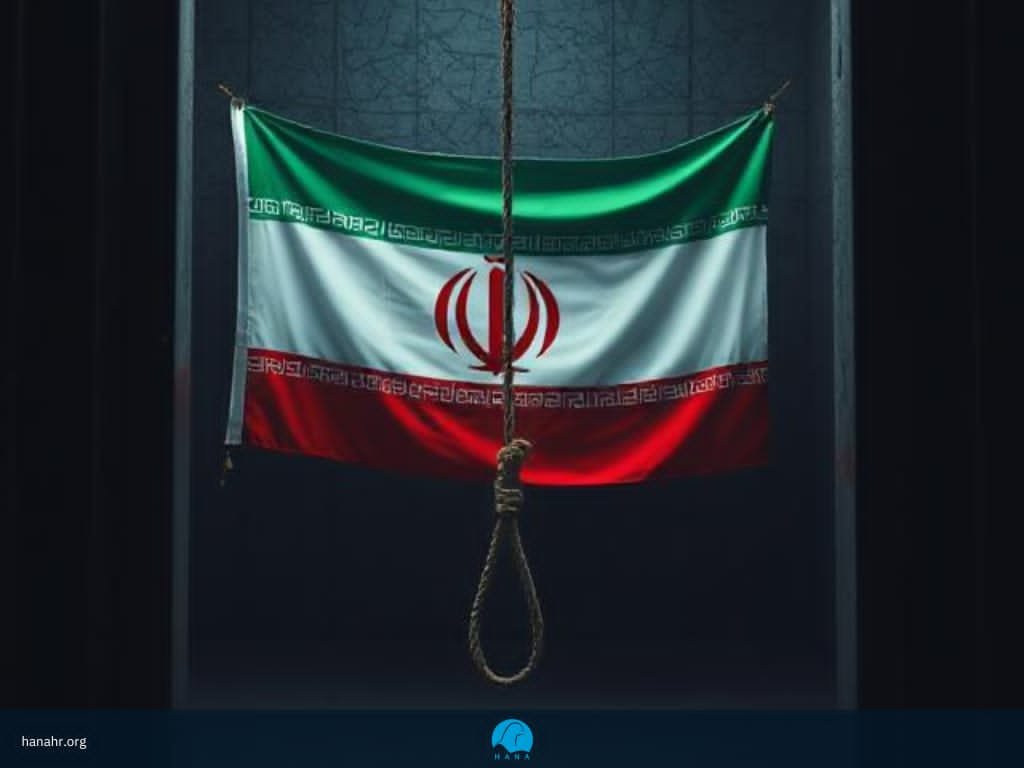
More than 70 people arrested during the January 2026 protests are now facing death sentences at Dastgerd Central Prison in Isfahan, according to published reports. Twenty-six of them are said to have been moved to solitary confinement or a quarantine unit, a transfer that, given the pattern seen in Iranian prisons, raises serious concern that executions could be imminent. The identities of 31 of the condemned have been made public, including three Afghan nationals and at least one person who was under 18 at the time of the alleged offense. The overall number of sentences and the full status of every prisoner cannot yet be independently confirmed.
HANA is voicing serious concern over the possibility that these death sentences could be carried out on a wide, coordinated scale. In cases carrying the death penalty, fair trial guarantees are not a mere formality; they are the fundamental condition for protecting the right to life. Prompt and effective access to independent counsel, clear notification of the charges, freedom from torture and coerced confession, trial before an independent and impartial court, a meaningful right to appeal, and the possibility of having a sentence reviewed are all minimum guarantees, and the absence of even one can turn an execution into an arbitrary taking of life.
Sentencing someone to death for an act allegedly committed while they were under 18 is an absolute violation of Iran’s international obligations, including under the International Covenant on Civil and Political Rights and the Convention on the Rights of the Child. Nor should the death penalty ever rest on confessions extracted under pressure, trials held behind closed doors, vague security charges, or the denial of a meaningful defense.
That death sentences against protesters keep being issued and carried out shows the Iranian government still relies on capital punishment as a tool to spread fear, silence dissent, and shore up its political structure.
This continues even as war, economic strain, and the erosion of political and security institutions deepen the state’s crisis of legitimacy and structural dysfunction. In this climate, the death penalty functions less as an instrument of justice than as a mechanism for manufacturing fear and holding back the spread of public discontent.
At the same time, as governments and international bodies train their attention on the Iran-US war, shipping security, and safeguarding energy flows, there is a growing risk that Iran’s grave human rights violations will simply be forgotten. Energy security and geopolitical calculations cannot substitute for the international community’s obligation to protect the right to life and prevent arbitrary executions. Turning away from these prisoners’ situation only clears the path for their sentences to be carried out in silence, normalizing the political use of the death penalty.
HANA is calling for an immediate halt to all death sentences connected to the protests, full access to independent lawyers for those condemned, the release of accurate information about their situation, and an impartial investigation into allegations of torture, forced confessions, and violations of the right to a fair trial.