
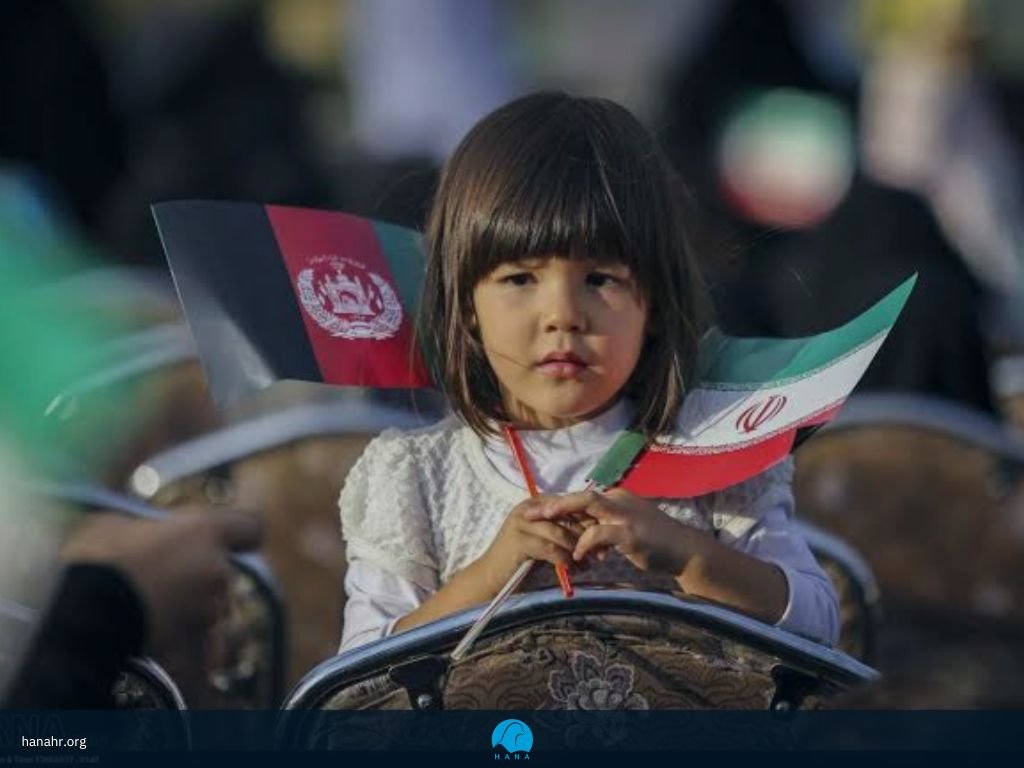
HANA Human Rights Organization expresses grave concern over an escalating pattern of legal exclusion affecting Afghan migrants in Iran. Available information indicates that many Afghan migrants, particularly women and children, face serious obstacles in obtaining legal recognition of their personal status and in accessing effective judicial protection. These challenges have intensified following the recent armed conflict, heightened security measures, disruption of public services, internet shutdowns, and increased administrative and law-enforcement pressure directed at Afghan nationals.
According to information available to HANA, one of the most significant legal challenges facing Afghan migrants in Iran is the absence of an effective, transparent, and accessible system for the registration and recognition of personal-status matters. Marriage, divorce, birth, filiation, custody, maintenance, inheritance, and other civil-status events are frequently left unregistered, inadequately documented, or difficult to establish before administrative and judicial authorities. As a result, many Afghan migrants experience legal invisibility, substantially limiting their ability to obtain judicial recognition of their family relationships, exercise civil rights, access public services, and obtain effective legal remedies.
Personal-status registration constitutes the legal foundation upon which numerous fundamental rights depend. The recognition of family relationships, parental responsibility, inheritance rights, legal identity, nationality-related claims, and access to judicial and administrative remedies all rely upon the existence of legally recognized civil-status records. Consequently, deficiencies in civil registration extend far beyond administrative inconvenience and may undermine the effective enjoyment of a wide range of civil, social, and economic rights.
The legal consequences of these deficiencies have become more severe during and after the recent conflict. Restrictions on movement, intensified security controls, widespread disruption of communication networks, fear of arrest or deportation, and reduced access to administrative and judicial institutions have significantly impaired many migrants’ ability to pursue legal claims or seek official protection.
These conditions have had a particularly severe impact on Afghan women. Women affected by domestic violence, unregistered marriages, informal divorce, abandonment, non-payment of maintenance, denial of custody rights, or other family disputes frequently encounter substantial barriers when attempting to obtain judicial protection or enforce their legal rights. The absence of effective civil registration mechanisms further compounds these risks by making it difficult to establish legally recognized family relationships before competent authorities.
Afghan children remain among the groups most adversely affected. Failure to register births, lack of valid identity documents, uncertainty concerning filiation, and the dependence of children’s legal status upon their parents’ migration or residence status may result in denial of education, healthcare, social protection, legal identity, and effective administrative protection. These circumstances expose children to heightened risks of practical statelessness, child labour, exploitation, early marriage, trafficking, and long-term exclusion from national protection systems.
Under Iranian domestic law, these practices raise serious concerns regarding compliance with fundamental legal guarantees governing foreign nationals. Article 5 of the Iranian Civil Code provides that all persons residing in Iran, whether Iranian or foreign nationals, are subject to Iranian law. Article 7 further recognizes that foreign nationals residing in Iran are, within the limits of applicable treaties, governed by the law of their own state in matters of personal status.
These provisions determine the applicable legal framework governing personal-status matters, but they also necessarily require that foreign nationals have a practical opportunity to establish, register, and prove their civil status before Iranian authorities. Without accessible administrative procedures and effective judicial recognition, the legal guarantees contained in Articles 5 and 7 cannot be fully realized in practice.
The Iranian Constitution likewise guarantees access to justice and equality before the law. Article 34 recognizes the right to seek justice as an inalienable right of every individual, while Article 20 guarantees equal protection under the law. In practice, denying migrants access to courts, refusing or failing to register essential civil-status events, or making judicial protection contingent upon residence status or documentary deficiencies is difficult to reconcile with these constitutional guarantees.
Iran’s international human rights obligations reinforce these domestic protections. As a State Party to the International Covenant on Civil and Political Rights, the International Covenant on Economic, Social and Cultural Rights, and the Convention on the Rights of the Child, Iran is required to guarantee, without discrimination, recognition before the law, access to justice, protection of family life, birth registration, education, healthcare, and special protection for children. These obligations apply to all individuals within Iran’s jurisdiction and cannot be denied solely because of nationality, migration status, or the absence of residence documentation.
The principle of the best interests of the child requires that children’s rights and welfare constitute a primary consideration in all legislative, administrative, judicial, migration-related, and security decisions affecting them. Measures adopted during periods of armed conflict, heightened security, or migration control do not diminish these obligations.
Effective access to justice requires more than formal recognition of legal rights. It requires practical access to courts, lawyers, civil-registration procedures, administrative authorities, enforceable judicial remedies, and protection against intimidation or arbitrary measures that discourage individuals from asserting their legal rights. Administrative barriers, fear of deportation, security pressure, and the inability to register personal-status events may collectively deprive Afghan migrants of meaningful access to justice in practice.
HANA emphasizes that security-based migration policies, particularly during periods of armed conflict or heightened national security measures, cannot displace the State’s obligation to ensure equal protection of the law and effective judicial protection. Afghan migrants, especially women and children, should not be subjected to legal invisibility, discriminatory treatment, fear of deportation, or practical exclusion from judicial and administrative protection because of their nationality, migration status, or lack of documentation.
HANA Human Rights Organization therefore calls upon the authorities of the Islamic Republic of Iran to:
1. Establish transparent, prompt, and accessible procedures for the registration and recognition of marriage, divorce, birth, filiation, custody, maintenance, inheritance, and other personal-status matters concerning Afghan nationals.
2. Ensure that migrants are not denied access to courts or administrative remedies because of residence-status issues, documentary deficiencies, or nationality.
3. Provide effective legal protection for migrant women affected by domestic violence, abandonment, unregistered marriage, informal divorce, denial of maintenance, or custody disputes.
4. Guarantee, without discrimination, migrant children’s rights to birth registration, legal identity, education, healthcare, social protection, and child-protection services.
5. Establish emergency mechanisms during armed conflict, security crises, internet shutdowns, or disruption of public services to ensure migrants’ continued access to courts, legal representation, healthcare providers, and protection institutions.
6. Refrain from arrest, deportation, intimidation, or other security measures that prevent migrants from accessing judicial, administrative, medical, or protection authorities.
7. Review laws, regulations, and administrative practices affecting foreign nationals to ensure compliance with the principles of human dignity, non-discrimination, effective access to justice, protection of the family, and the best interests of the child.
HANA is concerned that the cumulative effect of these administrative, judicial, and security-related barriers risks creating a system of structural legal exclusion in which Afghan migrants, particularly women and children, are unable to obtain effective recognition of their civil status or enjoy equal protection of the law.
The legal barriers documented in this report should be carefully considered when assessing the availability of effective state protection for Afghan nationals residing in or returning from Iran, particularly women, children, and individuals whose legal identity, family relationships, or civil-status rights depend upon access to Iranian administrative and judicial institutions. For these groups, the denial of effective civil registration and judicial protection represents not merely an administrative deficiency but a serious obstacle to the enjoyment of fundamental rights, including legal identity, family life, access to justice, effective remedies, and human dignity.