
At the Hana Human Rights Organization, we are watching the livelihoods of Iranian citizens unravel with mounting alarm. A recent, deeply unsettling report by the Shargh newspaper, aptly titled “Tehran, the City of Empty Pockets,” demands the immediate attention of the international community.
This isn’t just a story about the traditionally marginalized. It is a stark portrait of everyday people teachers, retirees, office workers, and families who, until recently, formed the backbone of the urban middle class. What is unfolding in Tehran today is no longer just an economic downturn; it is the slow, agonizing plunge of millions beneath the baseline of human dignity.
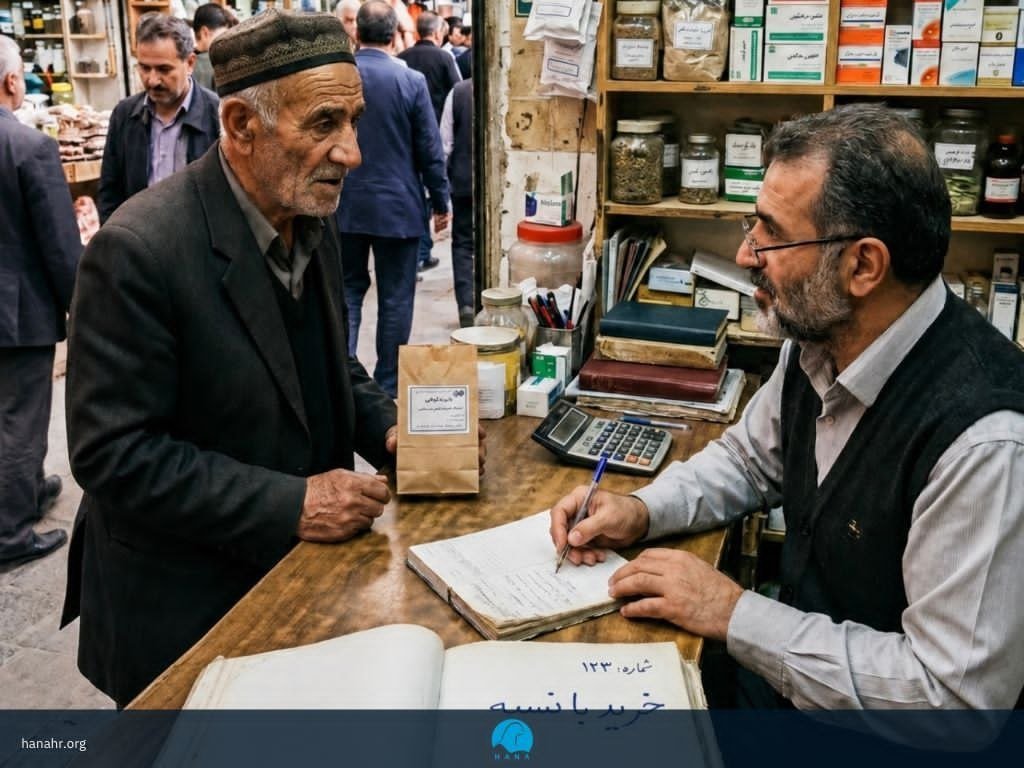
One of the most heartbreaking realities highlighted in the report is the resurgence of the old ledger books. People are increasingly relying on “nesyeh“; buying on credit just to put basic groceries on the table. Shargh shares devastating accounts of families forced to open tabs at local shops simply to survive until the end of the month. Buying basic food on debt is once again a normalized, inescapable part of daily life.
The deprivation goes further.
Families are no longer buying fruit by the kilogram; they are counting out individual apples or oranges, if they can afford them at all. This isn’t just a “shift in consumption patterns.” It is a nutritional crisis. It means parents are watching their children go without the sustenance they need to grow, signaling a quiet but steady decline in the nation’s health.
We must call this what it is: a profound human rights crisis.
When families cannot afford to eat, it is a direct violation of international law. Both the Universal Declaration of Human Rights and the International Covenant on Economic, Social and Cultural Rights which the Islamic Republic of Iran is bound by guarantee every human being the right to adequate food, housing, and a decent standard of living. The normalization of borrowing money just to buy a loaf of bread or a basic prescription is the very definition of a state failing its people.
Beyond the empty wallets, Shargh illustrates the systematic stripping of human dignity. When the daily routine requires begging a local grocer for grace, society has reached a breaking point.
The responsibility for this engineered poverty rests entirely with the Islamic Republic of Iran. Decades of systemic mismanagement, rampant corruption, and the ruthless prioritization of ideological and security agendas over public welfare have pushed millions into desperate, daily survival mode.
Hana condemns this manufactured deprivation in the strongest possible terms. The world must realize that the Islamic Republic’s brutal crackdown on civil rights arbitrary arrests, silenced voices, and surging executions is happening in tandem with the economic strangulation of its people.
We warn the international community: any diplomatic or security agreements forged without rigid human rights guarantees will only abandon the Iranian people to further suffering. History has shown that when global pressure eases on the regime, domestic repression only deepens.
Today, millions of Iranians are fighting a two-front war: one against political tyranny, and another against starvation and indignity. “Tehran, the City of Empty Pockets” isn’t just an economic report. It is a desperate distress call from human beings who are being robbed, day by day, of their fundamental right to simply live.