
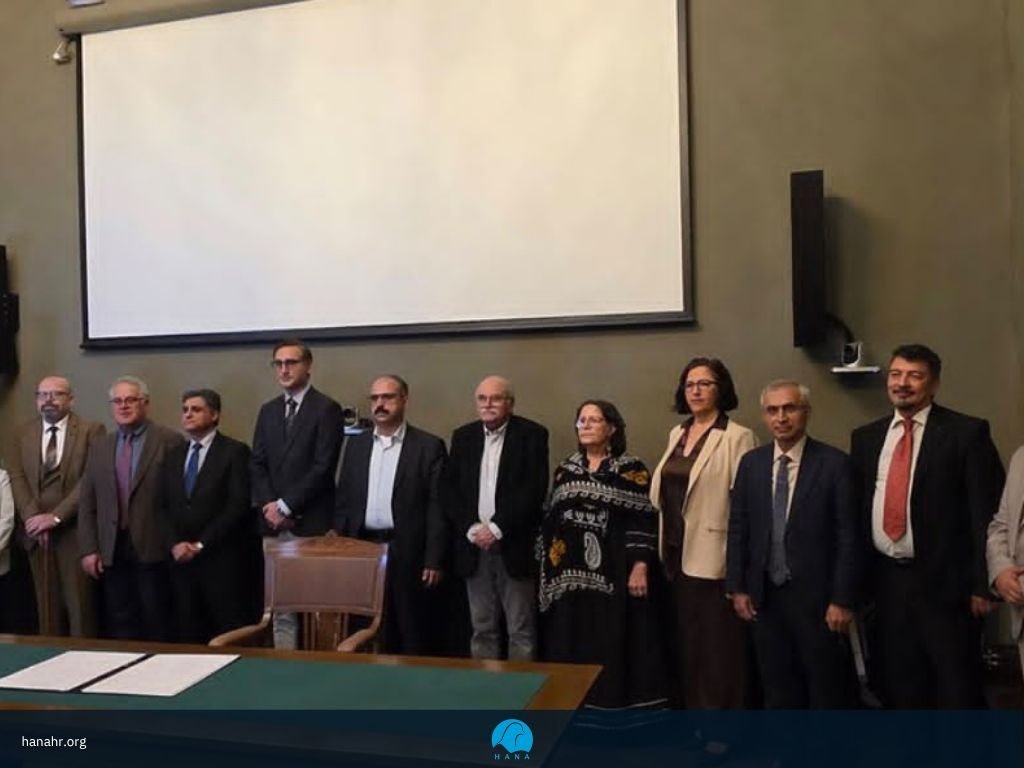
On 26 September 2026, fifteen political parties and organisations with differing political platforms endorsed a joint document entitled Minimum Human Rights Principles for the Transitional Period. Representatives of twelve participating groups formally signed the document in Oslo following several months of consultations facilitated by Iran Human Rights.
According to the organisers, the initiative marks the first time such a broad range of political groups have committed themselves to a common written framework of fundamental human rights standards without entering into a political coalition or agreeing on the future constitutional structure of the state.
The document sets out 13 principles, including abolition of the death penalty, the absolute prohibition of torture, equality and non-discrimination, freedom of expression and peaceful assembly, freedom of political and civil association, fair trial guarantees, free and fair elections, judicial independence, and accountability for serious human rights violations.
From a human rights law perspective, the significance of the agreement lies in affirming that fundamental rights and freedoms are not contingent upon political affiliation, ethnic or religious identity, or participation in a particular political project. Rights including the right to life, freedom from torture, equality before the law and core civil and political freedoms are framed as minimum standards applicable to all persons.
The document further rejects collective punishment and affirms the principle of individual responsibility for human rights violations. It places accountability within the framework of due process, fair trial guarantees and transitional justice, rather than political retaliation or attribution of responsibility on the basis of group affiliation.
The document does not constitute a legally binding international instrument. Its public endorsement nevertheless creates a clear political and human rights commitment and provides a concrete benchmark against which the future conduct of the signatory parties and organisations may be assessed.