
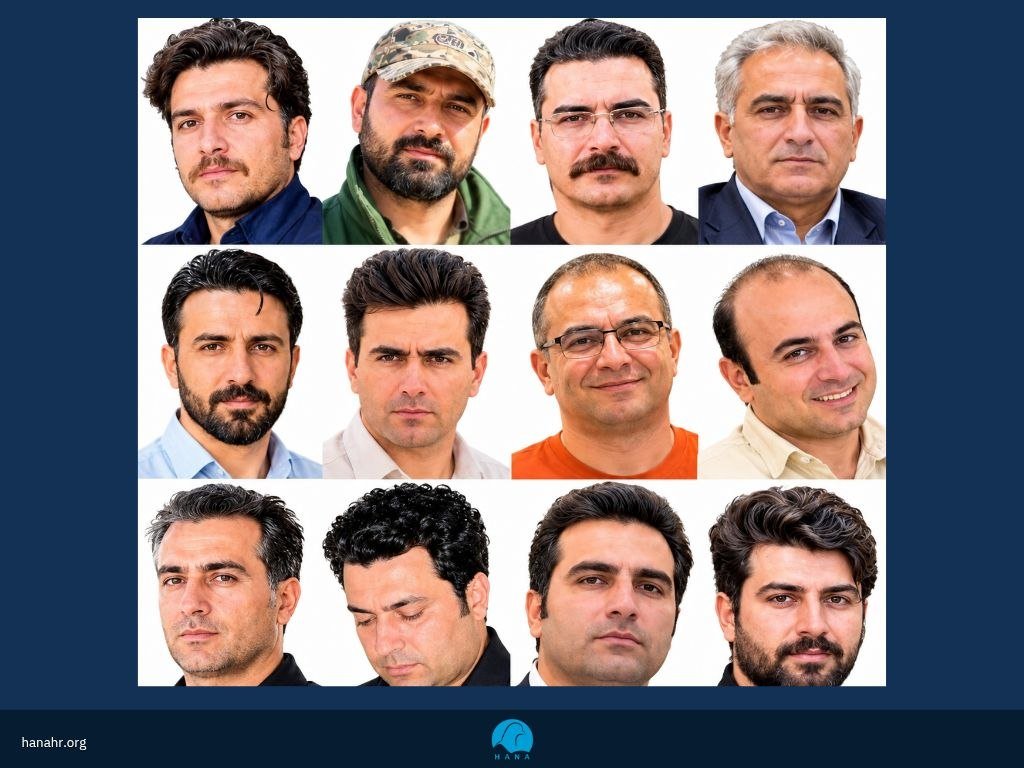
According to confirmed reports, at around 7:24 p.m. on the evening of Saturday, November 14, 2026, a bus carrying employees of the Dehloran NGL 3100 oil and gas project overturned on the Dasht-e Abbas to Mormori road in illam Province. The accident has so far left 12 people dead and 18 injured. According to medical officials, 16 of the injured remain hospitalized. The precise cause of the accident has yet to be determined, and the judicial authorities have taken up its investigation.
The names of the 12 victims, as announced by the Emergency Medical Services Organization, are Rouhollah Alijani, Bahram Tahmasebi, Sajjad Nasrollahi, Lotfollah Moradi, Fariborz Hadizadeh, Amin Mohammadvali, Ahmad Taghizadeh, Mousa Rahimi, Mohammad Rahimi, Saeed Gholami, Ayoub Hasanvand, and Mohammadreza Mohammadi.
The Hana Human Rights Organization stresses that protecting workers’ lives is not merely a moral responsibility but a legal and international obligation. Under Article 4 of the International Labour Organization’s Occupational Safety and Health Convention (No. 155), states are required to adopt effective policies for the prevention of work-related accidents. Furthermore, Article 1(d) of the 2002 Protocol to the Convention recognizes commuting accidents as work-related, and Articles 2 to 4 provide for mechanisms to record and report such accidents. Iran ratified both instruments in 2023.
Under domestic law, Article 60 of the Social Security Law classifies accidents occurring on the ordinary route between an insured person’s home and workplace as work-related accidents. Articles 85, 91, and 95 of the Labor Code likewise set out binding foundations for technical safety and employer liability. From this standpoint, an examination of the bus’s technical condition, the safety of the route, the driver’s circumstances, the obligations of the transport contractor, and the oversight exercised by the responsible bodies is a legal necessity. Where violations and a causal link are established, the civil or criminal liability of those concerned must also be examined.
This tragedy has occurred in a part of Kurdistan where vast oil and gas resources raise serious questions about the local population’s share of development, safe infrastructure, and equity in the distribution of economic benefits. A region’s natural wealth cannot be placed in the service of a centralized national economy while the safety of its roads, the lives of its workers, and the social rights of its people are pushed to the margins. Exploiting natural resources without commensurate guarantees of rights and protection reproduces an unequal order in which economic benefits flow to the center while the human costs remain with the people of the region.
Hana calls for an independent and transparent investigation; the determination of any liability on the part of employers and government bodies; guarantees of insurance entitlements and compensation for the victims’ families; and immediate measures to ensure the safety of workers’ transport services.
Hana expresses its profound sorrow and extends its sincere condolences to the families of the deceased and to the grieving communities of Abdanan, Mormori, and Dehloran, and wishes the injured a swift recovery. The lives of Kurdistan’s workers must not be the price of exploiting the wealth of a land whose people still struggle to claim the most basic rights and safety standards.