
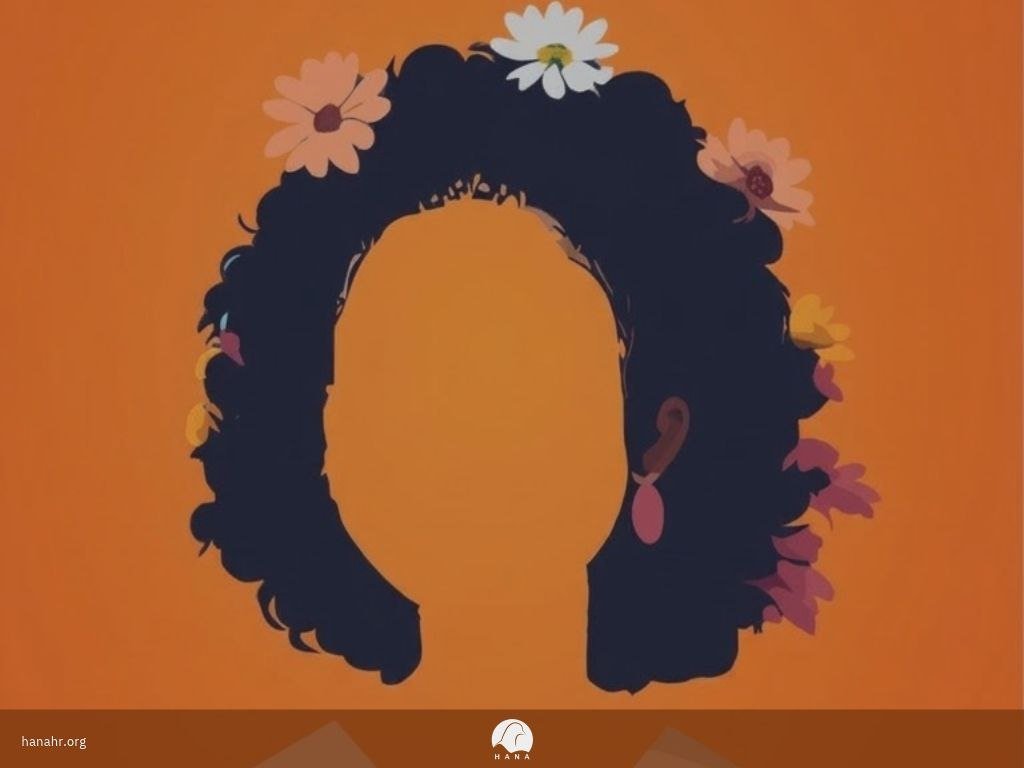
A Legal and Social Reading of the Honor Order, the Negation of Women’s Individuality, and Violence against Women in Iran
In patriarchal culture, honor (namus) is not merely a moral or familial concept. It is a form of normative power which, without being written into law, imposes obligations on women, defines the limits of their conduct, and treats any departure from those limits as grounds for censure, ostracism, and at times punishment. In this sense, namus is not an individual virtue but a mechanism for the exercise of power: an unwritten order that grants men authority to supervise women’s lives and expects obedience from women. The strength of this order lies precisely in the fact that it does not need a court, the police, or the law to be enforced. The family, relatives, and social judgment can all serve as its enforcers.
Under such an order, a woman is regarded as the bearer of other people’s reputation and dignity before she is recognized as an autonomous person with a will of her own. Her body, her dress, her emotional relationships, her marriage, and even her decision to end a relationship no longer belong to her alone. It is as though the men of the family, from father and brother to husband, hold an unwritten right to oversee and decide on her life. In this way, namus denies a woman’s individuality and reduces her from a rights-holding person to an object of other people’s decisions and judgments. She is valued not for her character, will, and choices, but for the degree to which her conduct conforms to male expectations.
This domination is reproduced in everyday language as well. Terms such as “old maid” and “widow,” or the contemptuous attitude toward the “divorced woman,” do not merely describe marital status; in their pejorative usage, they are instruments for classifying and ranking women socially. A woman who has never married, a woman who has lost her husband, and a woman who has left a marriage each face a different kind of judgment. Behind this vocabulary lies the assumption that a woman’s social worth must be defined in relation to a man. Even a woman’s independence may be seen not as a sign of personal autonomy but as a departure from the desired family order.
The honor order does not end with marriage; it may in fact take on a more binding form within the marital relationship. In this structure, sexual relations, instead of resting on the free consent and will of two people, can become a one-sided obligation for the woman. The concept of tamkin (a wife’s submission to her husband) in Iranian family law gives this inequality a legal dimension. Where a wife’s refusal to perform marital duties, under conditions set out in law, can result in the loss of her right to spousal maintenance (nafaqeh), her autonomy over her own body is set against an unequal legal relationship. The issue here is not only sexual relations; it is the extent to which a woman has the right to make independent decisions in the most private aspects of her life. The absence of an independent criminalization of marital rape is one of the clearest shortcomings in the legal protection of that autonomy.
The same hierarchy appears in divorce. In an honor-based system, a woman’s decision to end her marriage may be viewed not as the exercise of an individual right but as defiance of a man’s authority or damage to the family’s reputation. Even a woman’s own family may, instead of supporting her decision, urge her to remain in the marriage and endure a harmful relationship, invoking reputation, children, the judgment of relatives, and the social stigma of divorce. This social pressure is compounded by the unequal structure of divorce law in Iran, under which a woman, unlike a man, must rely on specific legal grounds to seek a unilateral divorce. Leaving a relationship she no longer wishes to continue can thus meet both a legal obstacle and social punishment.
The most brutal expression of this system is honor-based violence, in which a claim of authority over a woman’s life becomes a claim of authority over her very existence. In so-called honor killings, the perpetrator sees himself not merely as a member of the family but as the one entitled to judge and punish the woman. A woman may be targeted for choosing a spouse, seeking a divorce, entering into a romantic relationship, or even because of suspicion or rumor about her conduct. In this logic, the family’s alleged reputation takes precedence over a woman’s life to such a degree that a man claims the right to pronounce and carry out a death sentence. From this perspective, honor killing must be understood as the most extreme form of domination over a woman’s individuality and her right to life, not as an excusable reaction to the violation of a family value.
Yet the problem in Iran is not only that such norms exist in parts of society. More fundamental is the relationship between this unwritten order and the country’s legal system. Article 1105 of the Civil Code designates the position of head of the family as the husband’s prerogative, and Article 1108 provides for the loss of maintenance where a wife refuses, without legitimate excuse, to fulfill her marital duties. In criminal law, Article 301 of the Islamic Penal Code exempts a father and paternal grandfather from retaliation (qisas) for the murder of a child, although their criminal liability is not entirely extinguished. Article 630 of the Islamic Penal Code also provides an exceptional ruling for a husband who discovers his wife in the act of adultery, under specific and limited circumstances. These provisions cannot be read as a general license for honor-based violence. They do show, however, that in certain areas the law not only fails to guarantee equality of power among family members but also recognizes asymmetrical legal privileges.
The fundamental contradiction is that Iran’s legal system intervenes in women’s dress, even in their most minor individual choices, and prescribes penalties for violations of dress codes, yet it has failed to provide comprehensive and effective legal protection against domestic and sexual violence. Assault and murder are, admittedly, prosecutable under general provisions, and the law in some circumstances allows for separation or the pursuit of judicial protection. Nevertheless, these scattered protections are no substitute for an effective system for preventing violence, providing immediate protection to victims, and guaranteeing their access to justice. In practice, pressure to preserve the family, or the treatment of violence as a private dispute, can leave a woman defenseless against threats, humiliation, coercion, and abuse.
It is here that the boundary between privacy and immunity from legal accountability must be clarified. The privacy of the family exists to protect the freedom, dignity, and autonomy of its members, not to conceal violence against them. The home cannot be a place where fundamental human rights stop at the threshold. When a woman is subjected to assault, threats, humiliation, or sexual coercion within the family, the matter is no longer merely a family dispute; it is a violation of individual rights, and it engages the state’s responsibility to prevent such abuse, protect victims, and ensure effective investigation and redress.
The honor order does not, of course, operate uniformly in all families, and not all men carry or defend it. Many women have resisted these relations, and members of the family, including women, sometimes play a part in reproducing honor-based pressure. Even so, the core structure of this order rests on an inequality of power and the primacy of male authority over women’s autonomy. Its persistence is not simply a product of traditional beliefs; it results from the combination of social pressure, economic dependence, unequal family relations, and inadequate legal protection.
From a human rights perspective, confronting honor-based violence cannot be confined to punishing the perpetrators of killings. It requires challenging the very order that, before any violence occurs, restricts a woman’s freedom of choice, suppresses her autonomy, and defines her disobedience as deserving of punishment. As long as a woman is regarded not as an autonomous person but as the bearer of other people’s honor, the risk of honor-based violence, in its various forms, will remain.
The fundamental point is this: a woman is nobody’s namus. She is a person with rights, a will, dignity, and a life of her own. No family tie, no social tradition, and no claim about honor can give another person ownership over her body, her freedom, or her life. Ending the domination of namus begins with this recognition: a shift from viewing women as objects of others’ authority to recognizing them as independent holders of their own rights.