
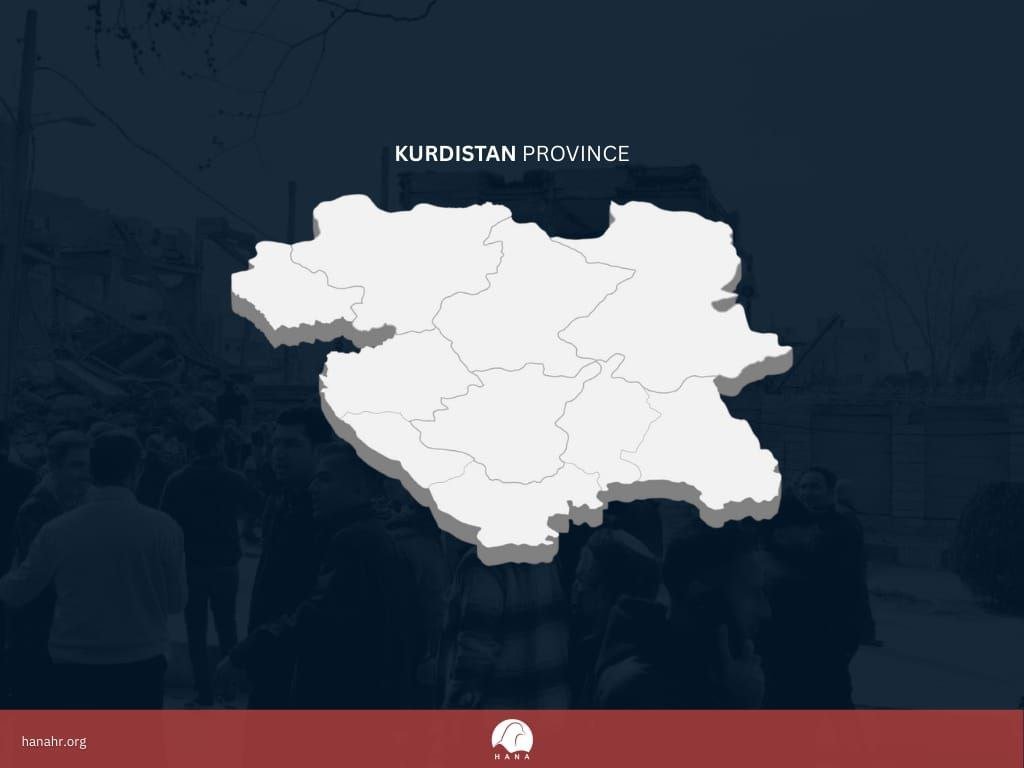
Special report on Saqqez
The Hana Human Rights Organization, continuing its documentation of field conditions in Kurdish cities amid escalating wartime conditions and severe communication restrictions, has released this special report on the current situation in the city of Saqqez, based on information collected from local sources.
According to field information, the general situation in Saqqez over recent days has been marked by simultaneous intensification of economic pressures, expansion of security controls, and serious disruption to the normal life of citizens. Local sources report that a significant portion of the city’s economic activities has halted, and a broad recession dominates the market, leaving many businesses practically inactive.
In the security domain, control over entry and exit routes to the city has noticeably increased. Checkpoints are established at all four main exits of Saqqez, and security measures are also in place along the Salehabad road toward Bukan. Furthermore, from the police road area up to approximately 100 meters inside the city, the presence of controlling forces continues. On the road toward Baneh, checkpoints are temporarily set up and later removed after a short period.
Field assessments by Hana indicate that a significant number of civilians have been injured, especially in the Baharestan neighborhood and areas near security forces. Due to limited access to medical information, the exact number of casualties remains unclear.
Socially, the city’s psychological atmosphere is characterized by ongoing expectation and anxiety. Local sources note that during attacks, some residents perceive these events as exerting effective pressure on government structures and respond with cautious hope for the future. Between attacks, with relative calm returning, feelings of despair and tension re-emerge, exacerbated by internet shutdowns and lack of access to independent information. Nonetheless, a significant portion of the population remains hopeful about the weakening position of the government as a result of current developments.
In terms of livelihoods, the prices of essential goods in Saqqez have sharply increased. The price of live chicken has reached approximately 280,000 tomans per kilogram, rice has risen to 3 million tomans, and bone-in meat is reported at 1,500,000 tomans. Local sources emphasize that in a short period, the prices of most essential goods have roughly doubled.
Simultaneously, disruptions in cash flow and banking services have placed additional pressure on residents. Reports indicate that some branches of Bank Melli and Bank Sepah have been inaccessible during the day, preventing citizens from withdrawing cash or effectively using bank cards for daily purchases.
Fuel supply is also problematic. While gasoline is available in the city, it is mostly sold at free-market rates, and official quotas do not meet general demand. According to local sources, fuel is more accessible in the early morning, but by approximately 1:00 PM, many stations run out of stock.
Regarding military and security matters, following damage and destruction to some military-affiliated bases in Saqqez, the deployment patterns of government forces have changed. Reports indicate that some forces have left their previous positions and are now stationed in government buildings. There is also increased presence of forces in vehicles and mobile patrols across the city.
The Hana Human Rights Organization, while issuing a warning about the continuation of the crisis in Saqqez, calls for the immediate attention of human rights and humanitarian organizations to the situation of civilians, ensuring their free access to essential services, restoring access to financial and medical facilities, and reducing security pressures in the city. Hana also expresses serious concern over the deployment of armed forces in administrative buildings and civilian spaces, which directly endangers the lives of residents, and considers this practice in violation of the principles of civilian protection.
Hana Human Rights Organization
16 March 2026