
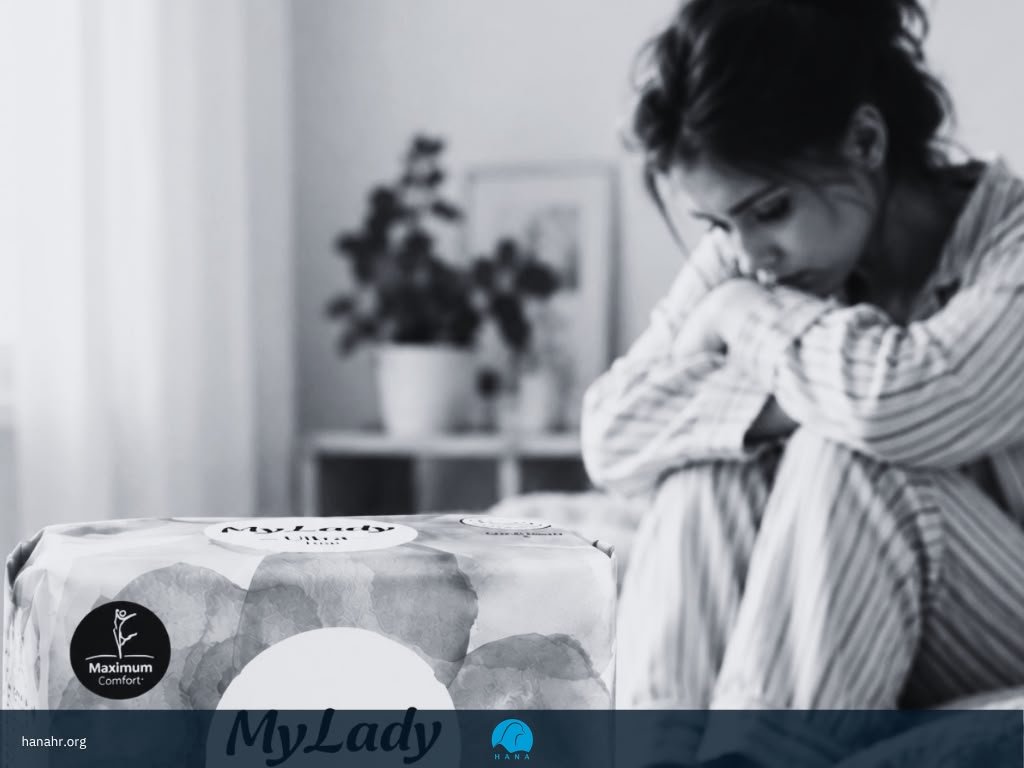
A sharp rise in the price of sanitary pads and other menstrual products, at a time when much of Iranian society is grappling with falling purchasing power and relentlessly rising living costs, has made one of the most basic health needs of women and girls harder to meet. Reports from Iran’s markets show that prices for a number of popular brands have multiplied within a short span, and even ordinary domestic products have become a significant, recurring expense for low income families.
Behind this price increase lies something far more human than the shifting cost of a consumer good. A woman or girl who menstruates cannot simply remove this need from her household budget. Monthly bleeding does not stop because a family lacks the money. Under these conditions, diminished purchasing power expresses itself in choices that are simple yet painful: using fewer pads, changing them less often, giving up a better suited brand, or making do with whatever can be found around the house.
Field reports published inside Iran, even before this latest wave of price increases, had already shown that for some women, this has long been a daily reality. Social workers in deprived areas of Khuzestan, Hormozgan, Golestan, Khorasan, and other parts of the country have described women who, out of poverty, use scraps of old clothing, reusable rags, newspaper, or similar materials in place of sanitary pads. Some women lack regular access even to soap, cleaning supplies, adequate underwear, or clean water for washing. In some families, a woman or girl can only use a product actually made for menstruation when one is provided by a charitable organization.
These accounts reveal the real meaning of “period poverty.” Period poverty is not simply the inability to buy sanitary pads. Sometimes a woman has cloth but not enough water to wash it. Sometimes water is available but there is no private, safe place to change or dry it. Sometimes a teenage girl chooses to stay home from school during her period out of fear of leaking or for lack of adequate supplies. The social stigma surrounding menstruation, moreover, keeps many women from even speaking about this deprivation, so that a family asking for help with food or medicine will keep hidden a daughter’s or mother’s need for sanitary pads.
This situation has now been compounded by rising costs for menstrual products. For a well off family, pricier sanitary pads may amount to little more than a slightly larger monthly expense, but for a woman with no independent income, or a family already struggling to cover food, housing, and medicine, the same increase can tip into genuine deprivation. Under such conditions, any choice among different products disappears, and even having enough of the most basic product comes to depend on financial means.
The significance of this issue becomes clearer once menstruation is no longer treated as merely a matter of personal hygiene. The World Health Organization insists on precisely this shift in perspective, recognizing menstrual health as part of women’s and girls’ physical, psychological, and social wellbeing. Under this approach, menstrual health is achieved only when a person can access accurate information, obtain a suitable and affordable product, reach water and sanitation facilities along with a safe place to change and dispose of or wash products, receive medical care in the event of pain or disorder, and is not forced out of education, work, or social life on account of menstruation.
The question, then, is not simply whether sanitary pads sit on a pharmacy or store shelf. There is a fundamental difference between a product’s “availability” and genuine “access.” A product may well sit on a store shelf, yet remain effectively out of reach for a woman who cannot afford the quantity she needs. This distinction is itself one of the key principles underlying the right to health in international law.
Contrary to a narrower reading, the right to health is not simply the right to visit a hospital or receive treatment once illness has struck. States must create conditions in which people can also access the essential means of preserving their health in the first place. Under the international interpretation of this right, access has several dimensions: health facilities and goods must exist, be available without discrimination, be economically affordable, be suited to women’s needs and living conditions, and be of adequate quality. Affordability carries particular weight here. Health systems and public policy must not operate in a way that burdens poor families, in meeting health related needs, far more heavily than well off ones.
This standard carries even greater weight when it comes to women’s health, since many of women’s health needs arise directly from their biology. Menstruation is not a matter of personal choice, and the cost of managing it is not optional either. Once access to a recurring, unavoidable bodily need becomes dependent on a woman’s income, economic inequality translates directly into inequality in health.
The World Health Organization has explicitly called on states to integrate menstrual health into their health, education, and public service policies. On this view, providing a suitable product is only one part of the picture. Clean water, private and usable sanitation facilities, a means of disposing of products, proper education before a girl’s first period, access to medical care, and efforts to counter shame and false beliefs are all part of the public responsibility toward menstrual health. Low income women, women with disabilities, women in prison, homeless women, adolescent girls, and people living in deprived areas or crisis conditions are among the groups requiring greater support.
This approach has by now found clear footing within the United Nations human rights system as well. The Human Rights Council has linked menstrual health and management to the right to health, human dignity, gender equality, education, water and sanitation, and social participation, and has called on states to ensure that women and girls have access to menstrual products that are suitable, safe, and affordable. These standards go so far as to emphasize special support for those in economically vulnerable circumstances and the use of supportive policies, including the free or subsidized distribution of products.
As a state party to the International Covenant on Economic, Social and Cultural Rights, Iran too is bound to respect, protect, and take effective steps toward realizing the right to the highest attainable standard of health. This obligation is not limited to treating illness once it occurs. Non discriminatory and financially affordable access to the basic goods, services, and conditions related to health forms part of the substance of this right. The state is likewise obligated, in allocating resources and designing public policy, to pay particular attention to the situation of groups whose poverty and marginalization leave them more exposed to being denied health.
The Hana Organization for Human Rights condemns the Islamic Republic’s indifference to the spread of period poverty and the absence of any effective public policy guaranteeing low income women access to essential menstrual products. At a time when rising living costs and soaring prices for hygiene products narrow the choices available to poor families with each passing day, leaving this thoroughly biological need of women to their purchasing power is unacceptable. The situation is all the more troubling given that field reports, dating back years, have already documented women who were unable to obtain sanitary pads on a regular basis even before this latest round of price increases.
Hana is likewise concerned about the absence of official data and national research on the scale of period poverty in Iran. That this issue is overlooked in public policy does not mean it has vanished from women’s lives. On the contrary, the silence surrounding menstruation has meant that a deprivation repeated every month in countless homes goes largely unseen and unmeasured. The state’s responsibility is not confined to responding to illness after it strikes. Preventing the conditions under which poverty deprives women and girls of basic health related needs is likewise part of its responsibility under the right to health.
Hana calls on the Islamic Republic to recognize access to menstrual products as part of women’s health policy and to make free or subsidized products available to low income women and girls. Such a policy should include the continuous provision of menstrual products in schools in deprived areas, prisons, detention centers, care institutions, and other public facilities, the provision of clean water and adequate, private sanitation facilities, sound scientific education on menstrual health, the monitoring of product prices and quality, and the publication of official data on the extent to which women are deprived of these resources.
Menstruation is not an illness, and poverty should not be allowed to turn it into a source of sickness, anxiety, or deprivation. No woman or girl should, simply because she has less money, be forced to manage a natural bodily need with materials she would not otherwise choose, to cut back on an essential product, or to withdraw from school, work, and ordinary life. The ability to get through one’s period in health, safety, and dignity is part of women’s right to health, and enjoying that right must not depend on their income.