
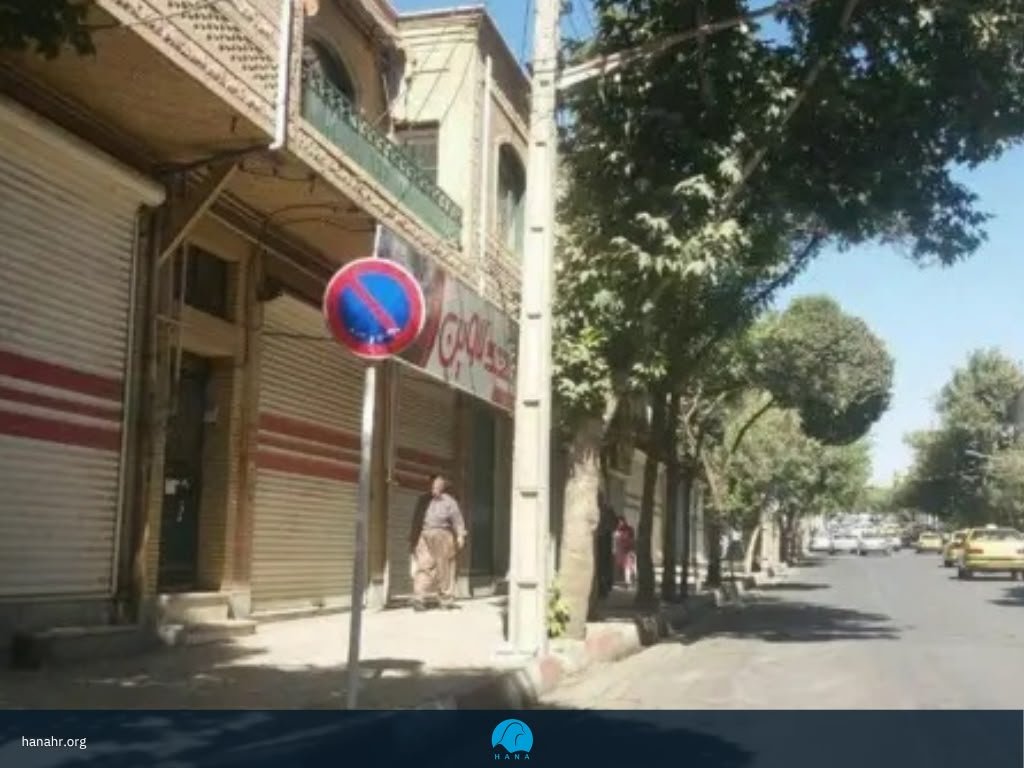
According to information received by the Hana Organization for Human Rights, in the run up to the general strike planned for September 16 in Kurdistan, the Public Places Supervision Department of Iran’s Law Enforcement Command and security institutions in a number of cities in Kurdistan have visited business establishments and pressured shopkeepers and store owners to refrain from joining the strike.
According to Hana’s sources, in some instances, business owners have been asked to sign written undertakings committing to keep their establishments open on September 16. A number of shopkeepers who have refused to sign these undertakings have faced threats and pressure.
These actions lack a clear legal basis even under the Islamic Republic’s own domestic laws. The Guild System Law permits the closure of a business establishment to be pursued only in specific, defined cases and through legal procedure, and the one day closure of a place of business does not, in itself, create any authorization for the Amaken Bureau or law enforcement institutions to threaten business owners or impose written undertakings on them.
Article 9 of the Islamic Republic’s Constitution likewise states explicitly that no authority has the right to deprive citizens of their legitimate freedoms. The use of police and security power to compel shopkeepers to refrain from participating in a peaceful protest constitutes the use of governmental authority to restrict citizens’ freedoms.
Under international law as well, the right to strike is recognized in Article 8 of the International Covenant on Economic, Social and Cultural Rights, and freedom of expression, assembly, and association are likewise regarded as fundamental human rights.
The Hana Organization for Human Rights regards the exertion of threats and pressure against shopkeepers in the cities of Kurdistan, aimed at preventing their participation in a peaceful strike, as a violation of citizens’ fundamental freedoms and an unlawful use of administrative, law enforcement, and security instruments to suppress an act of civic action.