
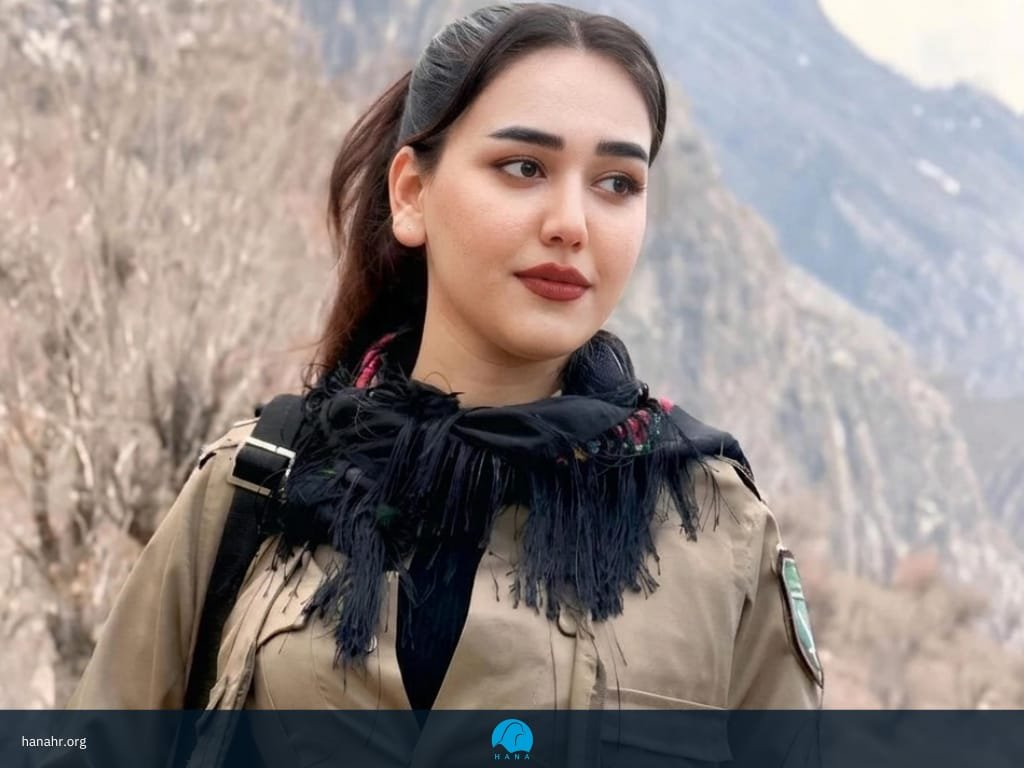
HANA Human Rights Organization is investigating the death of Ghazal Mawlan Chaparabad , an Iranian Kurdish female peshmerga affiliated with Komala Toilers of Kurdistan, who died after being wounded in a drone strike on 14 April 2026 in the Surdash area near Sulaymaniyah. Rudaw reported that Ghazal Mawlan Chaparabad later died from the injuries sustained in that attack and identified her as a native of Mahabad in western Iran.
According to testimony and incident information received by HANA, Mawlan was critically injured and first transferred to Shorsh Hospital, where she reportedly received only initial emergency care. She then required urgent higher-level treatment, including advanced imaging, specialist trauma care, and intensive care support. HANA has received serious allegations that the necessary treatment was not provided and that subsequent efforts to secure admission or transfer to other hospitals were delayed or refused. The central allegation under review is that, once the case was understood to be connected to a drone strike and to carry political sensitivity, non-medical considerations may have affected decisions concerning her admission and treatment.
Witness accounts further indicate that Mawlan’s condition worsened during these delays. After repeated attempts to locate a receiving facility, and further waiting in an ambulance while another hospital was sought, she was eventually transferred to Faruk Medical City, where she reportedly entered cardiac arrest shortly after arrival. Despite resuscitation efforts, she died soon thereafter. HANA is continuing to verify the full medical timeline, the reasons given for non-admission, and whether the refusals reflected genuine lack of capacity or unlawful interference with emergency medical care.
If confirmed, these facts raise serious concerns under international humanitarian law. Common Article 3 of the Geneva Conventions requires that wounded and sick persons be collected and cared for, without adverse distinction.  Customary international humanitarian law Rule 110 further requires that the wounded and sick receive, to the fullest extent practicable and with the least possible delay, the medical care and attention required by their condition, and that any distinction in treatment be based only on medical grounds.  These protections are directly relevant where urgent treatment is allegedly delayed or denied for reasons unrelated to clinical need.
The case also engages international human rights law. Article 6 of the ICCPR protects the inherent right to life and requires legal protection against arbitrary deprivation of life.  Article 12 of the ICESCR, as interpreted by the Committee on Economic, Social and Cultural Rights in General Comment No. 14, requires non-discriminatory access to health care and prohibits discrimination in access to medical services on grounds including political or other opinion.  In a case of this kind, the decisive question is whether treatment decisions were governed by genuine medical capacity and clinical judgment, or whether political or security considerations displaced obligations of impartial emergency care.
If HANA’s investigation confirms that Mawlan was denied admission, urgent treatment, or timely referral because of her political identity, affiliation, or the political character of the incident, such conduct may engage the legal responsibility of the hospitals concerned and of any medical or administrative personnel whose acts or omissions contributed to the fatal outcome. HANA does not treat liability as established at this stage. However, where a critically wounded person is refused or delayed life-saving care for non-medical reasons, the matter may raise serious issues of unlawful discrimination, breach of the protections owed to the wounded and sick, and preventable loss of life under applicable humanitarian and human rights standards. 
HANA strongly condemns both the drone strike that caused Mawlan’s injuries and any unlawful denial or delay of life-saving medical care thereafter. HANA is currently conducting a detailed examination of the reported non-admission and delayed care in Sulaymaniyah, including the possible legal responsibility of the hospitals involved and any members of the medical or administrative staff whose conduct may have contributed to the fatal outcome. HANA also respectfully calls on the relevant authorities of the Kurdistan Regional Government to provide prompt clarification regarding the circumstances of Mawlan’s transfer, the reported refusals of admission, and any instructions, restrictions, or institutional barriers that may have affected access to emergency medical care in this case. Such clarification is necessary to ensure transparency, establish the facts, and preserve confidence in the impartial provision of medical treatment in situations of grave political and security sensitivity