
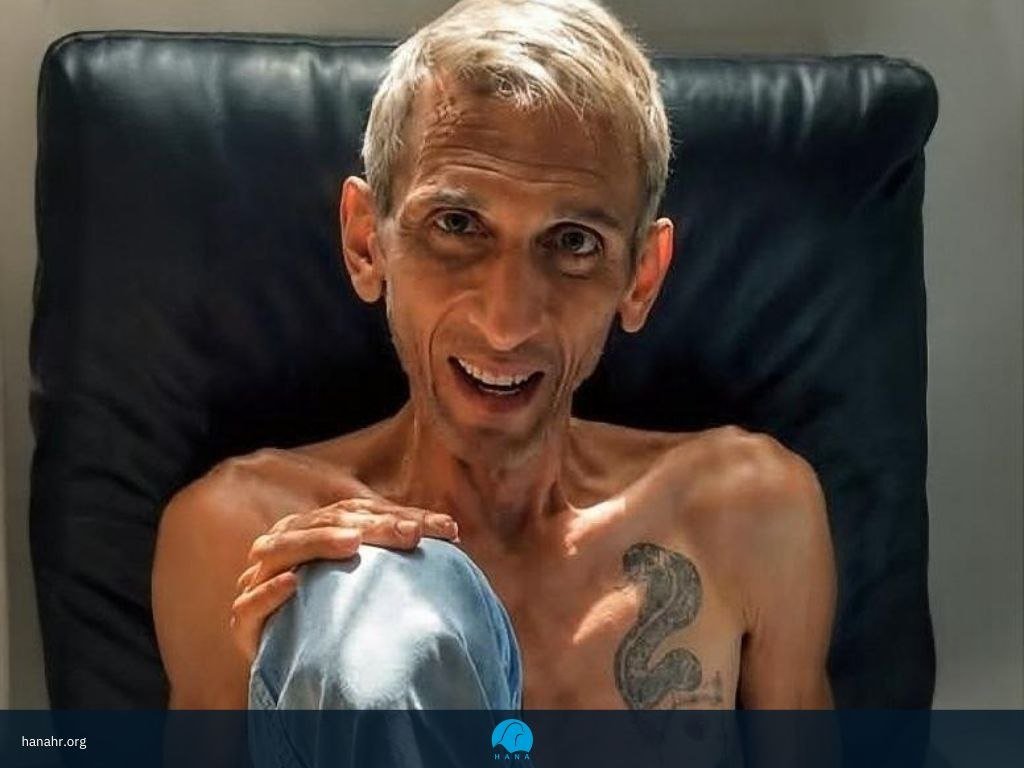
Report by HANA Human Rights Organization on the Deteriorating Physical Condition of Iranian Asylum Seeker Hatem Yekta in Papua New Guinea; Urgent Call for Action
The HANA Human Rights Organization expresses deep concern regarding the physical and legal situation of Hatem Yekta, an Iranian asylum seeker who has remained in a prolonged state of limbo in Papua New Guinea for more than thirteen years. The organization calls for immediate action by international institutions and relevant governments to protect her life.
This report is based on information, images, and statements provided by a close relative of Hatem Yekta. Its purpose is to draw the attention of responsible authorities to the humanitarian condition of an individual who, according to available information, is currently in a severely critical physical state and in urgent need of intervention and support.
Hatem Yekta, a Kurdish citizen from Ilam Province, was born on 27 August 1988. Prior to leaving Iran, he operated a bodybuilding gym together with his brothers and was in full physical health. In 2013, in pursuit of safety and a better future, he embarked on a migration route to Australia. However, according to available information, he never entered mainland Australia and, following interception, was transferred to Papua New Guinea, where he has spent the past thirteen years in conditions of prolonged uncertainty.
According to his family, many individuals who were part of the same process during that period have since been resettled in third countries or had their legal status resolved. Hatem Yekta, however, remains without a clear prospect for his future in the same location. The family further states that throughout these years he has not had access to effective legal support, and his legal status remains unresolved.
What turns this case into a serious human rights concern is the severe deterioration of Hatem’s physical condition. Recent images provided to HANA show a striking contrast between his physical state prior to leaving Iran and his current condition. An individual who, for years, was a bodybuilder with a high level of physical fitness is now reportedly suffering from severe weight loss and physical decline.
According to information provided by the family, he has been hospitalized in Papua New Guinea due to a severe infection, is unable to maintain adequate nutrition, and his health condition is described as critical and deeply concerning.
This situation is not merely a medical crisis. When the deterioration of an asylum seeker’s health is combined with years of legal limbo and the absence of an effective mechanism for determining their status, the matter falls within the scope of international human rights law and refugee law. The rights to life, to the highest attainable standard of health, and to protection from inhuman or degrading treatment are among the fundamental rights that states are obligated to respect, protect, and fulfil with regard to individuals under their jurisdiction or effective control.
More than thirteen years of uncertainty, combined with severe physical deterioration, elevates this case beyond a purely migratory issue. In such circumstances, the responsibility of states is not limited to the implementation of border control policies; it also includes the adoption of effective measures to safeguard life, health, and human dignity as part of their obligations under international law. Accordingly, the current situation raises serious questions regarding compliance with international obligations related to the right to life, the prohibition of inhuman or degrading treatment, and the right to access adequate medical care. Any delay in addressing this situation, if it results in further physical harm or endangerment of life, may lead to irreversible consequences.
From the perspective of international refugee law as well, individuals who remain in prolonged uncertainty as a result of extraterritorial transfer policies should not be deprived of effective protection, adequate medical care, and access to a durable solution. The continuation of such a situation is incompatible with the purpose and principles of the international refugee protection regime and calls for urgent attention from the responsible authorities.
HANA Organization’s Requests
The HANA Human Rights Organization calls on the United Nations High Commissioner for Refugees (UNHCR) to urgently review Hatem Yekta’s medical and protection situation considering his deteriorating physical condition, prioritize his access to a fully equipped medical facility, and place his case for urgent determination of protection status.
The organization also calls on the Government of Australia to take immediate and effective measures, in line with its obligations under international human rights and refugee law, to safeguard Hatem’s life, health, and human dignity, and to work in cooperation with international bodies to provide a durable solution that ends his years of prolonged uncertainty.
Furthermore, the HANA Organization urges the Government of Papua New Guinea to ensure continuous access to specialized medical care for Hatem and to fully cooperate with international mechanisms in order to protect his life and well-being.
Hatem’s case is not merely an immigration matter. It is a reminder that even within the framework of the most restrictive migration policies, states remain bound by their fundamental obligations to respect the rights to life, health, and human dignity. In the view of the HANA Organization, given the severity of Hatem’s physical condition, any delay in taking necessary measures may result in irreversible risks to his life. Therefore, immediate action by international institutions and responsible governments is both a legal and humanitarian necessity.