
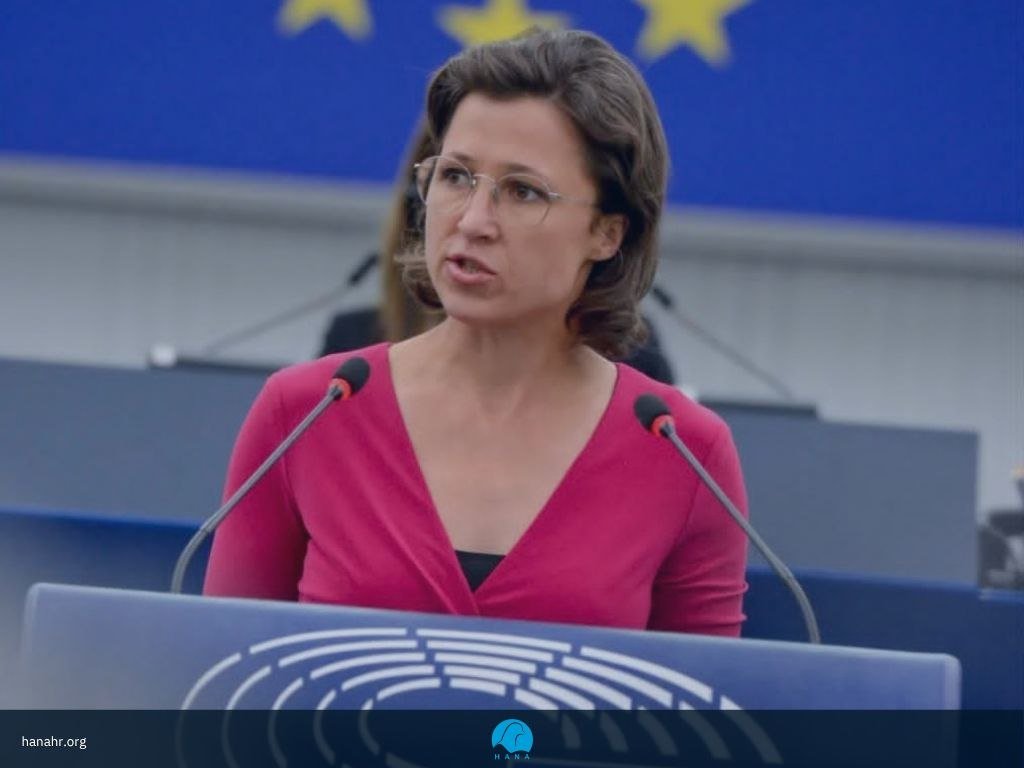
Hannah Neumann, the German member of the European Parliament who chairs its Delegation for Relations with Iran, has announced that she turned down a request from the Islamic Republic’s embassy for a meeting with Iran’s ambassador to France, and will not meet with him, whether inside the European Parliament or outside it.
In her response, Neumann stressed that she does not regard the Islamic Republic as representing the Iranian people, and that political legitimacy, in her view, belongs to a people who, as she put it, have met with detention, torture, and killing for demanding freedom.
Politically, this position amounts to more than the refusal of a single diplomatic meeting. Neumann has tied the question of relations with Islamic Republic representatives directly to domestic repression and to threats against dissidents and human rights defenders outside Iran. Positions of this kind are emerging at a time when European institutions are paying growing attention to transnational repression, the safety of activists in exile, and the conduct of the Islamic Republic’s missions in Europe.
From a legal standpoint, declining a single meeting carries no binding or sanctions like effect on its own, but it can be seen as part of a broader trend toward narrowing political and institutional engagement with Islamic Republic officials in Europe, particularly where human rights violations or threats against dissidents on European soil are at issue.