
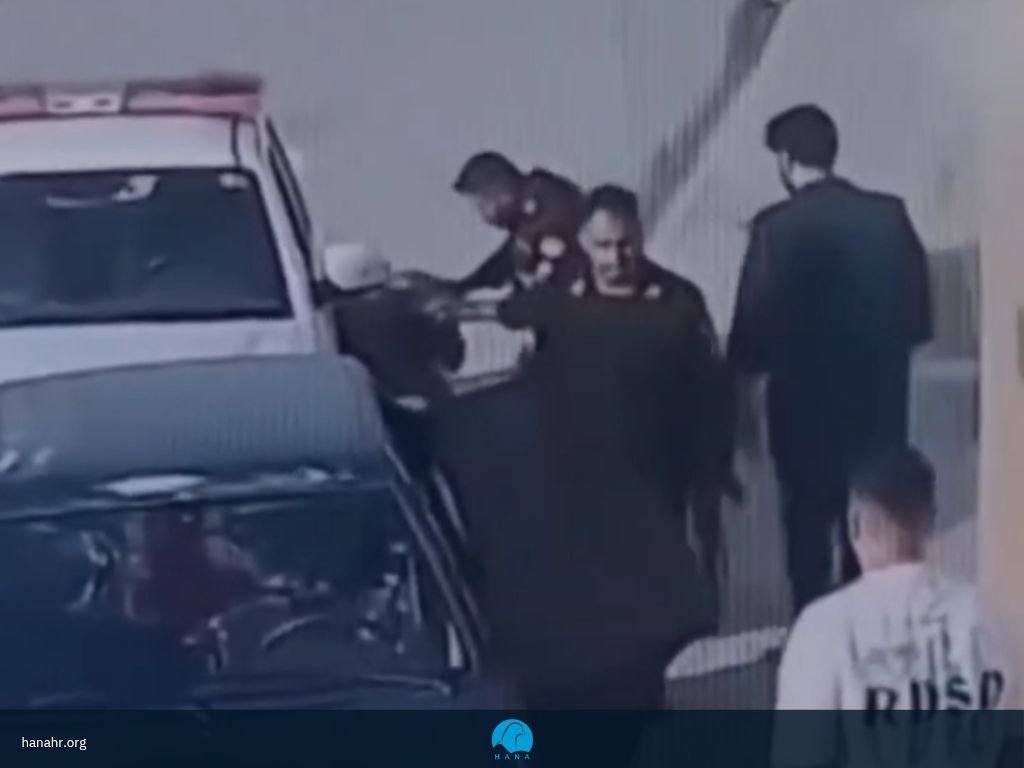
The Hana Organization for Human Rights strongly condemns the beating and degrading treatment of two teenagers by police officers in Sanandaj. Images circulating online point to violence against individuals who were entirely under the officers’ control. Conduct of this kind is not law enforcement. It is an unlawful use of public power and an assault on the dignity, bodily integrity, and fundamental rights of a child.
Even where a crime is suspected, a teenager keeps the presumption of innocence, the right to a fair trial, and special legal protection. The police act as judicial officers, and they have no authority to punish, humiliate, or carry out penalties. Iran’s Code of Criminal Procedure sets out special arrangements for anyone under eighteen and narrows what officers may do in dealing with them. No police officer may, ahead of any judicial process, cast himself as investigator, judge, and executor of punishment all at once.
The duty to protect the accused person’s dignity and to respect citizens’ rights is stated explicitly in Articles 4 and 7 of the Code of Criminal Procedure. The Law on the Protection of Children and Adolescents likewise treats beating, injury, threats, and any conduct that harms a child’s physical or mental health as abuse. The officers’ behavior here cannot be dismissed as an internal or disciplinary lapse. If the legal elements are established, it carries direct criminal liability for those who committed it and for anyone else involved.
This conduct also stands in plain conflict with Iran’s international obligations. Article 37 of the Convention on the Rights of the Child prohibits cruel, inhuman, or degrading treatment of a child. Article 40 of the same Convention requires the state to treat a child suspected or accused of an offense in a way that respects his or her dignity, age, and particular circumstances. Articles 7 and 10 of the International Covenant on Civil and Political Rights, for their part, forbid inhuman and degrading treatment of people held under the control of state officials.
Hana stresses that a police uniform and the power of the state confer no immunity. They bring a heavier duty to obey the law. Any attempt to justify this violence by pointing to the teenagers’ possible behavior, their records, or the demands of policing has no legal standing. Force can be defended only within the bounds of necessity and proportionality, and punitive or degrading violence has no place in law enforcement.
Hana calls for the immediate identification and suspension of the officers involved, the opening of an independent criminal case, an examination of the responsibility of those who gave orders and of the commanders concerned, the preservation of all images and evidence, an independent medical examination of the two teenagers, and guarantees of their access to a lawyer and to the support of their families. Kurdistan’s Law Enforcement Command must publicly state which unit the officers serve under, what specific judicial action has been taken against them, and where the case now stands.
In a climate where repeated acts of violence by police and security forces across Kurdistan’s cities have gone without effective accountability, silence, opaque proceedings, or the reduction of this incident to an organizational infraction would only feed continued impunity. The criminal responsibility of state officers must not be allowed to hide behind internal organizational structures.
A child, even when under suspicion, is not an object of police punishment. Police have no right to carry out punishment in the street. Beating and humiliating a teenager who is under officers’ control breaks the law and directly violates a child’s fundamental rights, and it must be answered with immediate, independent, and transparent criminal prosecution.