
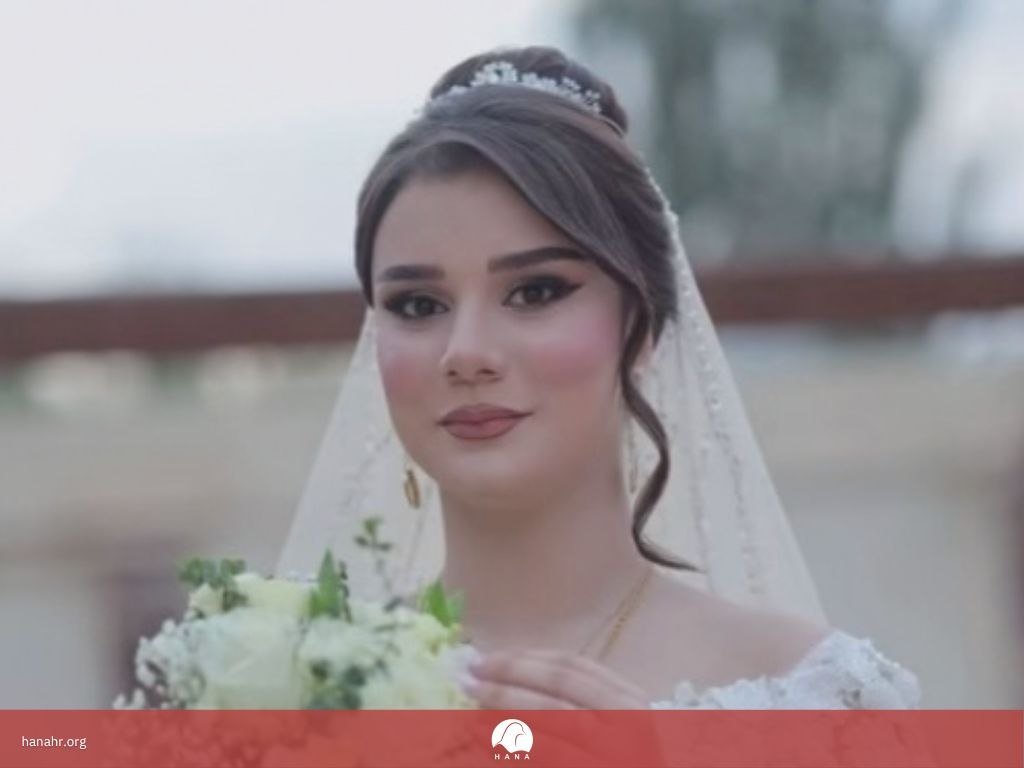
Following its review of reports published concerning the suspicious death of Shilan Koseh, a 15-year-old girl from Mahabad, Hana Human Rights Organization expresses concern over the unresolved questions surrounding the cause of her death and the need for judicial investigation. Shilan died in the home she shared with her husband just 15 days after their marriage. Her family has questioned the account suggesting that she died by suicide and has called for the circumstances of her death to be clarified.
According to Shabnam Mohammadpour, Shilan’s mother, her daughter had been preparing to attend a family gathering in the hours before her death. She stated that when she arrived at the location, she observed marks of pressure around her daughter’s neck, while Shilan’s hair was still wet and her face was made up. Shilan’s mother also spoke of recent disagreements between her daughter and her husband and his family, as well as mistreatment and psychological pressure. In addition, Shilan’s school principal confirmed that, a few days before her death, the teenager had made inquiries about continuing her education and enrolling in an adult education school.
Hana emphasizes that statements made by the family and observations reported by individuals with relevant knowledge, while important to a judicial investigation, are not sufficient on their own to establish whether the death was a homicide or a suicide. Determining the cause of death requires an examination of the autopsy report, any marks or injuries on the body, the circumstances and location in which the body was found, statements from individuals present, and any history of violence or threats. Any alleged pressure on the family to refrain from filing a complaint must also be investigated. As of the preparation of this report, Hana has not obtained any official, verifiable findings from the forensic medical or judicial investigations.
Regardless of the ultimate determination of the cause of Shilan’s death, her case once again highlights fundamental shortcomings in Iranian law regarding the protection of children from early marriage. The legal system of the Islamic Republic of Iran does not provide a single, uniform definition of a child that guarantees consistent protection across all areas of law. Article 1210 of the Iranian Civil Code sets the age of puberty for girls at nine lunar years, while Article 1041 permits the marriage of girls under the age of 13 with the permission of their legal guardian and a court determination that the marriage serves their best interests. Consequently, the law not only fails to prohibit marriage before the age of 18 but also preserves the possibility of marriage for girls at extremely young ages.
This situation has additional legal dimensions in matters of personal status among followers of Sunni Islam, including adherents of the Shafi’i school in Kurdistan. Under Article 12 of the Iranian Constitution and the 1933 Law Permitting the Observance of the Personal Status of Non-Shi’a Iranians, their religious rules concerning marriage and divorce are recognized by the courts, subject to applicable legal restrictions relating to public order. In traditional Shafi’i jurisprudence, the doctrine of wilayat al-ijbar grants a father and paternal grandfather broad authority to arrange the marriage of a virgin girl, potentially even without her explicit consent, although this authority is subject to certain conditions within that jurisprudence. Recognizing such authority without effective guarantees of a girl’s free and informed consent and respect for her autonomy conflicts with fundamental principles of children’s rights.
Nevertheless, Hana distinguishes between criticism of these legal provisions and the specific circumstances of Shilan’s case. According to her mother, Shilan herself had wanted to marry, while her parents had initially opposed the marriage. Therefore, the information currently available provides no basis for attributing forced marriage to her family. The fundamental issue is that even the apparent consent of a 15-year-old girl does not absolve lawmakers and responsible institutions of their duty to protect her health, safety, education, and rights. Religious puberty or parental approval cannot substitute for a minimum legal age of marriage and the special protections that children require.
Hana Human Rights Organization calls for an independent, impartial, and effective investigation into the death of Shilan Koseh, a thorough examination of all allegations of violence and mistreatment, and the disclosure of the investigation’s findings to her family. Hana also emphasizes the need to establish 18 as the minimum legal age for marriage without exceptions, repeal provisions based on compulsory guardianship in marriage, and bring domestic legislation into conformity with Iran’s international obligations concerning children’s rights.
Shilan’s death must not be excluded from effective judicial scrutiny through the definitive attribution of suicide or any other cause before the circumstances and cause of her death have been established.