
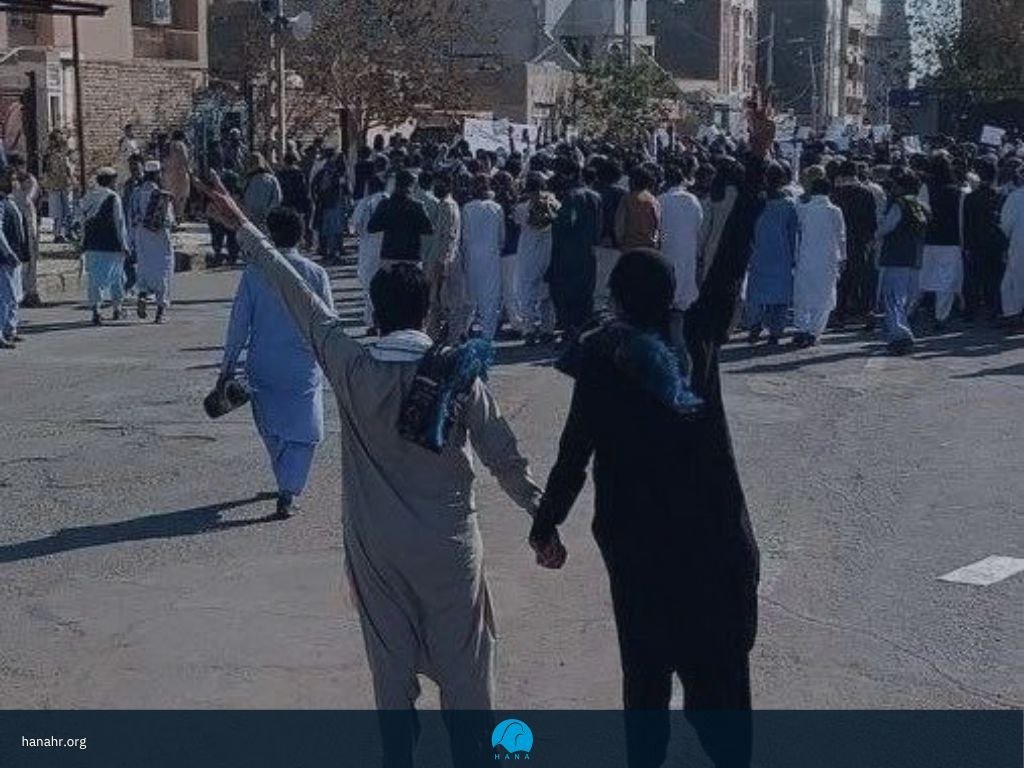
Four years have passed since Zahedan’s Bloody Friday, the day when forces of the Islamic Republic of Iran opened fire on protesters, worshippers, and Baloch civilians, marking one of the deadliest episodes in the suppression of protests in 2022. Despite the passage of four years and the publication of numerous reports by reputable international organizations, the criminal responsibility of those who ordered and carried out the massacre has yet to be addressed through an independent and transparent judicial process.
On Friday, September 30, 2022, following a gathering of Zahedan residents and protests over reports that a police commander had sexually assaulted a 15-year-old girl in Chabahar, security and law enforcement forces opened fire on the crowd around Zahedan’s Grand Musalla and the surrounding streets. Amnesty International’s investigations have documented the use of live ammunition by government forces and the targeting of victims’ vital body areas.
In its 2024 report, the United Nations Independent International Fact-Finding Mission reported that 103 people had been killed and approximately 350 injured. Amnesty International, in its September 2026 report, documented the unlawful killing of 87 people, including 15 children, during the incident. The discrepancy between these figures reflects differences in the scope and methodologies used for documentation.
Further findings published by the UN Fact-Finding Mission in 2025 revealed that the violence perpetrated by government forces was not confined to the streets; worshippers inside the Musalla were also targeted. The Mission also released evidence concerning the death of a seven-year-old girl, reportedly caused by a tear gas canister that may have struck her head.
Despite the extensive scale of the massacre, domestic judicial proceedings have largely been limited to a number of lower-ranking officers. Judicial authorities of the Islamic Republic have referred to the conviction of several officers and the payment of diyah (financial compensation under Islamic law). However, in its 2025 report, the UN Fact-Finding Mission identified the lack of transparency regarding the identities of the accused, the charges brought against them, and the judgments issued as major obstacles to accountability. The Mission also documented instances of pressure on victims’ families to accept compensation and remain silent.
Under international law, the payment of diyah or the conviction of a limited number of direct perpetrators cannot substitute for an independent investigation into the responsibility of commanders and officials who may have played a role in issuing orders, organizing the operation, or authorizing the use of lethal force. Under Article 6 of the International Covenant on Civil and Political Rights, Iran is obligated to protect the right to life and conduct effective investigations into cases of arbitrary deprivation of life.
In its September 2026 report, Amnesty International examined the suppression of the 2022 protests within the framework of crimes against humanity and emphasized the need to investigate the responsibility of senior government officials and security commanders. These findings underscore the importance of examining the chain of command and the potential responsibility of decision-makers involved in the Zahedan massacre.
On the fourth anniversary of Zahedan’s Bloody Friday, Hana Human Rights Organization calls for an end to impunity for those responsible for the massacre and demands independent, comprehensive, and impartial investigations into the roles of those who ordered and carried out the killings. Hana emphasizes that all judicial rulings and information concerning officers under investigation must be made public, and that victims’ families must be able to pursue their rights to truth, justice, and reparation without threats, security-related pressure, or coercion to accept compensation.
Hana also calls on the UN Fact-Finding Mission and other international human rights mechanisms to pursue the preservation and further collection of evidence relating to the massacre, including evidence concerning the chain of command within the security forces. States should also examine the possibility of prosecuting individuals potentially responsible for international crimes under universal jurisdiction and other applicable legal grounds.
Four years after Zahedan’s Bloody Friday, the central issue is no longer merely documenting the number of victims, but establishing the responsibility of those who ordered the shootings, those who carried them out, and officials who obstructed effective accountability. The passage of time cannot replace justice. Until responsibility for this massacre is established through an independent and effective process, the victims’ families will continue to demand justice.