
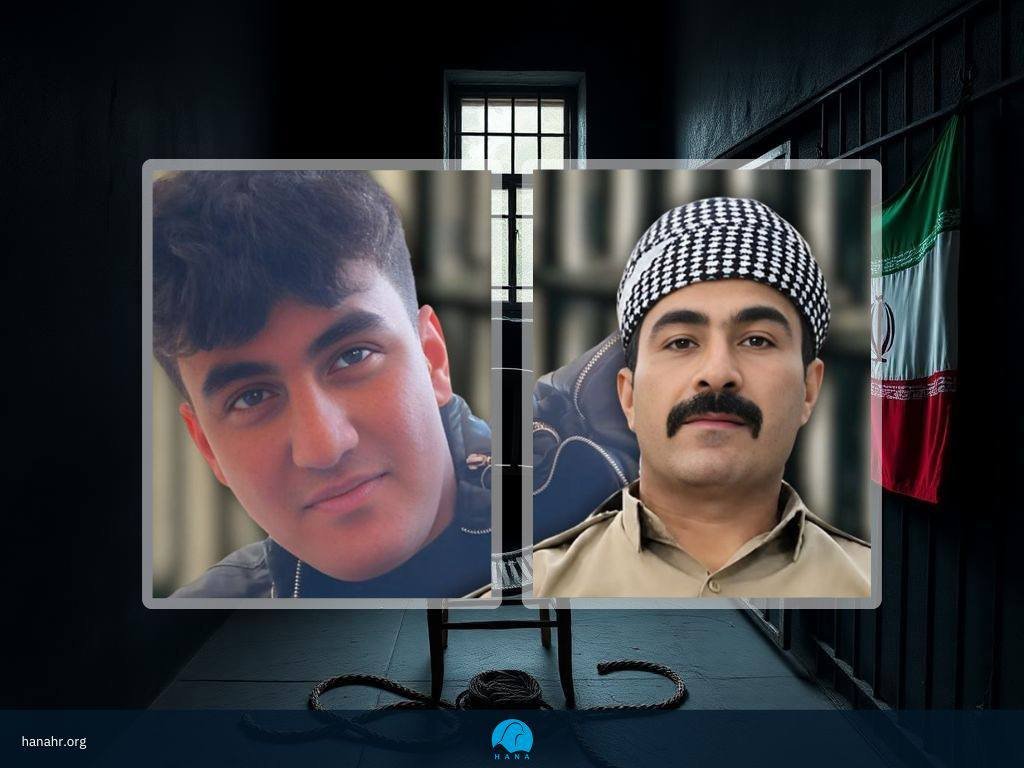
In the early hours of Tuesday, May 12, 2026, security forces affiliated with the Islamic Revolutionary Guard Corps (IRGC) Intelligence Organization raided the homes of two Kurdish citizens in the village of Kuseh Kahriz, a suburb of Mahabad. The individuals were arrested without a judicial warrant and transferred to an undisclosed location.
The identities of these individuals have been reported as Mikaeil (Shoresh) Dudkanlu Milan, a 40-year-old married man, and Ehsan Khorramabad, a 17-year-old minor. According to received reports, the arrests were carried out between 3:00 and 5:00 a.m. as security forces stormed their private residences.
As of the time of this report, no information has been released regarding the reasons for their arrests, potential charges, whereabouts, or legal status, and security and judicial authorities have yet to provide any official explanation. Their families remain entirely unaware of their fate and location.
Detention without a judicial warrant, holding individuals in undisclosed locations, and depriving detainees of immediate access to their families and legal counsel constitute clear instances of arbitrary detention and flagrant violations of the fundamental principles of a fair trial. These concerns take on a significantly more severe dimension in the case of Ehsan Khorramabad, as an individual under the age of 18.
Under the principles of juvenile justice, any criminal or security-related action against individuals under 18 must be subject to heightened protective standards, minimal intervention, effective judicial oversight, and the immediate guarantee of access to family, legal counsel, and psychosocial support.
The transfer of a child or adolescent to security detention centers or holding them under unknown conditions substantially elevates the risk of severe child rights violations, coercion, forced confessions, and the deprivation of the right to defense.
The detention of children in security-related cases, lacking judicial transparency and operating completely outside the protective frameworks established by both domestic law and Iran’s international obligations raises grave concerns regarding their physical and mental well-being and the imminent threat to their fundamental rights.