
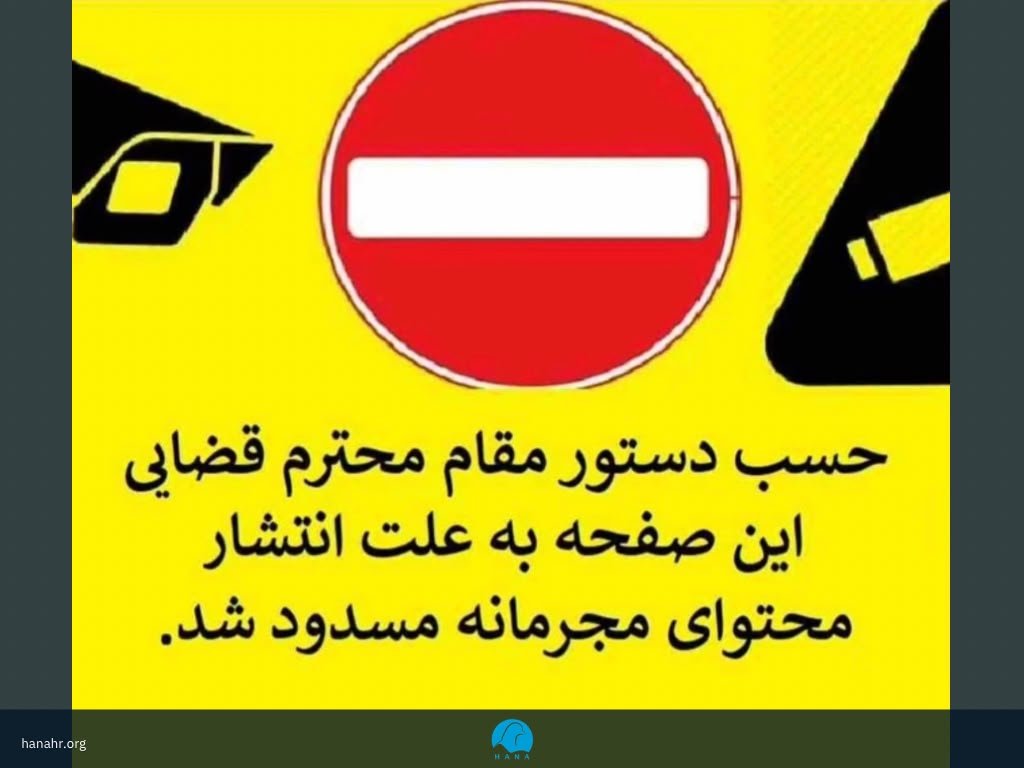
According to information received by the Hana Organization for Human Rights, on Sunday, August 23, 2026, Seyran Arabi, a blogger from Mahabad, was detained by the FATA Police, following the posting of a video insulting Mohammad Mamli, the prominent and beloved Kurdish artist, and was transferred to the judicial authority of that county. Her Instagram page has, moreover, been taken offline by judicial order.
The commander of Mahabad’s law enforcement has stated that the posting of this video was the basis for opening the case. In the content in question, Mohammad Mamli had been addressed in a manifestly mocking tone, a matter that met with widespread protest from citizens and cultural activists. Prior to her detention, Seyran Arabi had deleted the video and, through several video messages, had apologized to Mohammad Mamli’s family and the people of Mahabad.
As of the time of this report’s publication, the precise charge, the type of bail or detention order imposed, her place of detention, and her current status have not been announced. It is likewise unclear on the basis of which judicial decision, and for what duration, her Instagram page has been completely blocked.
Protecting the dignity and reputation of individuals is a legitimate aim for restricting freedom of expression, and Mohammad Mamli’s cultural standing cannot serve as a pretext for humiliation or insult. Nevertheless, the legitimacy of the aim alone is not sufficient to justify criminal intervention. Detention, criminal prosecution, and the complete blocking of a personal media account must rest on a clear legal basis and be subject to the principles of necessity and proportionality. The judicial authority must establish the specific harm arising from the content and the necessity of resorting to restrictive measures, particularly given that the material was removed and an apology issued prior to the detention.
This response comes at a time when several instances of femicide have been reported in Kurdistan in recent days, including the killings of Atousa Jafari in Sanandaj and Latifeh Mohammadzadeh in Saqqez. In these cases, a history of threats and violence preceding the killing was present, yet there continues to be no comprehensive and effective legal mechanism for the prompt assessment of risk, the issuance of protective orders, access to a safe location, and preventive intervention by law enforcement and judicial institutions.
Drawing this comparison is not meant to diminish the significance of the insult directed at Mohammad Mamli; the issue is a manifest imbalance in legislative and judicial priorities. The legislature has criminalized “insult” to protect the dignity of individuals, and the judiciary acts swiftly to remove content and detain those who publish it, yet women’s right to life, personal security, and immunity from violence do not enjoy a comparable degree of preventive protection.
The state’s obligation to protect women’s lives is not confined to prosecuting the perpetrator after a killing has occurred. Whenever a risk of violence is real and foreseeable, responsible institutions are obligated to take effective and proportionate measures to protect a woman at risk before harm occurs. The absence of such a mechanism, set alongside the swift and forceful response to a single piece of insulting content, exposes the double standard of the Islamic Republic’s legislative and judicial system in protecting, on the one hand, the dignity of individuals, and, on the other, the lives and security of women.
While emphasizing the necessity of respecting Mohammad Mamli’s standing and users’ responsibility to refrain from insulting speech, Hana emphasizes respect for Seyran Arabi’s rights, her access to legal counsel, and transparency in the judicial process. The protection of individuals’ dignity must not result in disproportionate restrictions on fundamental freedoms, and judicial sensitivity toward insult cannot conceal the persistent vacuum in the protection of women against violence.