
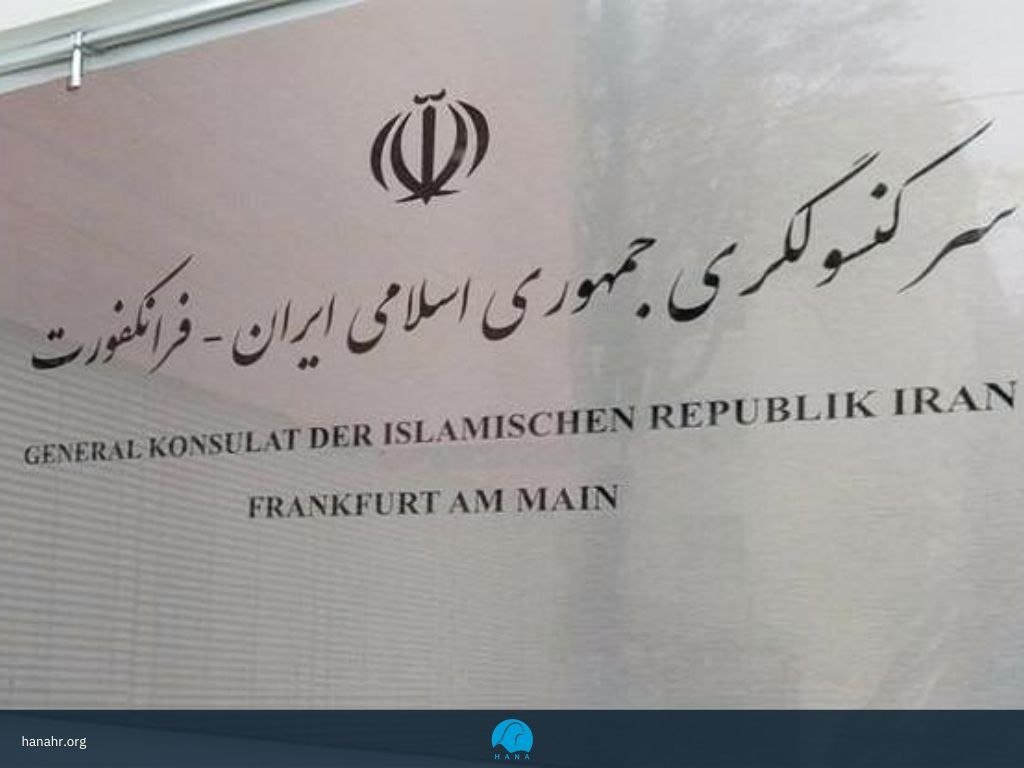
HANA Human Rights Organization is raising concerns over the Islamic Republic of Iran’s repeated provision of consular services out of the former Consulate General building in Frankfurt, and is calling on Germany’s Foreign Ministry to clearly state its official position on the legal basis, scope, and conditions of these activities.
On October 31, 2024, the German government ordered the closure of the Islamic Republic’s consulates general in Frankfurt, Munich, and Hamburg, in response to the abduction, unfair trial, and killing of Jamshid Sharmahd. That decision was not simply an administrative measure; it was a diplomatic response to a flagrant violation of the right to life, fair trial, and the Islamic Republic’s practice of state hostage-taking. The ongoing, organized use of a shuttered consulate building should not be allowed to quietly undo the German government’s own formal decision.
HANA notes that an embassy providing limited consular services with the host government’s consent can be consistent with international law. But holding this program for a fifth time, receiving visitors, processing passport applications and powers of attorney, and doing so again in the very same building, raises a real legal question: whether this has moved beyond a temporary arrangement and effectively revived a consular office in practice. Under the Vienna Conventions, setting up an office affiliated with an embassy, or a consular center outside the mission’s premises, requires the clear consent of the host state.
This concern carries added weight given the Islamic Republic’s well-documented record of surveillance, threats, and cross-border pressure against dissidents, journalists, and human rights defenders. Collecting identity documents, residency information, and data through the Mikhak system obligates the German government to ensure effective safeguards protecting the security and information of everyone who comes forward.
HANA is asking Germany’s Foreign Ministry to clarify whether these activities have been authorized, what their scope and duration are, and what safeguards exist to prevent the de facto revival of a shuttered consulate and to stop Iranians’ information from being exploited for security purposes. Continued diplomatic relations should not be allowed to normalize the presence of a state institution that remains responsible for executions, repression, and widespread violations of the fundamental rights of the Iranian people.