
HANA Human Rights Organization — July 1, 2026
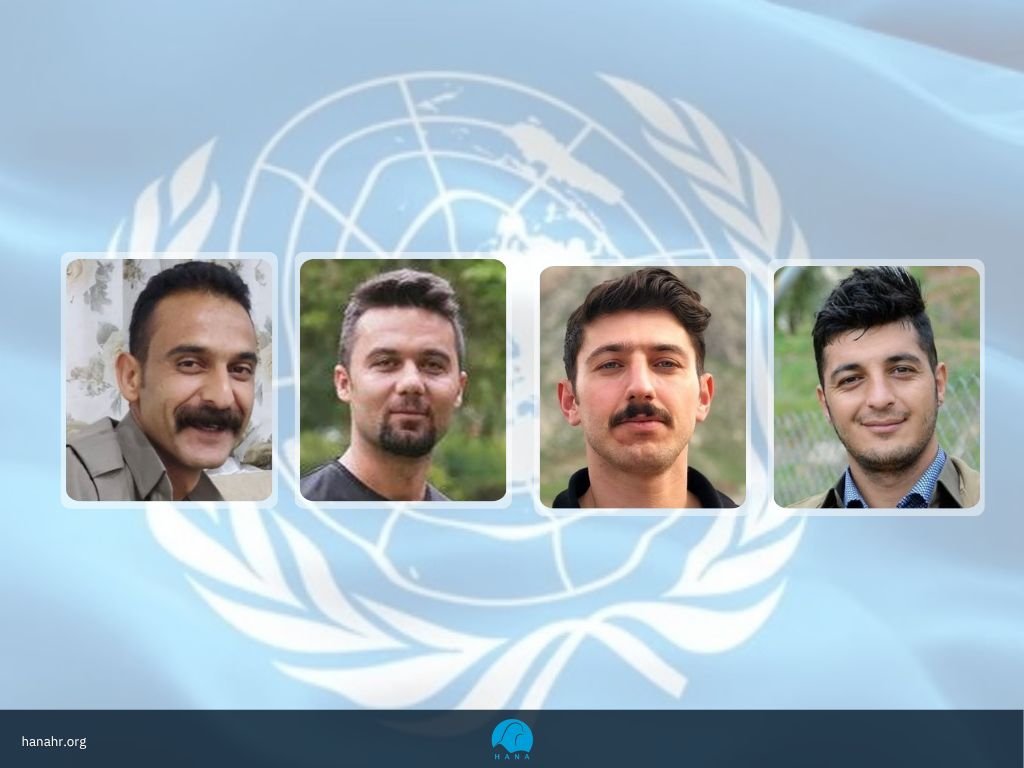
HANA Human Rights Organization announces that following a complaint filed by the lawyer representing the families of Pejman Fatehi, Mohsen Mazloum, Vafa Azarbar, and Mohammad Faramarzi, known as Hejir Faramarzi, four executed Kurdish political prisoners, the UN Working Group on Enforced or Involuntary Disappearances has accepted and taken up the complaint, characterizing their situation as a case of ongoing enforced disappearance, and has called on the Islamic Republic of Iran to clarify their fate, the whereabouts of their remains, and the location of their burial.
This development comes at a time when more than two years have passed since the Islamic Republic announced the execution of these four Kurdish political prisoners, yet judicial and security authorities continue to refuse to hand over their remains to their families, disclose their burial sites, or provide any official and reliable documentation regarding their deaths.
Pejman Fatehi, Mohsen Mazloum, Vafa Azarbar, and Hejir Faramarzi were arrested in July 2022 in the Suma Bradost area of Orumiyeh by security forces and transferred to security detention facilities. All four were members of the Komala Party of Iranian Kurdistan, which formally rejected the charges brought against them by the Islamic Republic’s security institutions.
Their families were kept in the dark for an extended period regarding their whereabouts, legal status, the course of their interrogations, and the conditions of their detention, and were denied any effective access to official information or legal proceedings.
According to reports received by HANA, these four Kurdish political prisoners were denied the minimum guarantees of a fair trial throughout their arrest, interrogation, and judicial proceedings. Their televised confessions were broadcast under circumstances that their families and informed sources have attributed to coercion, torture, and security driven procedures. Despite this, their death sentences were issued through a process that was neither transparent nor consistent with the fundamental standards of criminal justice.
On January 29, 2024, the Islamic Republic of Iran announced that the death sentences of the four had been carried out at Qezel Hesar Prison in Karaj. Yet their families were not only denied the right to say goodbye, to bury their loved ones, or to grieve — to this day, no official body has handed over the remains, disclosed the burial site, or provided any credible official documentation regarding their deaths or place of burial.
According to the families’ lawyer, the Working Group’s acceptance of the complaint and its referral to the Iranian government is a reflection of the legal weight of this case and constitutes a formal recognition that the situation amounts to a continuing enforced disappearance even after the announcement of execution. Under international law, a state’s announcement of an execution does not, by itself, bring an enforced disappearance to an end. As long as the victims’ remains, burial sites, official death documentation, and the full truth about their fate remain undisclosed, the violation continues.
HANA Human Rights Organization stresses that the right of families to know the truth is a fundamental and inalienable right. The families of these four Kurdish political prisoners have the right to know under what conditions their loved ones were arrested, held, tried, and executed; where their remains have been buried or kept; and which officials were involved in their arrest, torture, sentencing, execution, and the concealment of their remains.
Enforced disappearance under international law constitutes a continuing violation of human rights and an international crime which, when committed on a widespread or systematic basis, may also be examined within the framework of crimes against humanity. This crime does not end until the fate and whereabouts of the victim are fully established, and it is not subject to any statute of limitations.