
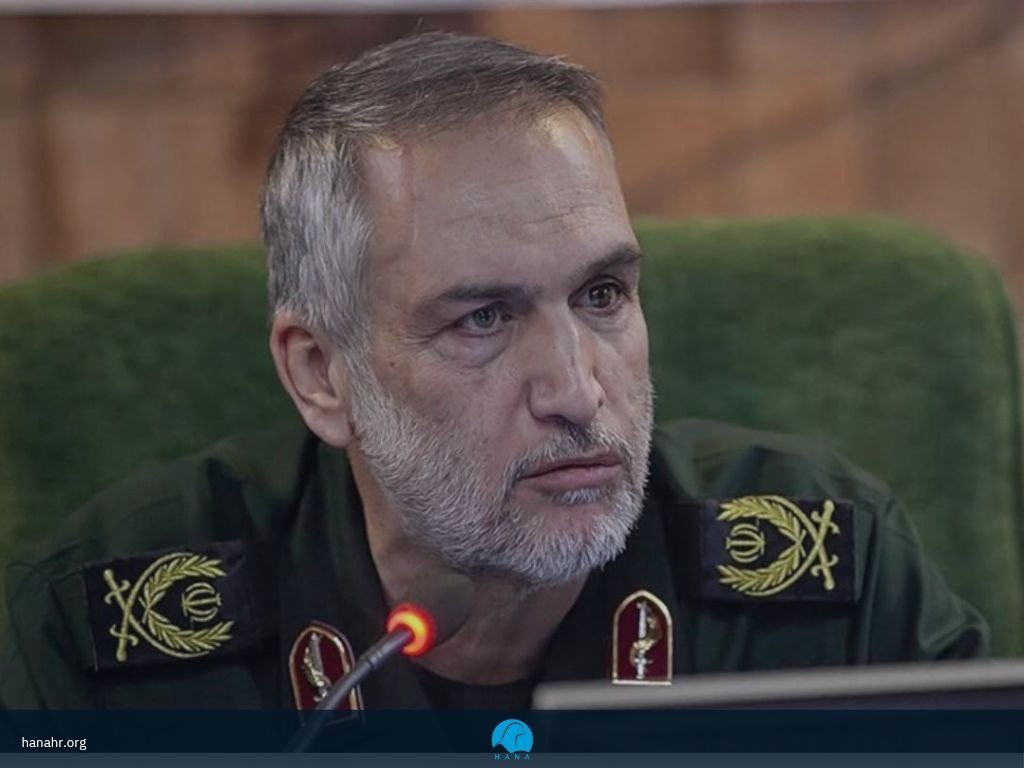
The Hana Human Rights Organization is deeply concerned by published reports that Abdolreza Mesgarian, a senior Quds Force commander and former head of the IRGC’s Ramadan Headquarters, has been put forward as the Islamic Republic’s proposed ambassador to Iraq. Hana warns that placing yet another commander from the Guard’s military and security apparatus at the head of Iran’s diplomatic mission in Baghdad, at a time when cross border attacks on Iranian Kurdish parties continue, could seriously endanger the lives of party members and cadres and, above all, their families in the Kurdistan Region of Iraq.
Mesgarian is a longtime IRGC commander whose record is tied to the Ramadan Headquarters, one of the Guard’s main structures for operations beyond Iran’s borders in Iraq. Tasnim News Agency formally introduced him as the headquarters’ commander in June/July 2024. Published reports also point to his role in Iran’s security coordination with Iraq, particularly on the file of Iranian Kurdish parties based in the Kurdistan Region. That background carries added weight given that the IRGC, including its Quds Force, appears on the terrorist organization lists of both the United States and the European Union.
On November 8, 2026, Nechirvan Barzani, President of the Kurdistan Region, met in Erbil with an Iranian delegation that, according to a number of Iraqi media outlets, was led by Mesgarian. The talks were reported to center on security cooperation and agreements among Tehran, Baghdad, and Erbil. Given Mesgarian’s security record, Hana fears that official diplomatic standing could pave the way for greater political and security pressure from the Islamic Republic on Iranian Kurdish parties and those linked to them.
That concern falls especially on the families of Peshmerga, political cadres, and other civilians tied to Iranian Kurdish parties, many of whom have lived in the Kurdistan Region for years. The IRGC’s repeated missile and drone strikes on the bases of these parties, including the recent attacks on Komala Party of Iranian Kurdistan positions in Zargwizleh and Balisan, show that the threat to their areas of residence has not let up. Hana believes that expanded Iranian security influence in these conditions could, beyond the danger of military attack, bring more threats, transnational pursuit, residency restrictions, and greater insecurity for families, especially women and children.
Under international law, a possible Mesgarian appointment renews concerns about the securitization of the Islamic Republic’s diplomatic missions and the use of diplomatic channels to advance Quds Force goals. Several of Iran’s earlier ambassadors in Baghdad also had well known ties to the Quds Force. If this practice continues, it raises serious questions about whether legitimate diplomatic functions are being kept separate from security and intelligence missions.
Under the 1961 Vienna Convention on Diplomatic Relations, diplomatic missions must carry out their functions by lawful means and with respect for the sovereignty of the receiving state. Article 41 in particular obliges diplomatic agents to respect the laws of the receiving state and not to interfere in its internal affairs. A military background does not, in itself, bar a diplomatic appointment. But using diplomatic privileges and immunities to pursue political opponents, direct unlawful security operations, or act against the sovereignty of the receiving state conflicts with the requirements of diplomatic law. Diplomatic immunity, for its part, neither makes such conduct legitimate nor removes the sending state’s international responsibility.
Given the sensitivity of the Kurdistan Region’s position and the complexity of its security relations with the Islamic Republic, Hana is concerned about what this appointment could mean for the safety of Iranian refugees and political opponents. Any stepped up pressure to forcibly relocate or extradite people facing political persecution could run up against the guarantees of Iraq’s Constitution and its international obligations not to return anyone to a risk of torture.
The Hana Human Rights Organization stresses that the growing presence of IRGC military and security commanders at the head of the Islamic Republic’s diplomatic missions, given the Guard’s record of operations abroad, is a troubling development for the safety of political opponents outside Iran. The danger is that diplomatic missions, instead of serving their legitimate purposes, become a platform for extending security influence and pressuring opponents, a trend that could expose the right to life, personal security, and legal protection of families who have lived in the Kurdistan Region for years to fresh threats.