
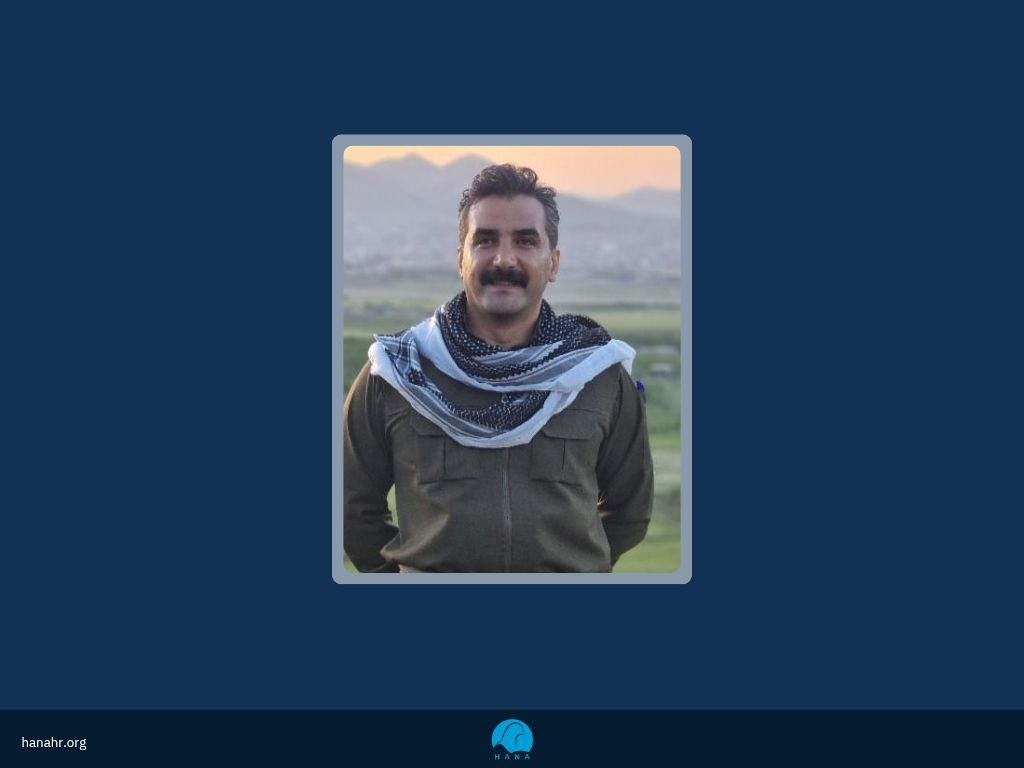
Nearly seven months after the detention of Arman Khaleghpanah, a 35 year old citizen from Saqqez, his whereabouts and fate remain unknown. His family has repeatedly approached judicial and security authorities in Saqqez, Sanandaj, and Tehran over this period, yet no official body has taken responsibility for disclosing his place of detention, his physical condition, or the legal basis for his continued deprivation of liberty.
On March 8, 2026, Khaleghpanah was surrounded by IRGC Intelligence forces, along with Sheikh Zahed Shahabi, as the two were entering Saqqez. According to information Hana has received, the agents opened fire on their vehicle without any prior warning, wounding Khaleghpanah from the waist down. He was then taken by security forces to an undisclosed location. Shahabi, for his part, was detained and transferred to Saqqez Central Prison, but no official place of detention has been announced for Khaleghpanah since that day.
About two months later, a letter surfaced indicating he had been moved to quarantine at Qorveh Central Prison, but officials there, when the family inquired, said he had never been transferred there. His family has since been reduced to searching cemeteries across Kurdistan Province for any trace of their son. A civil registry inquiry as recently as October 3, 2026, still lists his status as “alive.” Khaleghpanah was carrying no identification at the time of his arrest, and throughout this entire period, no official body has contacted the family either to collect his identity documents or to clarify his situation.
Taken together, these facts, detention by agents attached to a state institution, the removal of a wounded man to an unknown location, the total severing of contact with his family, the failure to disclose his whereabouts, and the sustained refusal of official bodies to clarify his fate, establish the serious elements of an enforced disappearance in this case. Under international law, enforced disappearance is not simply unlawful detention. Depriving a person of liberty and then concealing their fate or whereabouts effectively places that person outside the protection of the law, exposing a whole set of fundamental rights, including liberty and personal security, bodily integrity, access to judicial protection, and in some cases the right to life itself, to violation. Where the specific conditions of a widespread or organized attack against a civilian population are met, such conduct may also be examined as a crime against humanity.
The disappearance of individuals in the custody of state institutions in Iran is not a new phenomenon, and cases of it have been documented over past decades in the records and case files of United Nations human rights mechanisms. For this reason, months of silence over the fate of a man last seen wounded and in the hands of a security agency cannot be excused on grounds of confidentiality or the sensitivity of the case. No security consideration authorizes erasing a human being from the judicial record, cutting him off entirely from the outside world, or leaving a family with no word on whether their son is alive, where he is held, or what state he is in.
This situation is unjustifiable even under the Islamic Republic’s own domestic law. Article 32 of the Constitution and Articles 49 through 53 of the Code of Criminal Procedure make the detention and holding of individuals subject to registration, notification, judicial oversight, and respect for the rights of the person held. Judicial officers are required to report the identity of a detained person and the grounds for holding them to the prosecutor’s office within the shortest possible time, and the prosecutor bears responsibility for overseeing the lawfulness of that detention. Seven months on, the question is no longer simply where Arman Khaleghpanah is. The question is with which judicial authority his detention was registered, which official has overseen his custody, what legal order was issued regarding him, and which institution was last responsible for his transfer and custody.
IRGC Intelligence, which available information attributes the initial detention to, is obligated to answer for where Khaleghpanah was taken, his physical condition, and the chain of custody in his case. Any other security agency, including the Ministry of Intelligence, that has taken custody of him, held him, or possesses information about his fate cannot invoke confidentiality to avoid answering to the judicial authority and to his family. Articles 28 and 29 of the Code of Criminal Procedure likewise place officers of these agencies, in their capacity as judicial officers, under the prosecutor’s supervision. The continuation of this situation therefore directly raises the prosecutor’s own responsibility, and the judiciary’s silence in the face of a person’s disappearance in security custody is not acceptable.
The Hana Human Rights Organization strongly condemns Arman Khaleghpanah’s continued disappearance and the persistent refusal of responsible institutions to disclose his fate, and calls for the immediate disclosure of his whereabouts and physical condition, his access to family and legal counsel, an independent medical examination, and a judicial investigation into the shooting at the time of his arrest and the route of his transfer. The prosecutor’s office is obligated to review, without any further delay, the full record of his detention, transfer, and custody, and to establish the responsibility of every official or institution that has played a part in keeping his fate hidden.
Until Arman Khaleghpanah’s whereabouts and fate are disclosed officially and in a verifiable manner, Hana will continue to pursue this case as a serious instance of enforced disappearance. No security agency and no judicial official can detain a human being and then hide his existence behind a wall of silence, secrecy, and unanswered questions. Such a situation is a direct assault on the rule of law and on the fundamental rights of an individual who has come under the authority of the state, a state that bears responsibility for his life, health, and fate.