
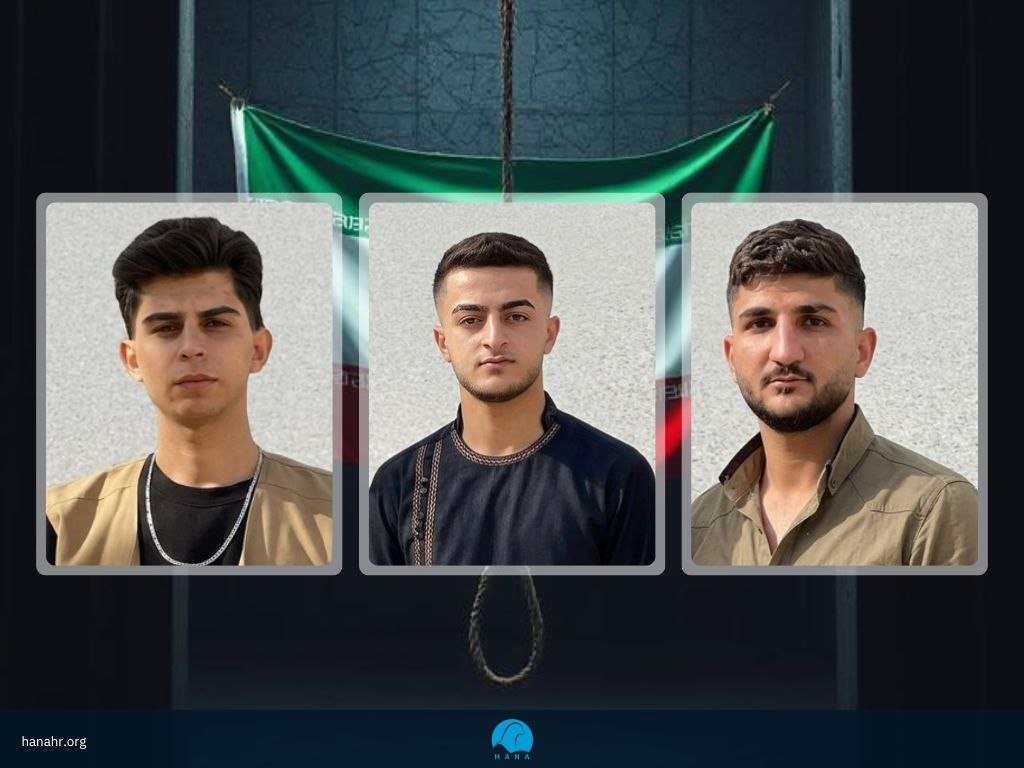
According to information received by Hana Human Rights Organization, Raouf Sheikh-Ahmadi and Mohammad Faraji, two Kurdish protesters detained during the “Woman, Life, Freedom” movement, have been sentenced to death by the Mahabad Revolutionary Court on charges including “Moharebeh” (enmity against God) and “Efsad-fel-Arz” (corruption on earth). These two prisoners, currently held in Bukan Prison, have stated that their sentences are based on confessions extracted under pressure and torture. However, official authorities have failed to provide a transparent or documented explanation regarding the nature of the charges or the evidence attributed to them.
In a separate case, Mohsen Islam-khah, another Kurdish protester, is facing a death sentence despite being under the age of 18 at the time the alleged offenses occurred. This verdict was issued by Branch 1 of the Mahabad Revolutionary Court. Reports indicate that the sentence is based on confessions obtained after approximately 40 days of pressure and torture at the Orumiyeh Intelligence Detention Center.
According to these reports, Mohsen Islam-khah was forced to flee the country and seek refuge in the Kurdistan Region of Iraq after being identified via CCTV cameras. In his absence, security forces repeatedly raided and searched his family home.
He eventually returned to Iran in August 2025 based on guarantees provided by intermediaries, but was immediately arrested and transferred to Orumiyeh. Additionally, he faces a murder charge in a separate case at the Miandoab Criminal Court.
These cases—specifically the reliance on confessions obtained under torture, the lack of transparency in the judicial process, and the issuance of a death sentence against an individual who was a minor at the time of the alleged crime—represent a severe violation of the principles of due process and the international obligations of the Islamic Republic of Iran, including the absolute prohibition of torture and the ban on the death penalty for individuals under 18.