
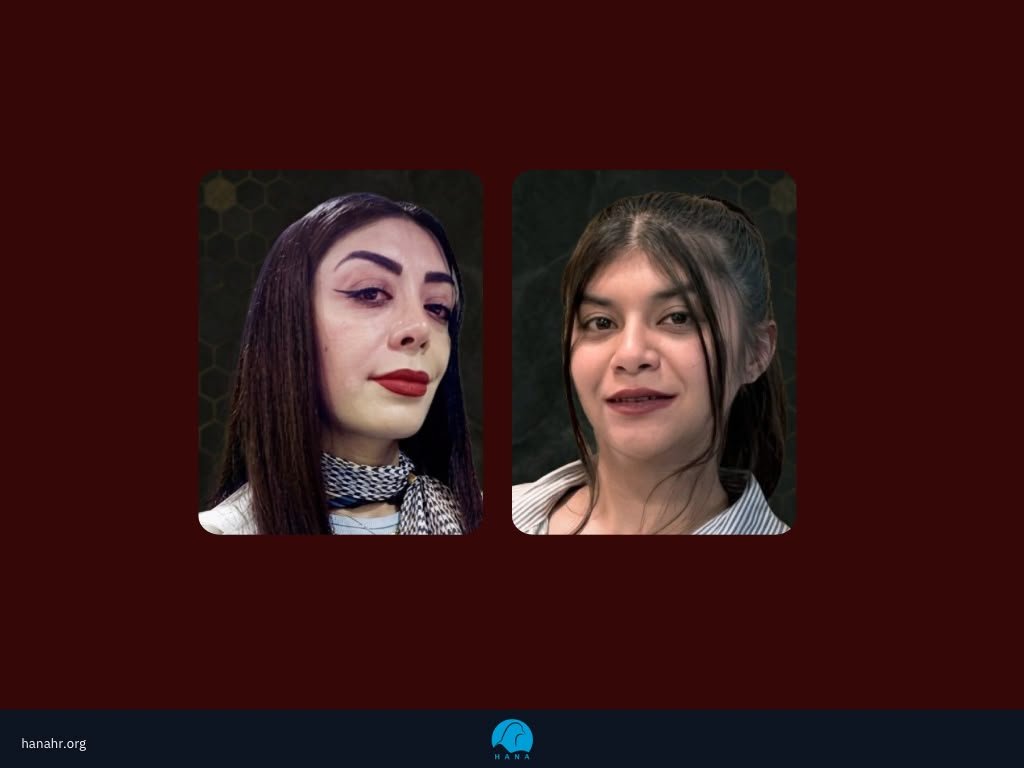
On Saturday, August 22, 2026, Neda Dadajani and Setayesh (Behnoush) Sarabi, two Kurdish women from Qorveh who had been detained during the January Protests, were arrested after being summoned to the Qorveh court. The sentence of 31 lashes against each of them was carried out on the spot, and both were then transferred to the women’s ward of Sanandaj Central Prison to serve their prison terms.
Branch 102 of Qorveh Criminal Court Two had sentenced each of them, on the charge of “disturbing public peace and order,” to one year’s imprisonment, 31 lashes, and two years’ exile to Nikshahr. Branch One of the Qorveh Revolutionary Court, for its part, issued a sentence of two years’ imprisonment on the charge of “assembly and collusion against internal security.”
Flogging is the deliberate infliction of pain and humiliation by order of the state, and constitutes an instance of judicial torture. Its imposition violates the absolute prohibition of torture set out in Article 7 of the International Covenant on Civil and Political Rights and Article 39 of the Constitution. Moreover, mere presence at a protest, absent proof of violent conduct and actual disruption, cannot satisfy the elements of the offense under Article 618. The right to peaceful assembly is recognized under Article 21 of the Covenant and Article 27 of the Constitution.
Furthermore, given that the two year prison term has been declared the more severe penalty to be enforced, the carrying out of the flogging attached to the lighter sentence also appears inconsistent with Article 134 of the Islamic Penal Code, and requires an immediate response from the judiciary.
The Hana Organization for Human Rights firmly condemns this heinous and inhuman punishment. Flogging the bodies of women protesters is not the administration of justice; it is state torture and an instrument for intimidating society. Hana demands the immediate release of these two women, the annulment of their prison sentences, and their immediate access to an independent physician and medical care.