
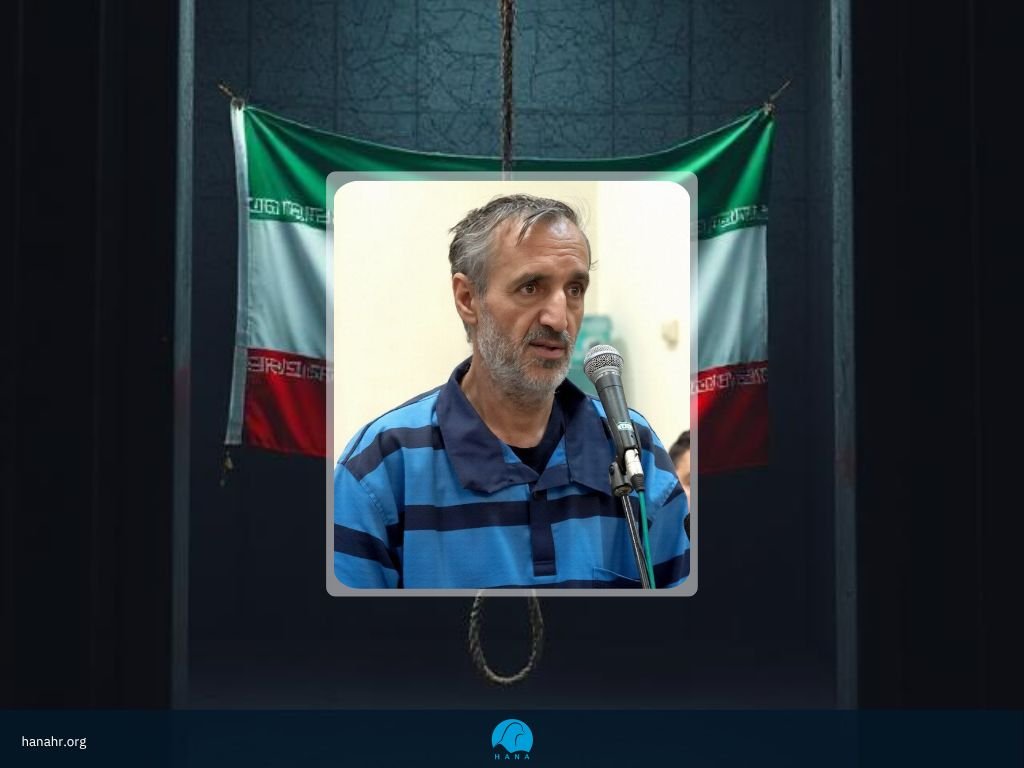
According to published reports, at dawn on Wednesday, May 13, the death sentence of Mohammad Abbasi, a detainee from the January 2026 nationwide protests, was carried out in Ghezel Hesar Prison in Karaj. This political prisoner was previously sentenced to death by Branch 15 of the Tehran Revolutionary Court, presided over by Judge Abolghasem Salavati, on charges of “Moharebeh” (enmity against God) in connection with the killing of Shahin Dehghani Kakavandi, a law enforcement officer in Malard. The sentence was subsequently upheld by Branch 39 of the Supreme Court.
Based on documented reports, Ghezel Hesar Prison authorities had summoned Abbasi’s family for a “final visit” prior to the execution; however, upon their arrival, they were prevented from seeing him. A source close to the family reported that his relatives were informed of the execution only after leaving the prison, via a phone call.
Simultaneously, the 25-year discretionary prison sentence of his daughter, Fatemeh Abbasi, who was arrested in connection with the same case, has been finalized by the Supreme Court. She is currently incarcerated in the women’s ward of Evin Prison.
During the trial proceedings, Mohammad Abbasi’s defense attorney pointed to the multiplicity of blows inflicted on the victim and noted that not all injuries were caused by a weapon, arguing that directly attributing the murder charge to his client entailed serious legal ambiguities. Nevertheless, the judiciary-affiliated “Mizan” news agency confirmed the execution on Wednesday evening, claiming that the act was carried out under the principle of “Qisas” (retribution in kind) at the request of the victim’s family.
Hana emphasizes that the issuance and execution of death sentences in cases related to nationwide protests constitute a blatant violation of the right to life and contradict the fundamental principles of a fair trial. Depriving the accused of effective and continuous access to an independent lawyer throughout the proceedings, the lack of transparency in the judicial process, and the denial of a final family visit represent clear violations of the defendant’s fundamental rights, as well as inhumane and degrading treatment toward the prisoner and his relatives.
Hana further reiterates that the execution of such sentences in security and political cases, under conditions lacking the necessary guarantees for an independent and fair trial, seriously conflicts with the international obligations of the Islamic Republic of Iran, including the provisions of the International Covenant on Civil and Political Rights.