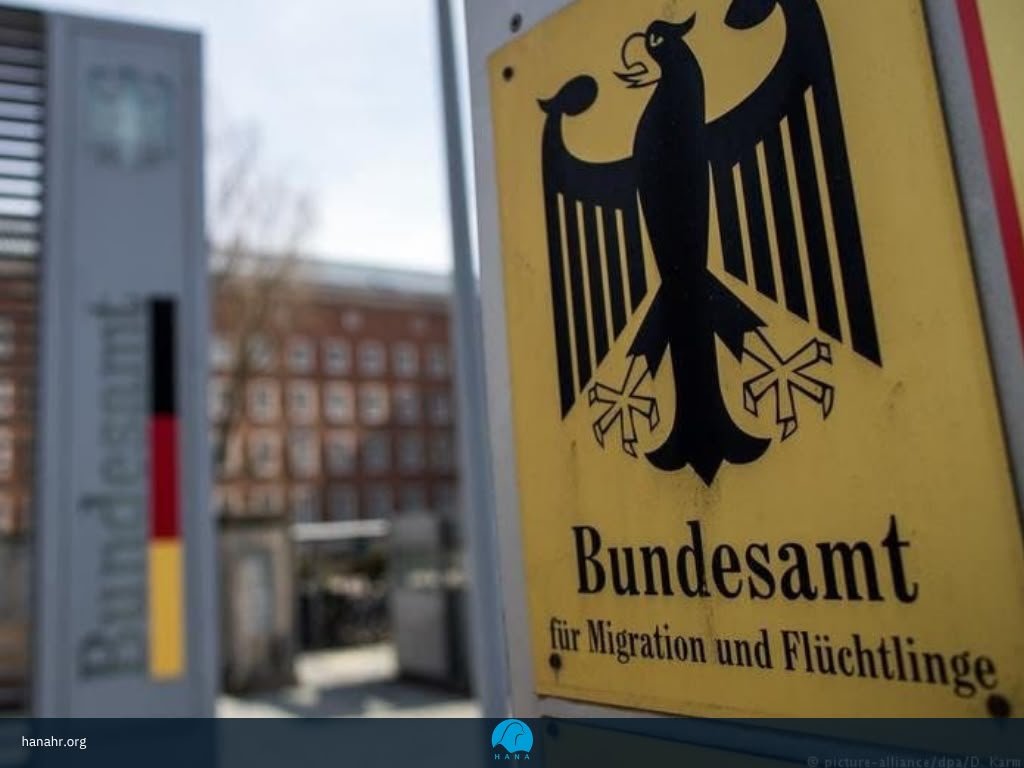
The Hana Human Rights Organization expresses concern over the processing and rejection of a significant portion of asylum applications filed by Iranian citizens in Germany. This concern arises as 2026 reports from the United Nations and other credible human rights institutions continue to indicate arbitrary detentions, torture, forced disappearances, the issuance of death sentences, and pressure on lawyers, journalists, political activists, human rights defenders, women, and ethnic and religious minorities in Iran. Under these circumstances, the reduction or tightening of international protection standards requires serious review.
According to official German statistics, the adjusted protection rate for Iranian nationals decreased from 36.7 percent in 2024 to 26.8 percent in 2025. During the early months of 2026, this rate increased again, reaching approximately 40 percent in the available data through April. However, a significant portion of substantive cases still results in rejected applications. In addition to this issue, the substantial number of cases that achieve a positive outcome following appeals in administrative courts raises the question of whether the initial risk assessment is consistently conducted with sufficient accuracy and coherence.
In the view of Hana, the primary issue is not solely the number of rejected cases but rather the method used to assess the real risk of political persecution in certain cases. Reviews by the Hana legal office indicate that within some administrative procedures for examining asylum applications in Germany, significant weight is given to an individual’s level of fame, political prominence, number of social media followers, media presence, or organizational role. These factors can be influential in evaluating a case, but they must not become an unwritten condition for recognizing an individual as a political refugee.
In cases concerning Iran, the actual criterion must be how the security institutions of the Islamic Republic identify and evaluate the individual. A person might not be a prominent political figure. However, they may face a serious risk upon return due to a history of detention, limited social media activity, participation in protests, cooperation with a human rights organization, family ties to dissidents, ethnic or religious affiliation, or an actual or attributed connection to a political movement. For Kurdish activists, Baluch activists, and other groups under pressure, this same combination of factors can increase the risk significantly.
German asylum law and the Geneva Convention also do not limit protection to famous individuals or political leaders. According to Article 16a of the German Basic Law, the 1951 Geneva Convention, European Union law, and the principle of nonrefoulement, the primary criterion is the existence of a real risk of persecution, torture, or inhuman treatment upon return. Even if the government incorrectly attributes a political opinion or affiliation to an individual, this very attribution can be sufficient to create a risk and consequently qualify the person for international protection.
Hana also warns about the impact of the increasingly strict political climate regarding immigration in Germany. The growing influence of far right movements and the simultaneous intensification of restrictive immigration policies do not inherently prove a direct impact on asylum decisions. However, they redouble the necessity for the asylum system to maintain complete independence from political objectives related to reducing immigration and increasing deportations. The number of accepted or rejected cases must not become a managerial or political target.
Hana calls on German authorities to review the cases of Iranian nationals based on the most recent information regarding the human rights situation and the behavior of the security institutions of the Islamic Republic. When evaluating risk, they must consider the entirety of an individual’s circumstances together. Political history, human rights activity, ethnicity, religion, family ties, activities abroad, and the danger arising from political attribution must be assessed collectively. In asylum law, the issue is not how important or famous the individual appears from the perspective of a German official. The issue is how the Iranian government views the person and what danger they will face if they return.
Hana Expresses Concern Over the Processing of Iranian Asylum Claims in Germany