
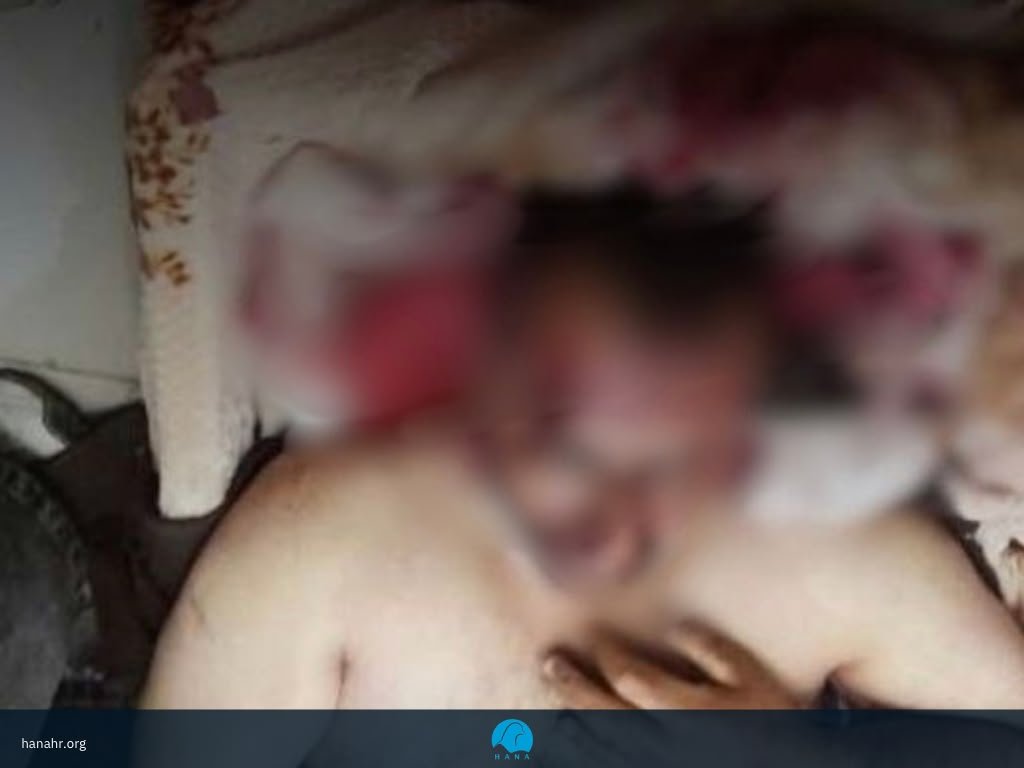
Hana Human Rights Organization expresses its deep sorrow over the killing of Motaleb Kheybari, a 33-year-old Kurdish resident of Saleh village in Baneh County, and considers this incident yet another example of the continued use of lethal force by government forces against Kurdish citizens in Kurdistan.
According to information received by Hana, in the early hours of Thursday, June 11, 2026 (21 Khordad 1405), government forces opened fire on Mr. Kheybari in the Choman area near the village of Bardeh Rash without prior warning. Local reports indicate that, in accordance with a common local practice, he had gone to the area to collect Gazangabin (a natural manna-like substance) and was not carrying any goods or contraband. The direct gunfire was the sole cause of his death. Mr. Kheybari was married and the father of two children.
From the perspective of domestic law, such reckless use of firearms and deployment of military weapons against a civilian lacks any legal justification. Even under the restrictive and security-oriented provisions of the Islamic Republic of Iran’s Law on the Use of Firearms, officers are permitted to use lethal force only under exceptional circumstances and only after prior warning, while observing the principles of necessity, proportionality, and the absence of less harmful alternatives. Available reports in this case indicate that even these minimum legal requirements were not respected in relation to a Kurdish civilian, and that the direct shooting without warning constitutes a clear instance of arbitrary and unlawful use of force.
This killing also constitutes a direct violation of the right to life under international human rights law. Article 6 of the International Covenant on Civil and Political Rights (ICCPR) recognizes the right to life as a fundamental right and prohibits states from arbitrarily depriving individuals of their lives. The lethal use of firearms can only be justified when it is strictly necessary to protect human life from an imminent threat. Shooting an unarmed civilian who posed no immediate danger is a clear violation of this standard.
The killing of Motelab Kheybari occurred within the context of a well-established pattern of state violence in Kurdistan. Over the years, the Islamic Republic of Iran has repeatedly subjected Kurdish civilians, border couriers (kolbars), and residents of Kurdistan to direct gunfire. These killings, however, have consistently been accompanied by impunity. The absence of independent investigations, the failure to effectively prosecute perpetrators and those responsible for ordering such acts, and the lack of answers provided to victims’ families demonstrate that this violence is not merely the result of isolated incidents but rather part of a structural pattern of repression and violations of the right to life in Kurdistan.
Hana Human Rights Organization strongly condemns the state killing of Motelab Kheybari and calls for an independent, impartial, and effective investigation, the identification and prosecution of both perpetrators and commanding officials, and an end to the practice of lethal shootings against Kurdish civilians. The continued impunity in such cases has sent a clear message to government forces that the lives of Kurdish citizens can be taken without accountability.
Hana considers this situation a grave violation of the right to life, human dignity, and the fundamental principles of justice.