
Han
Introduction
The Statistics Division of the Hana Human Rights Organization publishes its monthly report on the human rights situation in Kurdistan for September 2026. The information in this report was gathered through field investigations, interviews with victims of human rights violations and their families, the review of documents and records, and information received from local sources. Wherever possible, Hana has cross checked and verified the information it received using independent sources and corroborating evidence.
Restricted access to free information, security pressure on local sources, and the absence of official transparency make it difficult to document every violation that occurs. The figures in this report therefore represent, at minimum, the cases Hana was able to review and confirm by the time of publication.
General Strike and Pressure on Shopkeepers
Marking the fourth anniversary of the death of Zhina (Mahsa) Amini and the start of the “Woman, Life, Freedom” movement, a coalition of six Kurdish parties called on citizens and business owners to join a general strike on Wednesday, September 16, 2026.
Hana’s investigations show that, in the days leading up to the strike, pressure from security institutions and the Public Places Supervision Office of the Law Enforcement Command on a number of business owners had intensified. Some shopkeepers, according to information received, faced threats that their premises would be sealed, that their business licenses would be restricted or revoked, fines, and in some cases threats of arrest.
From the earliest hours of the strike, Hana tracked conditions in various cities through local sources, field observations, and the images and videos it received. Based on verified information and images, the strike held across a significant number of cities in Kurdistan.
Participation was documented and confirmed in Sanandaj, Saqqez, Divandareh, Kamyaran, Qorveh, Bijar, Kermanshah, Kerend, Mahabad, Bukan, Miandoab, Marivan, Baneh, Oshnavieh, Piranshahr, Ravansar, and Paveh. In Sanandaj, Saqqez, and Divandareh, business closures were especially widespread, with shopkeeper participation in these cities estimated, on the basis of available data and images, at roughly 70 to 80 percent. These figures are estimates, limited to the information Hana had access to at the time this report was prepared.
Following the strike, Hana also received reports that the Public Places Supervision Office of the Law Enforcement Command had sealed a number of business premises in Sanandaj and Saqqez.
Threatening arrest, sealing businesses, or imposing administrative restrictions on individuals for peacefully taking part in a protest action bears directly on the right to freedom of expression, peaceful assembly, and association under international human rights law. Under Articles 19, 21, and 22 of the International Covenant on Civil and Political Rights, restrictions on these rights are justified only under specific legal conditions and in keeping with necessity and proportionality. Using punishment or administrative restrictions as a means of pressuring peaceful political and civic conduct is incompatible with these requirements.
Arbitrary Detention and Fair Trial
Hana’s Statistics Division recorded at least 72 detentions of Kurdish citizens by security institutions in September 2026. Among those detained were 8 women and 5 individuals under the age of 18.
The reasons or charges cited in these cases mainly involved alleged ties to or cooperation with opposition parties, civil and professional activities, media work, and the posting of content on social media.
Over this same period, a combined total of 43 years in prison sentences was handed down against 10 individuals named in these case files.
The prohibition on arbitrary detention is among the fundamental guarantees set out in Article 9 of the International Covenant on Civil and Political Rights. Every detained person must be informed of the reasons for their detention and the charges against them, and must have the means to effectively challenge the lawfulness of that detention. Judicial proceedings must likewise be accompanied by the guarantees set out in Article 14 of the Covenant, including the right to a fair trial.
For individuals under 18, the protections set out in the Convention on the Rights of the Child also apply. Under Articles 37 and 40 of that Convention, depriving a child of liberty must be used only as a measure of last resort and for the shortest appropriate period, and every stage of proceedings must be suited to the child’s age, circumstances, and need for protection.
Hana emphasizes that peaceful political, civic, professional, or media activity cannot, in itself, serve as grounds for depriving someone of their liberty. The lawfulness of any detention must be assessed according to the specific conduct attributed to the individual, the legal basis for the restriction, and whether fair trial guarantees were observed.
The Right to Life, the Death Penalty, and Deaths in Custody
At least two Kurdish citizens were executed in September 2026. One had been convicted on a drug related charge, the other on a charge of premeditated murder. From the start of 2026 through the end of September, Hana has documented at least 64 executions of Kurdish citizens.
This same month, Amir Amiri, a citizen from Kermanshah, died at Qezel Hesar Prison under circumstances that remain unclear to Hana.
Article 6 of the International Covenant on Civil and Political Rights recognizes the right to life and, in states that still carry out the death penalty, confines its application to the “most serious crimes.” The UN Human Rights Committee, in General Comment No. 36, has made clear that offenses which do not directly and intentionally result in death, including drug offenses, do not fall within this category.
Any death in custody likewise calls for a prompt, independent, and effective investigation into its cause and the circumstances surrounding it. When a person is under the control and care of a public authority, responsibility for protecting their life and health rests with the detaining institution, and any death occurring under such circumstances must be investigated in a manner that is transparent and open to oversight.
Kolbars and the Use of Lethal Force
Hana documented the deaths of at least two kolbars and the wounding of one more in September 2026. According to verified information, these cases resulted from gunfire by border guard forces.
The legal status of the goods being carried does not, on its own, authorize the use of lethal force. Under the right to life guaranteed by Article 6 of the International Covenant on Civil and Political Rights, and the United Nations Basic Principles on the Use of Force and Firearms by Law Enforcement Officials, resort to firearms must be confined to exceptional circumstances and is justified only when necessary to protect life against an immediate and serious threat.
Every shooting incident must be examined to determine whether an immediate threat existed to the lives of officers or others, whether the use of a firearm was unavoidable, and whether less dangerous alternatives were available.
The continued deaths and injuries among kolbars must also be understood in light of the economic conditions of border regions. Poverty, unemployment, and the lack of stable job opportunities push many citizens toward this high risk activity. A purely security based response to a situation rooted in economic and social causes, without addressing those underlying factors, does nothing to resolve the problem and instead raises the risk that violations of citizens’ right to life and security will continue.
Workplace Safety and Worker Deaths
At least three workers lost their lives in work related incidents in September 2026.
The right to just, safe, and healthy working conditions is recognized under Article 7 of the International Covenant on Economic, Social and Cultural Rights. Realizing this right requires the adoption and enforcement of safety standards, effective oversight of workplaces, the provision of proper equipment, and mechanisms for accountability when safety regulations are violated.
Where a worker’s death or serious injury is linked to a lack of safety equipment, inadequate training, or weak oversight, the matter is not simply an individual accident. It also raises the responsibility of the institutions tasked with prevention, oversight, and the enforcement of safety standards.
Suicide and the Right to Mental Health
Hana documented at least 13 cases of suicide in Kurdistan in September 2026. Of these, 8 were men and 5 were women, and three involved individuals under the age of 18.
Economic hardship, psychological and social pressure, and other social harms were among the contributing factors reported in the information gathered on these cases. Without access to specialized information and a separate review of each case, however, no definitive causal link can be drawn between these factors and any individual instance of suicide.
The right to the highest attainable standard of physical and mental health is recognized under Article 12 of the International Covenant on Economic, Social and Cultural Rights. Effective access to mental health services, social support for those at risk, and the adoption of preventive policies all fall within the obligations arising from this right.
The recording of three suicides among individuals under 18 underscores the particular need for attention to children’s and adolescents’ access to psychological and social support and to mechanisms for preventing harm.
Femicide and Domestic Violence
Hana documented the killing of two women in September 2026. According to available information, both were killed by a spouse or a first degree relative.
Lethal violence against women within the family is not simply a matter of the perpetrator’s criminal responsibility. Cases of this kind also raise the state’s obligation to effectively protect the right to life, prevent violence, and guarantee equal protection under the law. Articles 2, 3, 6, 7, and 26 of the International Covenant on Civil and Political Rights are of particular relevance here.
The state’s obligation is not confined to a criminal response after a killing has occurred. Effective prevention mechanisms, prompt access to protection for women at risk, the effective handling of reports of violence, and independent investigation into killings are all essential elements of protecting women’s right to life and security.
The cases recorded this month once again point to the need for a serious examination of how effective existing mechanisms for preventing and protecting against domestic violence actually are.
Citizens Killed in Clashes and Operations by State Forces
Hana documented the deaths of four Kurdish citizens in the course of clashes or operations by state forces in September 2026: Shirzad Ghasemi in Kermanshah, Mojtaba Babakhani in illam, Ali Oslub in Piranshahr, and Shamal Fakhrololamaei in Marivan.
Assessing the legality of each of these cases requires a close examination of the circumstances surrounding the incident, the status of the victim, the nature of the operation, and how lethal force was used. The mere fact that a death occurred during an operation or clash is not, on its own, sufficient to determine whether it was lawful.
Where an operation is law enforcement in character, the use of lethal force must be assessed against necessity, proportionality, and the obligation to protect life. Where a particular situation meets the legal threshold of armed conflict, the rules of international humanitarian law must be considered as a separate matter.
In every case, a death resulting from action by state agents, where credible indications of unlawful use of force exist, must be the subject of an independent, impartial, and effective investigation.
Overall Assessment
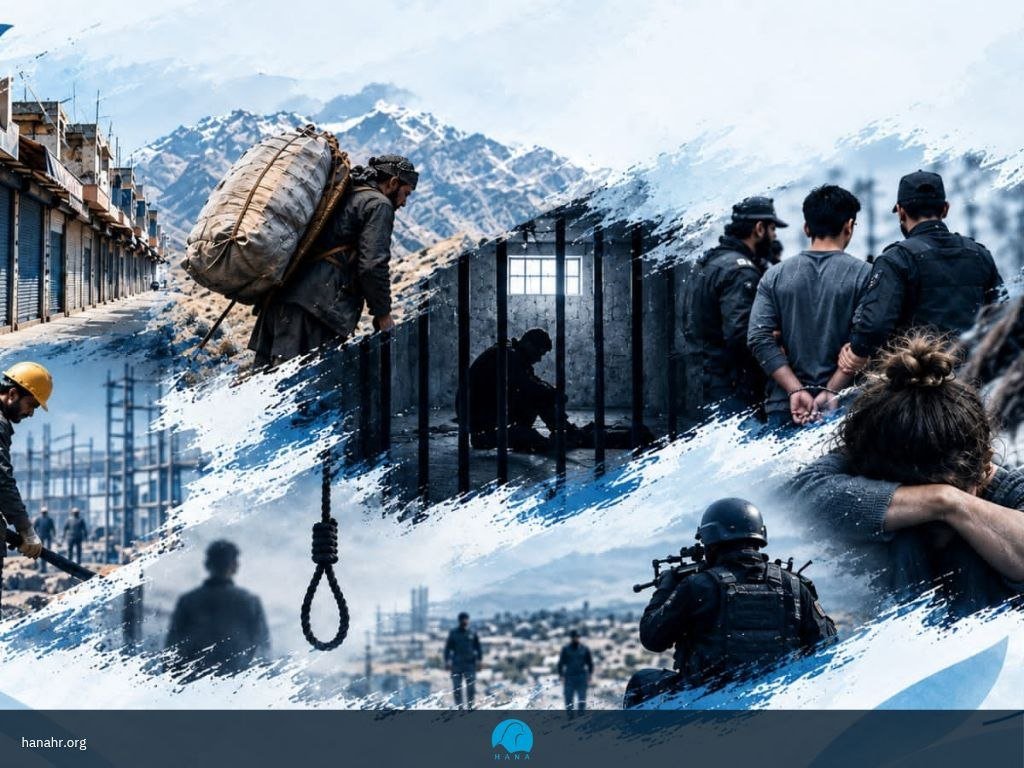
The data recorded in September 2026 points to the continuation of a range of serious human rights violations and concerns in Kurdistan. The detention of dozens of citizens, including women and individuals under 18, the handing down of heavy prison sentences, the carrying out of executions, the death of a prisoner under circumstances that call for investigation, lethal shootings of kolbars, worker deaths in workplace incidents, the killing of women within the family, and numerous recorded suicides stand among the most significant documented findings of this period.
Taken together, these cases show that the human rights situation in Kurdistan is not confined to security and political responses. The right to life and personal security, the prohibition of arbitrary detention, the guarantee of a fair trial, freedom of expression and peaceful protest, workplace safety, access to mental health services, and effective protection for women and children all bear on any assessment of the region’s human rights situation.
The Hana Human Rights Organization calls for an independent and effective investigation into deaths resulting from the use of lethal force and deaths in custody, full observance of fair trial guarantees for those in detention, an end to the use of security and administrative tools against peaceful activity, stronger mechanisms to protect women and children at risk of violence, effective enforcement of workplace safety standards, and expanded access to mental health services.
Hana further stresses the necessity of ensuring that victims and their families have access to truth, justice, and effective reparation. Independent investigation, the identification of responsible individuals and institutions, and guarantees of non recurrence are fundamental requirements of accountability for human rights violations.
Hana Human Rights Organization
October 1, 2026
The use and republication of the statistics in this report is permitted with attribution to the source