
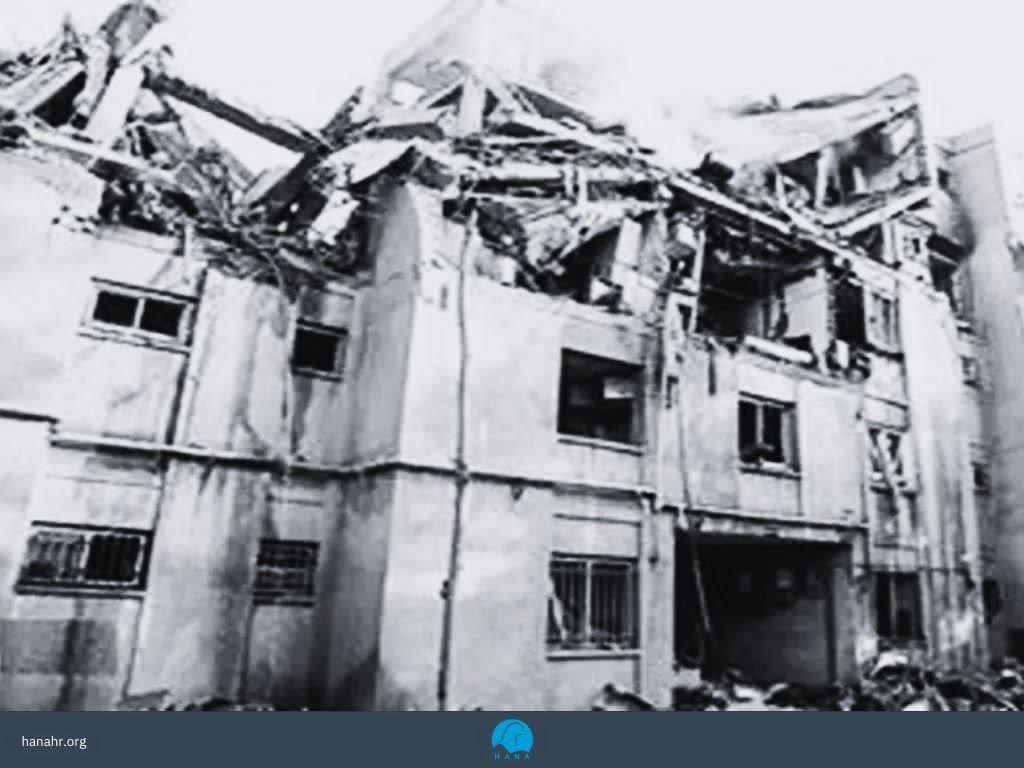
Citing official data, Hana Human Rights Organization declares that following recent military conflicts, tens of thousands of residential units across various regions of the country have suffered damage, with a portion of them completely destroyed. From a legal standpoint, this situation is not merely an infrastructural issue but directly results in the violation of the right to housing as a fundamental human right.
Under Article 11 of the International Covenant on Economic, Social and Cultural Rights, the state is obligated to recognize the right of everyone to adequate housing and to utilize the maximum of its available resources to ensure the realization of this right. Furthermore, according to General Comment No. 4 of the Committee on Economic, Social and Cultural Rights, the right to housing necessitates access to a safe and habitable shelter coupled with human dignity. In situations where citizens lose their homes as a result of armed conflicts, the government’s commitment to adopt compensatory measures is an immediate and binding obligation and cannot be reduced to indirect or delaying policies.
Within this framework, examining the allocation of public resources is of decisive importance. Credible international reports, including a report by Reuters news agency, indicate that during the widespread conflicts between Israel and Hezbollah between 2023 and 2024, cash assistance was provided to over 230,000 affected Lebanese families, and sums of approximately $8,000 along with rental assistance were allocated for destroyed residential units. These contributions are described in the report as being “largely financially supported by Iran”.
From a legal perspective, what matters is not merely the existence of such support, but its implications for assessing the government’s obligations. Under Article 2, Paragraph 1 of the Covenant, states are required to utilize the “maximum of available resources” to realize the economic and social rights of their citizens. Consequently, in a situation where credible evidence points to the allocation of resources in extraterritorial domains, the failure to adopt effective, immediate, and accessible measures to compensate for widespread domestic housing damages cannot be justified by citing resource limitations.
Hana Human Rights Organization emphasizes that replacing direct financial support with mechanisms such as building density incentives or policies that are inaccessible to a significant portion of citizens during an economic crisis effectively shifts the burden of compensation onto the victims. Such an approach stands in blatant contradiction to the government’s binding obligations regarding the right to housing, the prevention of homelessness, and the guarantee of a minimum standard of decent living.
Accordingly, Hana Human Rights Organization clarifies that the government of the Islamic Republic of Iran is obligated to promptly and transparently implement effective compensatory policies, including direct financial provision, temporary sheltering, and the reconstruction of destroyed units. The persistence of the current situation, in light of the government’s international commitments, can be construed as a systematic violation of the right to housing and a breach of human rights obligations.