
HANA Judiciary Monitoring Report Series
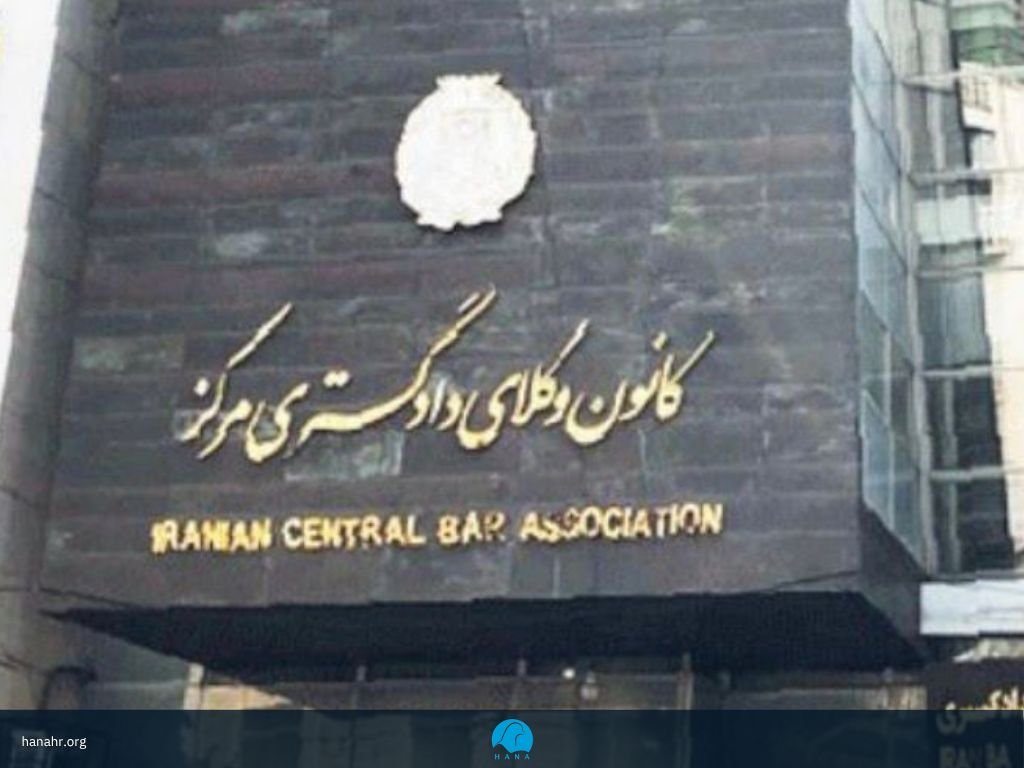
The publication of a list of 44 applicants for law licenses under Article 8 of the Law on the Independence of the Bar Association has once again drawn attention to the manner in which judges and certain former officials of state institutions enter the legal profession in Iran. A number of the individuals on this list are judges of the judiciary who, by virtue of a statutory privilege, may apply for a law license without going through the usual process of examination and apprenticeship.
Under Clause (b) of Article 8 of the Law on the Independence of the Bar Association, holders of a university law degree who have at least five years of judicial service, and whose judicial qualification has not been revoked by the Supreme Disciplinary Court for Judges, may avail themselves of this privilege. This provision makes judicial tenure and the absence of disciplinary disqualification the primary basis for eligibility, without providing for a judge’s documented record in human rights violation cases to independently serve as one of the criteria for assessing his professional fitness.
Hana’s review shows that, among the applicants, the names of at least two judges with documented records appear in human rights reports. Ali Hassanpour, a deputy prosecutor at the Prosecutor’s Office of the Supreme Court and the former prosecutor of Bushehr, is among these individuals. His name appears in human rights documentation relating to the suppression of the Aban1398 protests of November 2019, and responsibilities have been attributed to him in connection with the mass detention of protesters and the use of lethal force against unarmed demonstrators. These matters bear directly on fundamental rights such as the right to life, liberty and personal security, and freedom of assembly.
Mohammad Reza Mohammadi Kashkouli is likewise among the applicants. He has presided over cases that have been criticized by human rights institutions for violations of fair trial guarantees. Mohammad Salas was sentenced to death in Branch 9 of the Tehran Criminal Court, over which he presided. In the course of this case, numerous reports were published concerning torture, the extraction of forced confessions, restricted effective access to counsel, and a lack of adequate opportunity for a defense. Kashkouli has also played a role in judicial proceedings against journalists and media activists.
Prior to this as well, Abbas Jafari Dolatabadi, the former Tehran prosecutor, had successfully obtained a first grade law license through the special legal pathway available to former judges. Dolatabadi remains under European Union human rights sanctions on account of his responsibility for human rights violations, and the United States has likewise previously sanctioned him for his role in serious human rights violations. The issuance of a law license to such an official demonstrates that being placed on a human rights sanctions list, or having a documented record of judicial conduct, does not, in itself, constitute an obstacle to entering the legal profession in Iran.
This situation is of particular significance from the standpoint of international standards governing the legal profession. The United Nations Basic Principles on the Role of Lawyers emphasize the independence of the legal profession from government, the self governance and independence of bar associations, and non discriminatory access to the profession. Under these same standards, lawyers, in carrying out their professional duties, are to uphold human rights and fundamental freedoms and to observe the independence, dignity, and professional ethics of the legal profession.
Nevertheless, Iranian law requires of ordinary applicants seeking entry into the legal profession, in addition to academic and professional qualification, conditions such as “belief in and practical commitment to Islam,” allegiance to the Islamic Republic and to the guardianship of the jurist, and the absence of certain political affiliations. As a result, a citizen’s religious or political beliefs can affect the determination of his or her fitness to enter the legal profession, while a judicial official’s documented record in cases involving violations of the right to life, torture, the suppression of protests, or violations of the right to a fair trial does not necessarily bar him from receiving the privilege of entering this same profession.
From a human rights perspective, the issue is not merely the exemption of a number of judges from the bar examination, but rather a double standard in the definition and assessment of professional fitness. A system that measures citizens’ ideological and political loyalty as a condition for entering the legal profession, yet possesses no independent, transparent, and effective criterion for examining the human rights record of officials who have wielded judicial power for years, stands at a considerable distance from the principles of the independence of the legal profession, non discrimination, and the professional responsibility of lawyers to uphold fundamental rights and freedoms.
The independence of the legal profession acquires real meaning and function only when bar associations are able, independently of the structures of power, to assess applicants’ professional fitness on the basis of legal criteria, professional ethics, and respect for human rights, and when the legal profession does not become a channel for transferring the privileges of former judicial officials.