
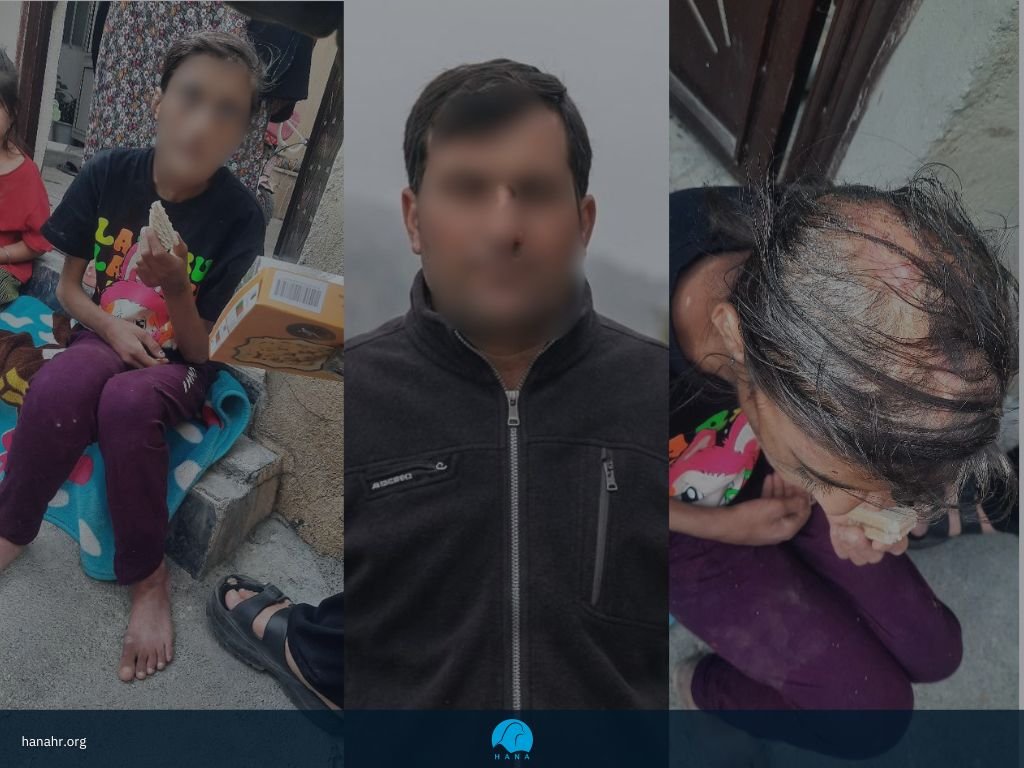
The Hana Human Rights Organization continues to follow with deep concern the harrowing child abuse case involving two sisters, aged 7 and 15, in Sanandaj. According to official records and gathered data, the children were locked in the home’s restroom for prolonged periods, denied basic access to food, care, and security, and subjected to relentless physical and psychological abuse. Following an intervention by social emergency services and a judicial order, they were rescued from these inhumane conditions, showing multiple fractures and severe physical trauma. Reports indicate that one of the children remains hospitalized, while the other is under the care of the State Welfare Organization (Behzisti).
Information obtained by Hana indicates that the children’s father, identified by the initials “R.R.,” is a resident of Sanandaj and an employee of the Sanandaj Judiciary. If confirmed, this detail elevates the case beyond a criminal matter of child abuse, raising grave concerns over potential conflicts of interest, administrative influence, and the undermining of an independent judicial process. The suspect’s employment within the judiciary underscores the urgent need for absolute transparency, his immediate administrative suspension, and strict guarantees for an independent and impartial prosecution.
From the perspective of Iranian domestic law, the 2020 Child and Adolescent Protection Law mandates immediate intervention by responsible agencies in any instances of violence, ill-treatment, neglect, confinement, or physical and psychological harm against minors. This statute was not enacted merely to penalize perpetrators after a tragedy occurs, but to prioritize prevention, early identification, and effective protection for at-risk children. Therefore, the critical question in this case remains: how were two children subjected to prolonged confinement, fractures, and severe trauma without the country’s welfare and protective systems executing a timely intervention?
Internationally, as a state party to the United Nations Convention on the Rights of the Child (CRC), the Islamic Republic of Iran is legally bound to protect all children from every form of physical or mental violence, maltreatment, neglect, and torture. Article 19 of the CRC requires governments to implement legislative, administrative, social, and educational measures to prevent, identify, report, and intervene in cases of violence against children. Furthermore, the UN Committee on the Rights of the Child, in its General Comment No. 13, explicitly states that no form of violence against children is justifiable, and governments cannot limit their responsibility solely to criminal prosecution after the crime has taken place.
Hana emphasizes that in cases of this nature, accountability does not rest solely on the direct perpetrators. The state and its protective institutions bear responsibility for any failure in early detection, prevention, and timely intervention. When children in an urban environment endure torture, confinement, and broken bones over an extended period, it exposes an institutional failure to protect the most vulnerable members of society.
The Hana Human Rights Organization condemns the torture, abuse, and inhumane treatment of these two young girls in the strongest possible terms. No family relationship, custody right, guardianship, administrative affiliation, or professional status can ever justify violence against children or immunize a perpetrator from accountability. Hana further warns that any attempt to suppress the truth, exert institutional influence on the case, minimize the suspects’ accountability, or dismiss the suffering of the victims constitutes a secondary violation of child rights and a direct assault on justice.
This case must serve as a critical test for institutional accountability, transparency, and the protection of children surviving domestic violence. In an environment where the rule of law in Iran is severely compromised, safeguarding children has become an urgent human rights demand. The state’s responsibility begins the moment a child is placed at risk not merely after the physical marks of torture are exposed and public outrage forces a reaction.