
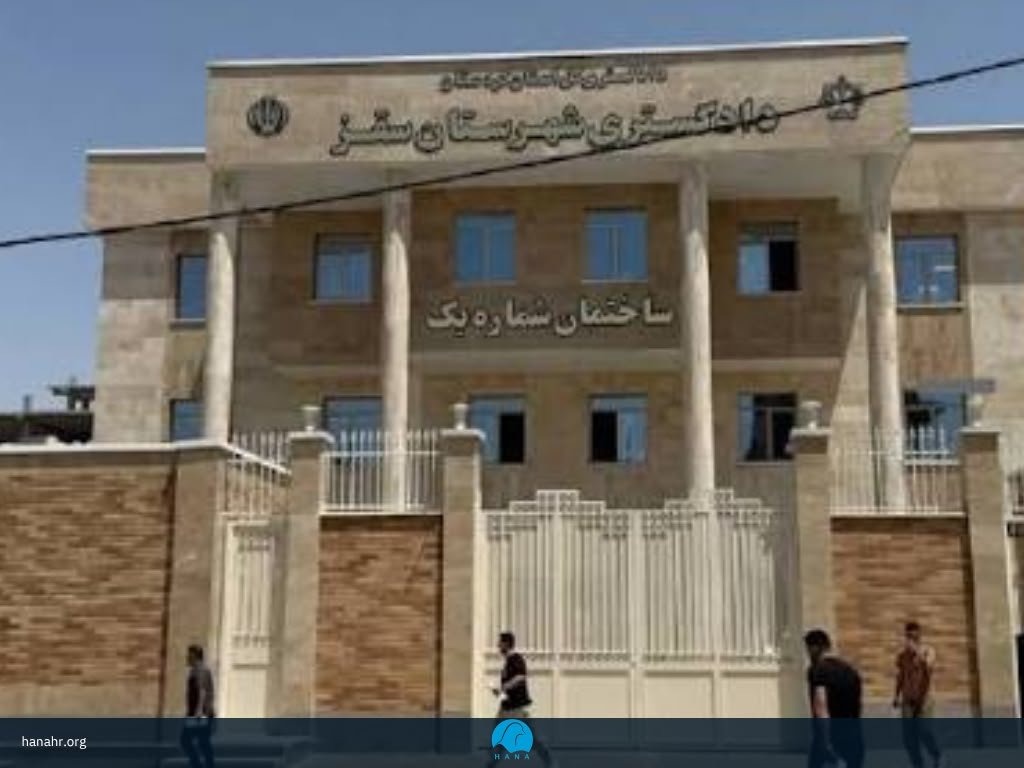
According to exclusive information received by the Hana Organization for Human Rights, at least 14 employees and one judge of the Saqqez Judiciary have, in recent days, been detained in connection with cases involving charges of bribery, embezzlement, abuse of office, and financial corruption. More than 10 additional individuals have been summoned, and a number of them have been released on bail.
Hana’s informed sources within the Saqqez Judiciary state that numerous complaints and reports concerning the receipt of bribes and the abuse of judicial and administrative positions had previously been raised, but that the Judiciary’s own protection unit, the Judges’ Disciplinary Prosecutor’s Office, and other internal mechanisms have, in practice, either been unable or unwilling to prevent the spread of these violations. According to this same information, the scale of the case ultimately grew to a point where the Saqqez Intelligence Department became directly involved in the matter.
Hana’s sources have also reported a dispute between the Intelligence Department and judicial officials over control and the continued handling of this case. Hana is conducting further investigation into this aspect of the information.
Should this information ultimately be confirmed, what has occurred within the Saqqez Judiciary cannot be reduced to the misconduct of a few individuals. When bribery, abuse of office, and financial corruption penetrate an institution that is itself responsible for administering justice and handling the public’s complaints, the matter becomes one of structural corruption within the machinery of government. Such a situation demonstrates that the Islamic Republic’s judiciary’s internal mechanisms of oversight, accountability, and corruption control lack the necessary independence and effectiveness.
Corruption within the judicial apparatus is not merely an economic offense. This corruption directly destroys citizens’ right to a fair trial, equality before the law, and access to justice, and creates the conditions for the buying and selling of judicial decisions, impunity for those with influence, and the erosion of the rights of those without power.
Hana emphasizes that a genuine handling of this case requires a full examination of the chain of corruption, the role of supervisory officials, networks of influence, and any institutional support or turning a blind eye. Confining the case to a few employees or low level defendants, without examining the structural responsibility of judicial institutions, will amount to nothing more than a reproduction of the same cycle of corruption and impunity.