
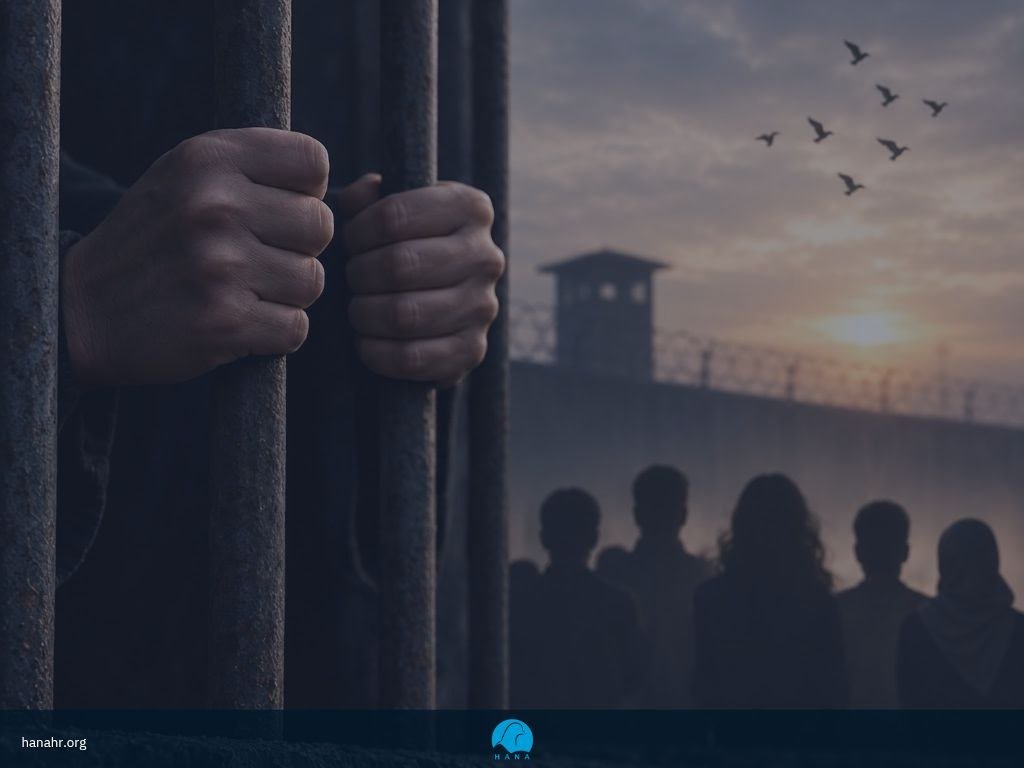
October 30, International Political Prisoners Day, serves as a reminder of the resistance of individuals deprived of their freedom because of their beliefs and political opposition. On this occasion, the Hana Human Rights Organization expresses its solidarity with all political and prisoners of conscience in Iran and voices its deep concern over the continued use of arbitrary detention, harsh sentences, and criminal justice mechanisms to suppress political dissent. The widespread arrests and convictions of Kurdish citizens on political grounds, alongside the alarming situation of political prisoners from Baloch, Arab, and other communities across Iran, warrant particular attention from human rights organizations.
Under international human rights law, being a political prisoner is not a criminal offense in itself, but rather a concept relating to the nature or political motivation of a deprivation of liberty. Holding dissenting views, criticizing the government, engaging in peaceful political and civil activities, and advocating for linguistic and cultural rights do not, in themselves, constitute crimes. The state cannot disregard the prohibition of arbitrary detention by assigning vague security-related charges to such activities. Any criminal prosecution must be based on specific conduct, individual responsibility, and credible evidence, and must be examined through an independent and fair process that fully respects the rights of the defense.
Findings documented by the Hana Human Rights Organization point to the widespread use of security and judicial measures against Kurdish citizens. According to the organization’s annual report, at least 827 arrests of Kurdish citizens were recorded in 2025, including 56 women and 29 children. During the first six months of 2026, Hana also documented the arrests of at least 540 Kurdish citizens and the execution of 10 individuals in cases of a political or security-related nature. These figures refer to recorded cases of arrest and execution and should not be conflated with the total number of political prisoners currently incarcerated. Nevertheless, the scale of these cases and concerns regarding arrest procedures and judicial proceedings underscore the need for independent oversight of security and judicial institutions in Kurdistan.
The continued prosecution of Kurdish political activists, teachers, journalists, and civil and cultural activists, particularly in cases involving peaceful activities, raises serious questions about compliance with the principles of equality and non-discrimination in the administration of criminal justice. In 2024, the United Nations Committee on the Elimination of Racial Discrimination also expressed concern about structural discrimination against Iran’s national and ethnic and religious communities, as well as the use of vague criminal provisions to restrict their fundamental rights. Hana emphasizes that a person’s identity or political beliefs must not serve as grounds for criminal suspicion, and that advocating for cultural rights and equal political participation does not, in itself, justify prosecution or punishment.
The cases of Zeinab Jalalian, Pakhshan Azizi, and Vrisheh Moradi are among the prominent cases involving Kurdish political prisoners that Hana has followed. The reissuance of a death sentence against Vrisheh Moradi after the Supreme Court overturned her previous sentence has raised serious concerns regarding compliance with fair trial guarantees and the protection of the right to life. The continued lack of information about the fate and whereabouts of Khaled Barzanji also underscores the urgent need to investigate reports of his enforced disappearance. Alongside these cases, Hana’s reports on the execution of Amer Ramesh, a Baloch political prisoner, and six Arab prisoners in Ahvaz highlight the importance of independent scrutiny of judicial proceedings and equal protection of the rights of political prisoners throughout Iran.
The Islamic Republic of Iran is obligated under the International Covenant on Civil and Political Rights to respect the right to liberty and security of person, the prohibition of arbitrary detention, the right to a fair trial, freedom of expression and association, and equality before the law. A general invocation of national security does not exempt the state from these obligations. Under Article 6 of the Covenant and the interpretation of the United Nations Human Rights Committee, in countries that have not abolished the death penalty, its imposition is permissible only within the narrowest scope of the “most serious crimes,” understood as crimes involving intentional killing. The imposition of such a penalty following an unfair trial also constitutes a violation of the right to life. No charge, regardless of its nature, can justify torture, coerced confessions, or the denial of an effective opportunity to mount a defense.
The Hana Human Rights Organization calls for the immediate and unconditional release of all individuals imprisoned solely because of their beliefs or peaceful activities. The organization also calls for an immediate halt to executions, independent reviews of political cases, guaranteed access for detainees to legal counsel of their choice, their families, and medical care, and effective investigations into allegations of torture and enforced disappearance. Independent investigations into serious human rights violations, accountability for those responsible, and guarantees of victims’ rights to seek justice and obtain effective reparation are also requirements arising from the state’s international obligations.
Hana calls on United Nations human rights mechanisms to continue monitoring the situation of all political prisoners in Iran, with particular attention to Kurdish political prisoners and other individuals at risk of discriminatory prosecution and punishment.
Defending the rights of political prisoners, regardless of their beliefs, political affiliations, or identities, is an obligation rooted in the universality of human rights and the principle of equality before the law. Particular attention to the situation of Kurdish political prisoners does not mean prioritizing one community’s rights over those of another. Rather, it is a response to the scale of documented violations affecting them. No government can criminalize political dissent as such or confer legal legitimacy on repression by recasting peaceful activities as security offenses. Protecting political freedoms requires guaranteeing everyone the right to oppose those in power without fear of arrest or punishment.