
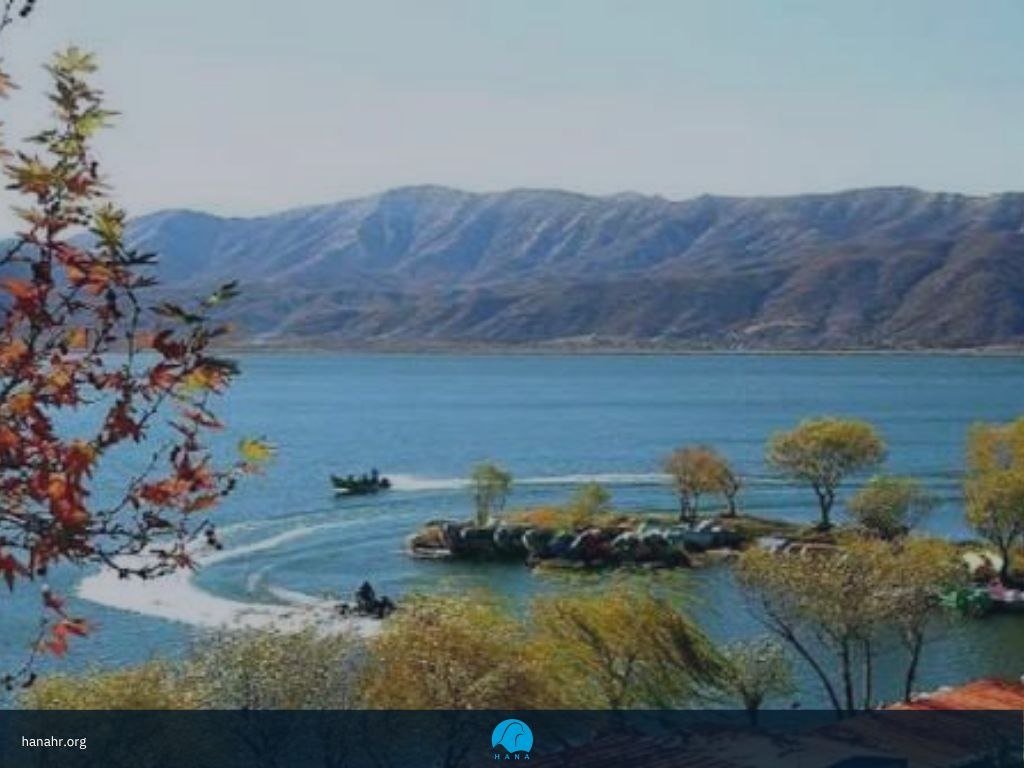
According to information received by the Hana Human Rights Organization, the Marivan County Water and Wastewater Department has begun drilling a deep well in the northern part of the Zarivar International Wetland, within the Sharwan birdwatching site. The operation has prompted protests from environmental activists and raised serious questions about the legal authorization for the drilling, the assessment of its environmental impacts, and compliance with wetland protection regulations.
Zarivar Wetland is one of Kurdistan’s valuable ecosystems, and its ecological stability depends on maintaining a balance between surface water and groundwater resources. Drilling and potential water extraction within the wetland, without independent hydrogeological assessments, could affect groundwater levels, the wetland’s hydrological regime, and bird habitats. These concerns are heightened by the fact that Zarivar has already faced declining water quality, pressure from urban development, and shortcomings in water resource management.
From an environmental law perspective, water supply projects cannot be implemented independently of the requirements for protecting sensitive ecosystems. Article 50 of Iran’s Constitution recognizes environmental protection as a public duty and prohibits activities that cause irreparable environmental damage. The principles of prevention and precaution in environmental law also require that the potential impacts of any intervention affecting the wetland’s water resources be assessed in advance, and that information regarding permits, projected extraction volumes, and ecological impacts be made publicly available.
The Hana Human Rights Organization emphasizes that ensuring access to drinking water for citizens and protecting natural resources are simultaneous responsibilities of public authorities, and neither can be pursued without meeting the obligations associated with the other. Continuing drilling operations without clarifying their legal basis or conducting an independent assessment of their impacts conflicts with the state’s obligation to protect the environment and respect local communities’ right to a healthy environment. Despite protests by environmental activists, Hana has not yet received reliable information confirming whether the operation has been halted, the well sealed, or the project’s technical and legal documentation made public.