
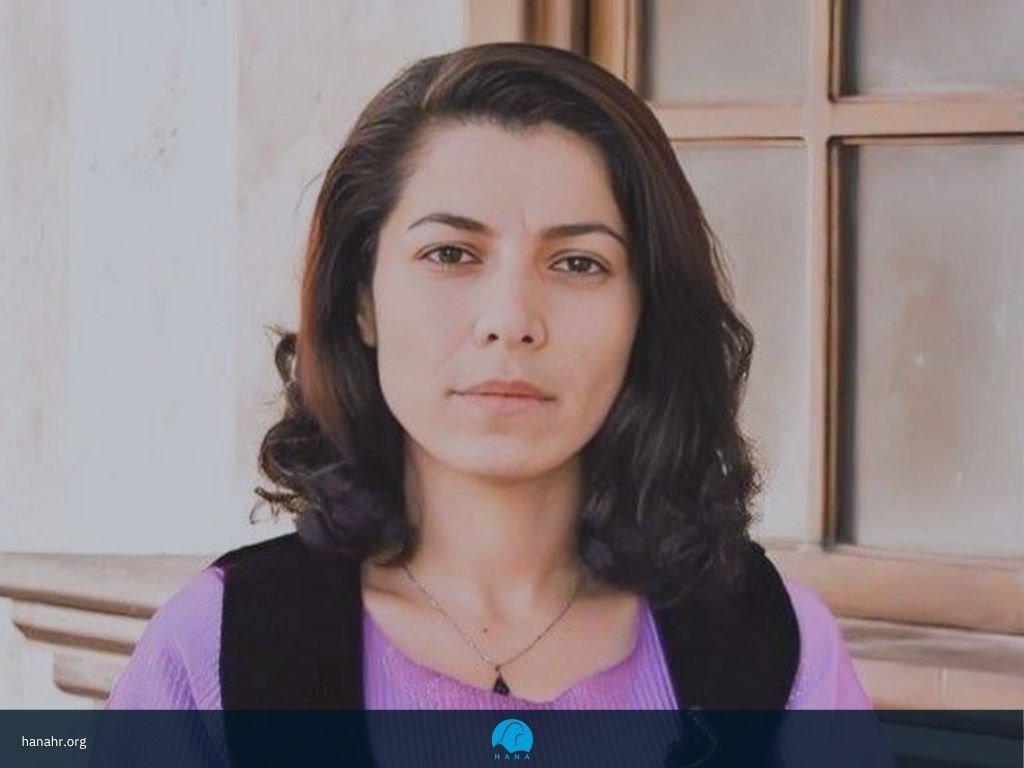
Branch 15 of the Tehran Revolutionary Court, presided over by Abolghasem Salavati, has once again sentenced Varisheh Moradi, a Kurdish political prisoner and women’s rights activist, to death on the charge of “membership in a rebellious group.” The verdict was notified to her lawyers on Wednesday, October 14, 2026 (22 Mehr 1405), and may be appealed within 20 days. The renewed death sentence comes despite the Supreme Court of Iran having previously overturned the ruling due to fundamental deficiencies in the investigation and failure to observe legal procedures.
Varisheh Moradi, also known as “Jovana Seneh,” was arrested near Sanandaj on July 31, 2023 (10 Mordad 1402). Following months of interrogation in Ward 209 of Evin Prison, she was transferred to the women’s ward. Her first death sentence was issued in November 2024 (Aban 1403). However, in December 2025 (Azar 1404), Branch 9 of the Supreme Court overturned the verdict after identifying investigative deficiencies, including the failure to formally notify her of the charge on which the death penalty had been based, and remanded the case for retrial.
Amir Sajjadi and Keyvan Azizi, two of Moradi’s lawyers, have stated that the court reissued the death sentence without carrying out the investigations required by the Supreme Court and merely changed the legal classification of the charge. This raises fundamental concerns regarding criminal procedure. Under Article 470(a) of Iran’s Code of Criminal Procedure, when a judgment is overturned due to investigative deficiencies, the court is required to complete the investigations specified by the Supreme Court. Changing the classification of a charge cannot substitute for remedying investigative deficiencies or safeguarding the defendant’s right to a defence.
From the perspective of substantive criminal law, the classification of an act as baghy (armed rebellion) requires the establishment of the conditions stipulated in Article 287 of Iran’s Islamic Penal Code, including an armed uprising by a group against the foundations of the state and the use of weapons. Mere allegations of membership in an organization, without proof of the legal elements of the offence and the conditions required for imposing the death penalty, cannot constitute sufficient grounds for taking a defendant’s life. This distinction is further underscored by Article 288 of the same code. Moradi’s lawyers have also emphasized that their client did not participate in any armed operation against the Islamic Republic of Iran and that her activities in northern Syria were undertaken as part of the fight against ISIS.
The Hana Human Rights Organization maintains that the objections raised in this case cannot be reduced to merely procedural disagreements. Precise notification of charges, the opportunity to mount an effective defence, the establishment of the legal elements of an offence, and the proper consideration of the grounds on which a previous judgment was overturned are fundamental safeguards in criminal proceedings. These safeguards are particularly critical in cases that may result in the death penalty. Furthermore, according to the United Nations Human Rights Committee’s interpretation of Article 6 of the International Covenant on Civil and Political Rights (ICCPR), the death penalty must be restricted to the most serious crimes involving intentional killing.
The reissuance of the death sentence against Varisheh Moradi, despite the specific deficiencies identified by the Supreme Court and her lawyers’ assertion that those deficiencies remain unremedied, raises fundamental questions about the legal basis of the verdict and the validity of the retrial. Unless the elements of the alleged offence are established through credible evidence and fair-trial requirements are upheld, pursuing a punishment that deprives a person of life is incompatible with the principle of legality, the right to a defence, and the state’s obligation to protect the right to life.