
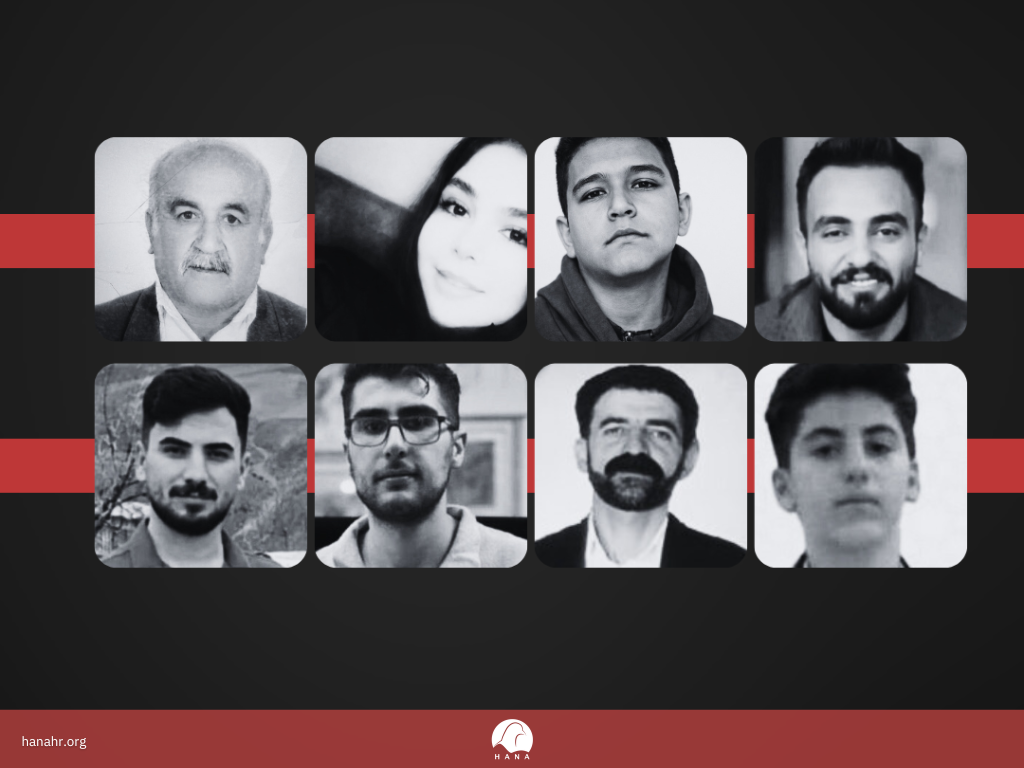
The Hana Human Rights Organization announces that, as of the time of preparing this report, the identities of 25 Kurdish civilian citizens who lost their lives as a result of the recent airstrikes have been verified by the organization.
From the perspective of international human rights law and international humanitarian law, the right to life is a fundamental and non-derogable right. Under Article 6 of the International Covenant on Civil and Political Rights, states are obligated not only to refrain from the arbitrary deprivation of life, but also to take effective measures to protect the lives of individuals under their jurisdiction. This obligation becomes even more significant in times of crisis, armed conflict, or high-risk situations, requiring states to take all reasonable and available measures to reduce risks faced by civilians.
Hana’s findings indicate that the deaths of these citizens were not solely the result of the airstrikes themselves, but are also directly linked to the clear absence of preventive and protective measures for civilians. The lack of standard shelters, the absence of early warning systems, the shortage of emergency evacuation mechanisms, and serious deficiencies in crisis management all reflect a structural failure in the Iranian state’s obligation to protect the lives of its citizens. While public resources have been spent for many years on military and security programs, a large portion of the civilian population in cities and residential areas has remained deprived of even the most basic protective infrastructure during emergency situations.
International humanitarian law governing armed conflicts contains fundamental principles, including the distinction between military targets and civilians, the principle of precaution in attack, and the prohibition of indiscriminate or disproportionate attacks, all intended to minimize harm to civilian populations. In such circumstances, any policy, action, or omission that effectively exposes civilians to a foreseeable risk of death or injury must be assessed in light of international responsibility and the protective obligations of states.
The Hana Human Rights Organization emphasizes that exposing society to the consequences of a costly and deadly confrontation without providing even minimal mechanisms for civilian protection is not merely an administrative failure; it may constitute a violation of the state’s fundamental obligations regarding the right to life, personal security, and human dignity. The people played no role in the major political and security decisions that placed them in such danger, yet they have paid the heaviest price with their lives and health.
Based on the available verified information, the names of the civilians identified so far are as follows:
- Shayan Mam-Salimi, 15, Bukan
- Peyman Erfani, 30, Bukan
- Ardalan Pakdel, 21, Bukan
- Nabi Gholami, Kamyaran
- Bahram Ghasri, Sanandaj
- Jamal Ghaderi, Sarvabad
- Abubakr Alizadeh, 63, Naqadeh
- Shaho Bahrami, Dezli, Sarvabad
- Mohsen Zamani, Dezli, Sarvabad
- Hasti Mohammadi, 16, Ravansar
- Mahan Zarei, 14, Kamyaran
- Fardin Darboui, Marivan
- Samira Sharifi, Divandareh
- Fereydoun Amini, Divandareh
- Hamed Saeidi, Divandareh
- Soleiman Mollaviseh, Divandareh
- Farnaz Rashidpour, Divandareh
- Bahram Seyedi Tanha, Salas-e Babajani
- Asad Mohammadi, 60, Paveh
- Mitra Jilavi, Marivan
- Farzad Bazargan, 34, Marivan
- Karzan Bazargan, 4, Marivan
- Abubakr Moghmi, Mahabad
- Mohammad-Ali Javanmard, Shamalkan, Orumiyeh
- Nemat Shamsipour, Shamalkan, Orumiyeh
The Hana Human Rights Organization continues to examine and verify additional reports. Given the critical condition of some of the injured and the continued airstrikes, there is a possibility that the number of victims may increase. Hana will continue its documentation efforts and emphasizes the necessity of accountability, an independent and immediate investigation, and the adoption of effective measures to protect civilians.