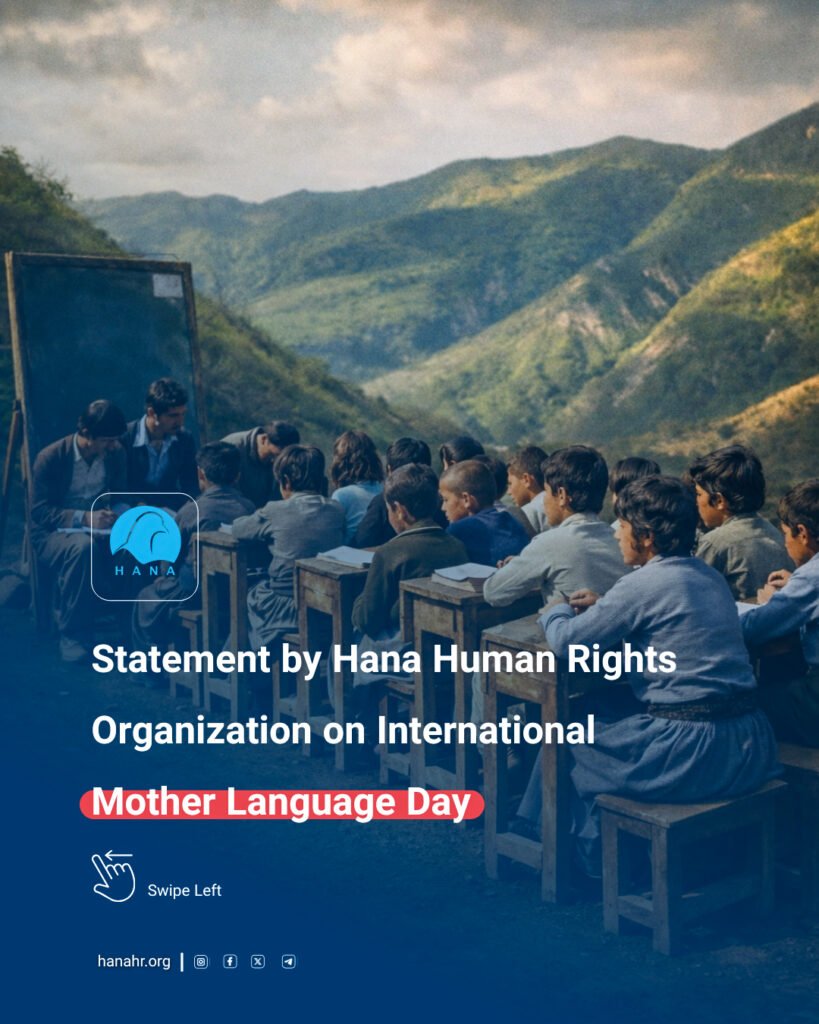
Hana Human Rights Organization affirms that the right to use and be educated in one’s mother tongue constitutes a fundamental human right protected under international human rights law, particularly in multilingual and multiethnic societies. This right is essential to ensuring equality, human dignity, and effective access to education and public life for linguistic minorities. The protection of linguistic rights is not merely a cultural entitlement but a legal obligation arising from the principle of non-discrimination and equal protection of the law.
International legal instruments explicitly recognize and protect the rights of linguistic minorities. Article 2 of the Universal Declaration of Human Rights guarantees all rights and freedoms without discrimination, including on the basis of language. Article 26 of the International Covenant on Civil and Political Rights prohibits discrimination and requires equal protection before the law, while Article 27 specifically protects the rights of minorities to use their own language. Furthermore, Article 13 of the International Covenant on Economic, Social and Cultural Rights guarantees the right to education, which must be accessible and acceptable to all without discrimination. United Nations treaty bodies and Special Rapporteurs have consistently affirmed that education in the mother tongue is essential for equal access to education, preservation of identity, and effective participation in society. The United Nations Special Rapporteur on Minority Issues has emphasized that denial of mother-tongue education constitutes a form of structural discrimination that undermines equality and social inclusion.
Despite these clear international legal obligations, the Kurdish language in Iran remains subject to systematic restriction and suppression. Although Article 15 of the Constitution of the Islamic Republic of Iran formally permits the use of regional and minority languages in the press, media, and teaching of their literature, the Iranian authorities have failed to implement this provision in practice. Kurdish is excluded as a language of instruction in public schools, and education is conducted exclusively in Persian. This policy creates structural barriers to education for Kurdish-speaking children, undermines educational attainment, and violates the principle of equal access to education guaranteed under international law.
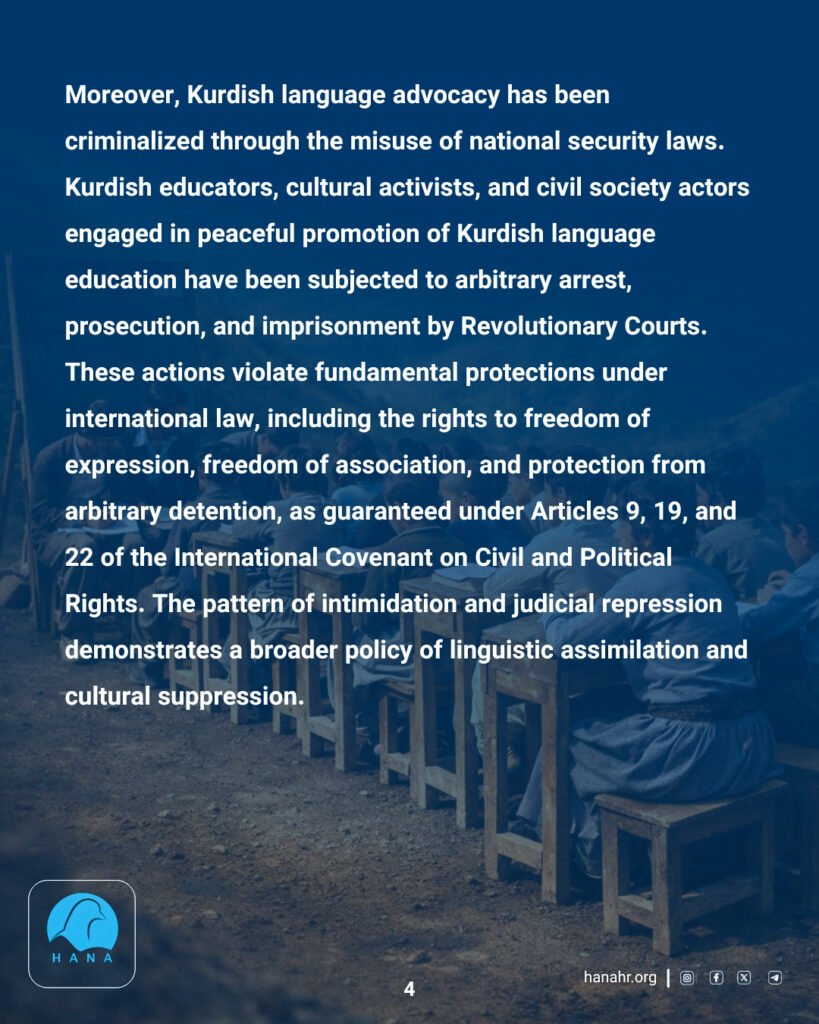
Moreover, Kurdish language advocacy has been criminalized through the misuse of national security laws. Kurdish educators, cultural activists, and civil society actors engaged in peaceful promotion of Kurdish language education have been subjected to arbitrary arrest, prosecution, and imprisonment by Revolutionary Courts. These actions violate fundamental protections under international law, including the rights to freedom of expression, freedom of association, and protection from arbitrary detention, as guaranteed under Articles 9, 19, and 22 of the International Covenant on Civil and Political Rights. The pattern of intimidation and judicial repression demonstrates a broader policy of linguistic assimilation and cultural suppression.
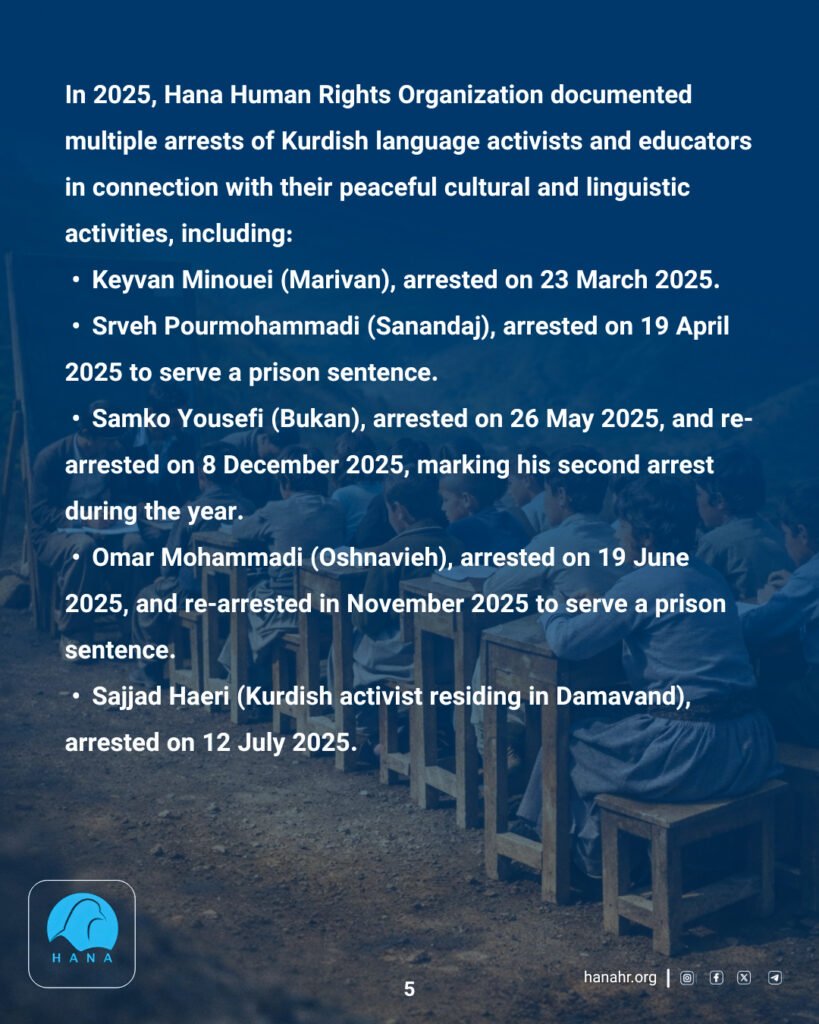
In 2025, Hana Human Rights Organization documented multiple arrests of Kurdish language activists and educators in connection with their peaceful cultural and linguistic activities, including:
- Keyvan Minouei (Marivan), arrested on 23 March 2025.
- Srveh Pourmohammadi (Sanandaj), arrested on 19 April 2025 to serve a prison sentence.
- Samko Yousefi (Bukan), arrested on 26 May 2025, and re-arrested on 8 December 2025, marking his second arrest during the year.
- Omar Mohammadi (Oshnavieh), arrested on 19 June 2025, and re-arrested in November 2025 to serve a prison sentence.
- Sajjad Haeri (Kurdish activist residing in Damavand), arrested on 12 July 2025.
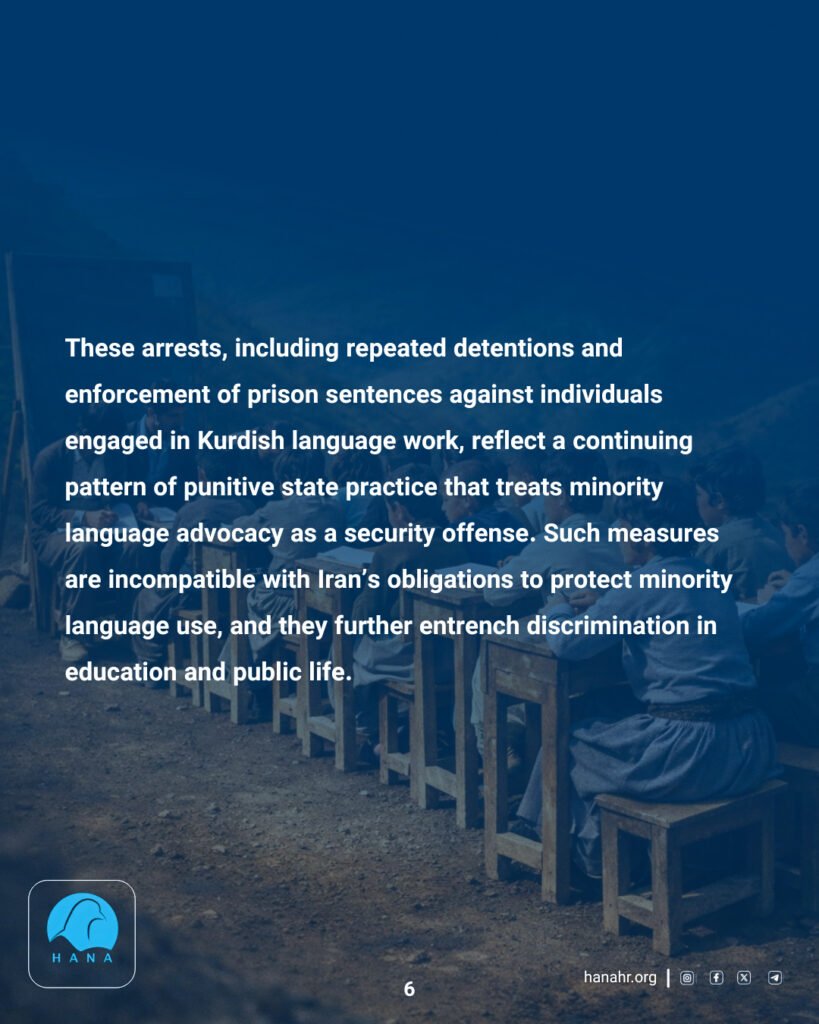
These arrests, including repeated detentions and enforcement of prison sentences against individuals engaged in Kurdish language work, reflect a continuing pattern of punitive state practice that treats minority language advocacy as a security offense. Such measures are incompatible with Iran’s obligations to protect minority language use, and they further entrench discrimination in education and public life.
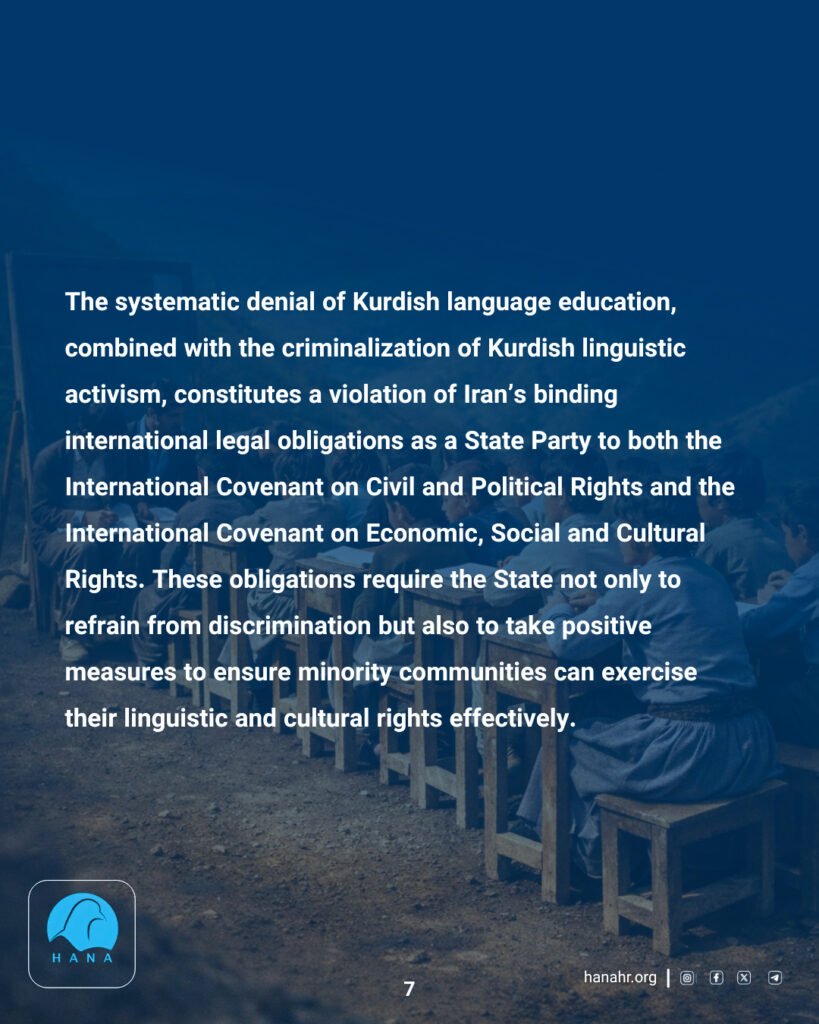
The systematic denial of Kurdish language education, combined with the criminalization of Kurdish linguistic activism, constitutes a violation of Iran’s binding international legal obligations as a State Party to both the International Covenant on Civil and Political Rights and the International Covenant on Economic, Social and Cultural Rights. These obligations require the State not only to refrain from discrimination but also to take positive measures to ensure minority communities can exercise their linguistic and cultural rights effectively.
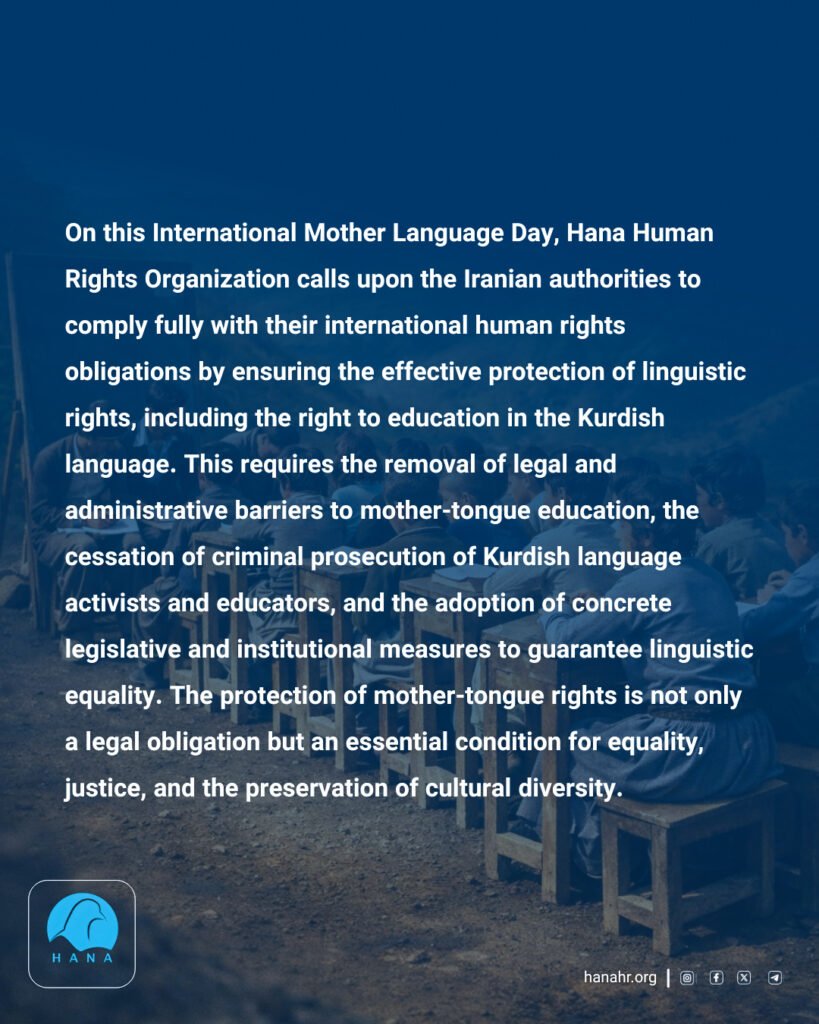
On this International Mother Language Day, Hana Human Rights Organization calls upon the Iranian authorities to comply fully with their international human rights obligations by ensuring the effective protection of linguistic rights, including the right to education in the Kurdish language. This requires the removal of legal and administrative barriers to mother-tongue education, the cessation of criminal prosecution of Kurdish language activists and educators, and the adoption of concrete legislative and institutional measures to guarantee linguistic equality. The protection of mother-tongue rights is not only a legal obligation but an essential condition for equality, justice, and the preservation of cultural diversity.