
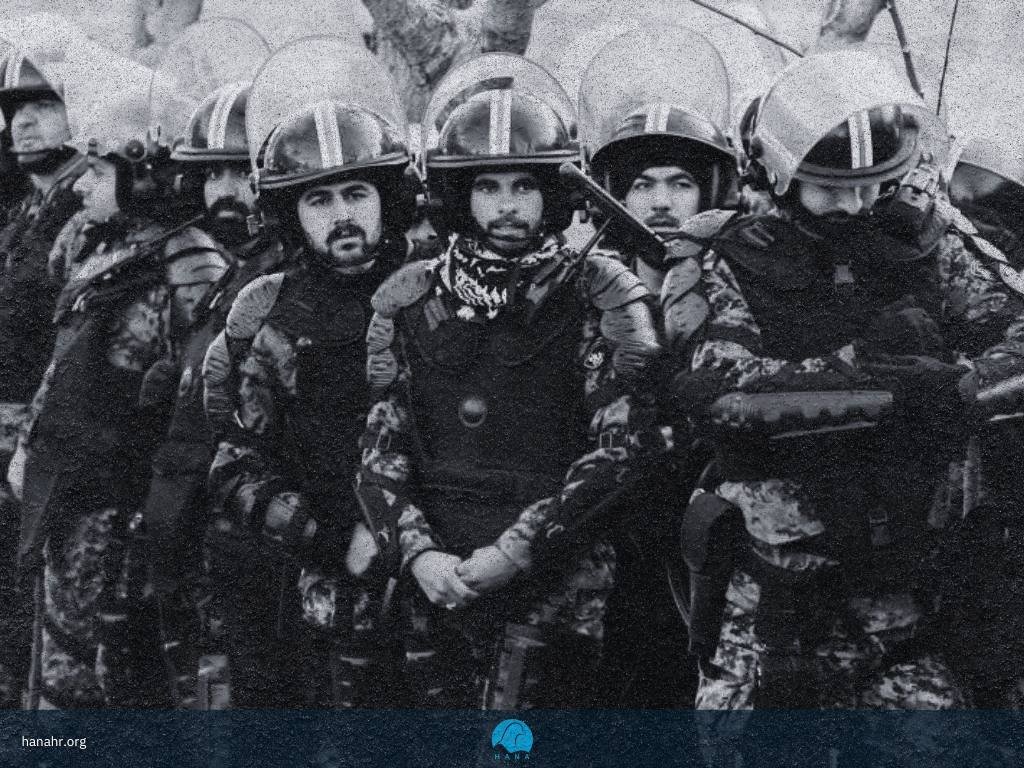
In recent days, some individuals — particularly political figures — have described the situation of crimes committed against protesters as a “war,” and consequently have referred to the committed offenses as “war crimes.”
However, from a legal perspective, what risks does such characterization entail?
What is the legal significance of accurately characterizing the current situation and the crimes committed by the Islamic Republic, and what is the difference between war crimes and crimes against humanity?
From a legal standpoint, the use of terminology may generate distinct legal consequences. Describing the current situation as a “war” is fundamentally incorrect in legal terms, as no armed conflict is taking place. On one side stand unarmed civilians who have taken to the streets to demand their most fundamental rights, and on the other side stands a government that, through its armed forces, is carrying out the killing of protesters.
One of the dangerous legal consequences of framing these circumstances as a war is the improper transformation of “protesters” into “combatants.” Under the law of armed conflict, attacking and killing combatants engaged in hostilities may be considered lawful. Therefore, the situation must not be characterized as a war, nor protesters implicitly portrayed as combatants, nor their deaths — even unintentionally — legitimized or classified as permissible war casualties.
What, then, is the difference between war crimes and crimes against humanity?
According to legal principles, the importance of this distinction lies in the severity of punishment. The more serious the crime, the harsher the applicable punishment. Under international law, crimes against humanity are considered more serious than war crimes. Furthermore, war crimes are limited to situations of armed conflict (whether internal or international), whereas crimes against humanity may occur in times of peace and are applicable to the present situation of popular protests.
Although killing occurs in both categories of crimes, the classification as crimes against humanity subjects the perpetrators to more severe criminal liability and punishment.
Characterizing the situation as a war and labeling the killing of civilians by the forces of the Islamic Republic as war crimes effectively downgrades the criminal nature of these acts from a more serious international crime to a lesser one.
Under international law, despite extensive efforts and the establishment of legal limitations such as international humanitarian law aimed at reducing human suffering during armed conflicts, war has never been categorically declared unlawful, and killing may be permitted under certain conditions. By contrast, no such legal justification exists for the killing of protesters by a government during civil demonstrations.
Pursuant to Article 4 of the 1966 International Covenant on Civil and Political Rights — to which Iran is a State Party — the government is obligated to respect all rights enshrined in this international treaty with regard to protesters. Among the most important of these obligations, which have been flagrantly violated during the protests, are the right to life, the right to freedom of expression and peaceful assembly, the prohibition of torture, the prohibition of arbitrary detention, as well as the protection of the rights of women and children.
Therefore, the legal characterization of the current situation as a war is incorrect, and the improper use of such legal concepts may ultimately contribute to the implicit legitimization of violence against protesters.