
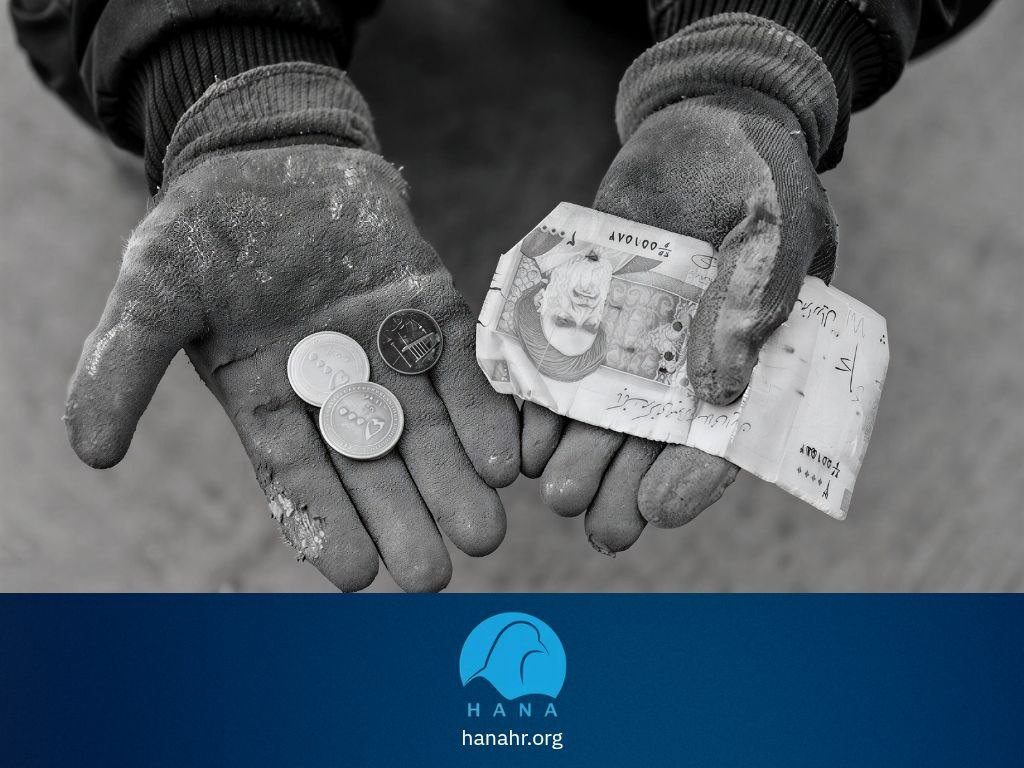
In recent days, Iran’s economic situation has reached a critical stage, posing a serious threat to the daily lives of many families, particularly low-income households. The sharp devaluation of the national currency, soaring inflation, and rising living costs have significantly reduced citizens’ ability to meet their basic needs and secure a minimum standard of living, directly impacting their fundamental human rights.
Under human rights principles and international obligations, every individual has the right to a dignified livelihood, adequate nutrition, and access to essential goods and services. Economic indicators show that within just the past week, the Iranian rial has experienced a notable decline against the US dollar, with the exchange rate rising from approximately 1,230,000 rials to 1,310,000 rials per dollar, an increase of around 6.5 percent. These currency fluctuations have driven up production and import costs, leading to higher prices and further limiting citizens’ purchasing power.
During the same short period, the prices of everyday food items, which are key components of household food security, have risen sharply. Dairy products, eggs, fruits, and even basic flatbread (lavash) have reportedly increased in price by nearly 40 percent within a single week. This surge has severely undermined the purchasing capacity of low-income families, restricting their access to adequate nutrition and minimum living standards.
At the same time, the increase in the price of unsubsidized gasoline from 30,000 rials to 50,000 rials has placed additional economic pressure on citizens. Fuel costs play a central role in the transportation of goods and services, and their rise has further contributed to the overall increase in prices across various sectors.
These developments come as workers’ base wages, amounting to a net monthly income of approximately 13 million tomans, are insufficient to cover even the basic needs of a single individual, let alone multi-member or tenant households. The widening gap between income and the real cost of living has left millions of Iranians facing livelihood insecurity and the erosion of their right to a dignified life.
Meanwhile, rising unemployment and the lack of stable job opportunities, particularly for household breadwinners and young people, have intensified the livelihood crisis. Many families are now deprived of sustainable income, increasing the risk of widespread poverty, malnutrition, and social harm, with serious humanitarian consequences.
Hana Human Rights Organization stresses that the continuation of these conditions is incompatible with fundamental human rights, including the right to an adequate standard of living, food security, and human dignity. In line with international obligations and human rights standards, authorities are required to ensure conditions that enable people to meet their basic needs and to protect them against the impacts of economic crises.