
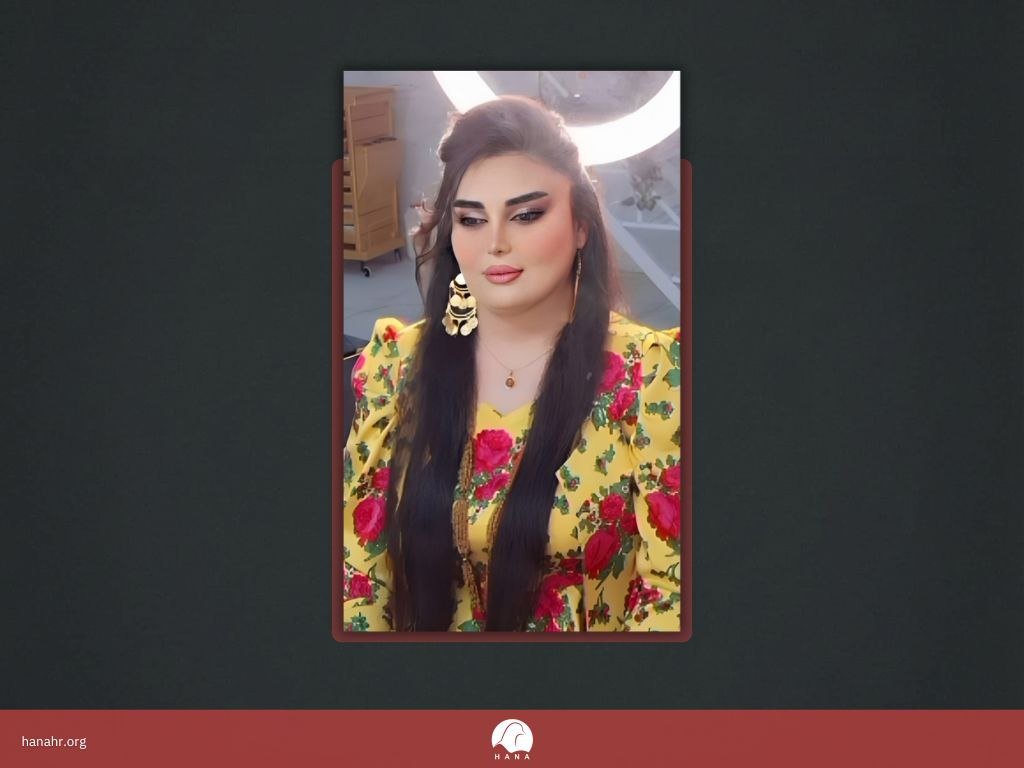
According to investigations by the Hana Human Rights Organization, Maria Hosseinpanahi, aged 32 and a resident of Sanandaj, was brutally murdered by her husband. The perpetrator, fully aware that his wife was pregnant, killed her in a particularly violent manner using a knife.
According to witnesses and individuals close to the family, the killing occurred following a severe argument between the couple. This act of femicide took place on Tuesday, 3 February 2026.
The perpetrator inflicted deep and severe stab wounds to vital parts of Maria’s body. Maria, who had been married for only three months, was reportedly in a loving relationship with her husband and was deeply attached to him.
Prior to the killing, the perpetrator had threatened Maria’s sister during a phone call, stating that he would kill his wife upon returning home. Taking the threat seriously, Maria’s sister immediately warned her and urged her to leave the house. However, for reasons unknown, Maria did not consider the threat imminent and remained at home.
At the same time, her sister reported the threat to the police and the Criminal Investigation Department. During a subsequent phone call with Maria, she heard her sister screaming and calling for help.
Following the infliction of severe injuries, Maria was transferred to hospital and underwent surgery; however, at approximately 4:00 a.m., she died due to massive bleeding. As a result of the mother’s death, the fetus also lost all vital signs.
According to informed sources, the murder occurred in the presence of the perpetrator’s mother, who suffered cardiac arrest due to the shock of the extreme violence and was transferred to hospital.
Shawan Naseri, the perpetrator, was arrested by the Sanandaj Criminal Investigation Department after committing the murder and has confessed to the crime.
The Hana Human Rights Organization strongly condemns this killing and once again emphasizes that the absence of effective protective laws for women is a primary factor contributing to such tragedies. The granting of legal authority over the family to men under Iran’s Civil Code, along with discriminatory and inhumane jurisprudential concepts such as “obedience to the husband” and “disobedience of the wife,” are among the main structural causes of so-called honor killings in Iran.
The theocratic legal system of the Islamic Republic of Iran remains silent and refrains from intervening when women require protection from violence, often justifying inaction under the pretext of privacy and honor. At the same time, when women seek to exercise fundamental freedoms—such as the right to choose their clothing—the state intervenes and even criminalizes these basic rights.